
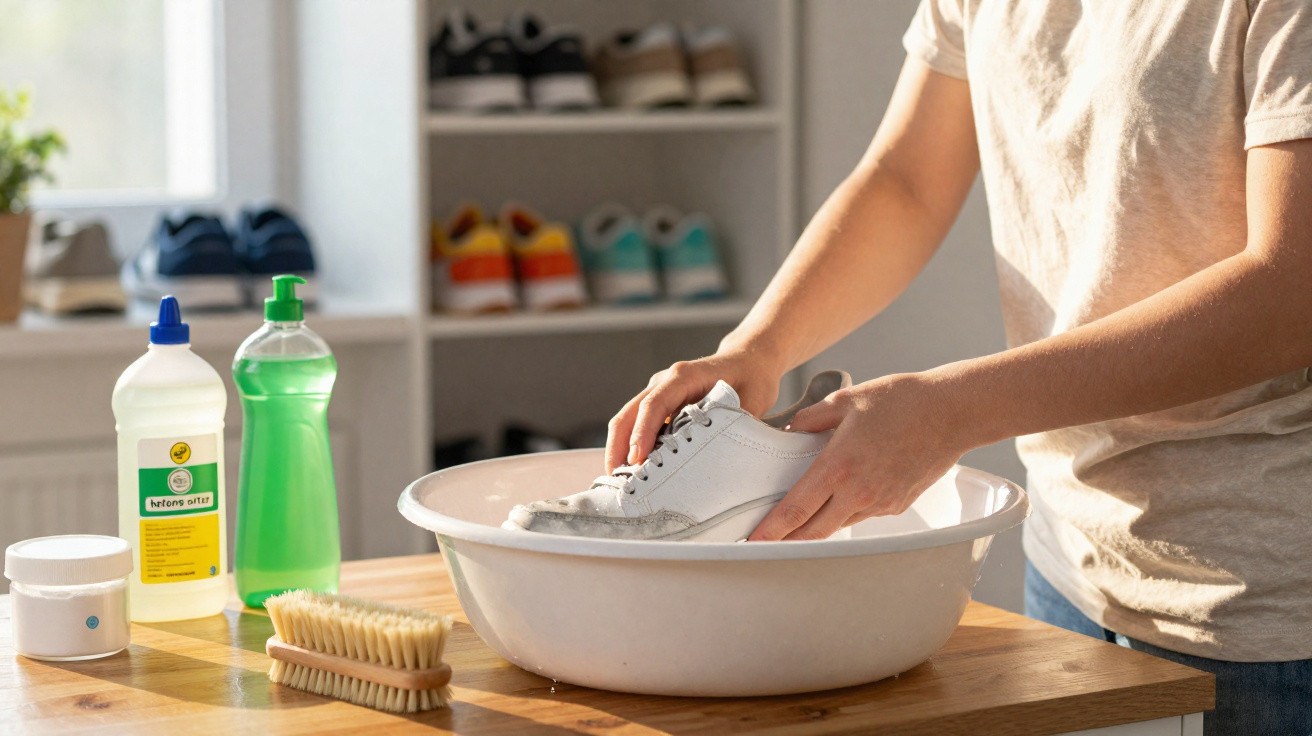
A low-key cleaning method is restoring worn-out sneakers to favourite status in the wardrobe.
In kitchens, corridors and cramped flat balconies, people are bringing battered trainers back to life with a solution that has an ordinary smell, is gentle on fabric, and does not damage adhesive or colour.
Why sneakers wear out faster than we think
Sneakers endure more than most items of clothing. They splash through puddles, travel on packed trains, make it through festivals and carry us through hectic weeks. Grime accumulates gradually in layers, until a pair that merely looked worn starts to feel slightly embarrassing.
The usual response is familiar: put them in the washing machine, select a hot wash, add powerful detergent and finish with the tumble dryer. Although the trainers may initially appear clean, the harm is often less obvious. Heat compromises glue, friction from the drum damages mesh, and leather edging becomes rigid. White textiles can end up uneven rather than brighter.
Strong bleach creates further problems. Chlorine damages fibres, turns rubber soles yellow and leaves behind a harsh odour that seems impossible to remove. Baking soda may appear to be a milder option, but it can remain on fabric as a flat-looking coating. Colours lose intensity, while logos no longer look sharply defined.
Most “quick fixes” for sneakers don’t fail because they clean too little, but because they clean too aggressively.
This is why another method is becoming increasingly popular: avoid both bleach and baking soda, using a carefully measured solution instead. Oxygen and gentle surfactants handle the dirt while the shoe materials retain their form.
The unexpected sneaker-cleaning pair: household ammonia and washing-up liquid
At the centre of this technique is a small amount of standard household ammonia combined with basic washing-up liquid. When applied correctly, the pairing loosens grime and perspiration without removing fibres or leaving a powdery layer behind.
A simple cleaning routine that protects your shoes
This straightforward process is one that many sneaker enthusiasts now recommend:
- Pour roughly three litres of lukewarm water into a basin.
- Mix in one capful of mild washing-up liquid.
- Add one capful of household ammonia.
- Take out the laces and, where possible, the insoles.
- Leave the sneakers, laces and insoles to soak for approximately one hour.
- Use a soft brush gently in small circular movements.
- Rinse everything well with fresh water.
- Fill the shoes with paper and allow them to air-dry away from direct sunlight and heat.
Wearing gloves and keeping windows open are important precautions. Ammonia vapours can irritate the eyes and lungs, and it must never be used alongside chlorine-based products. However, when kept separate and properly diluted, this solution provides fast, deep cleaning while remaining notably gentle on most textiles.
The goal is not to blast the dirt off, but to loosen it so it slides out of the fibres with almost no force.
This gentler method helps to prevent fraying seams, misshapen toe boxes and fragile overlays. It can also preserve printed features and reflective sections for longer, which matters to collectors just as much as comfort does.
The oxygen boost: percarbonate for dulled whites
For pale sneakers, the next stage can turn an effective wash into a noticeably fresher result. Rather than using bleach, many households choose sodium percarbonate, which is sometimes sold as “oxygen bleach” granules.
When the water reaches around 40 degrees Celsius, roughly body temperature plus a little extra, percarbonate releases active oxygen. This oxygen breaks down perspiration residue and organic marks, both of which contribute to greying and persistent smells.
A typical process is as follows:
| Step | What to do |
|---|---|
| 1 | Dissolve two tablespoons of percarbonate in a bowl of hot water. |
| 2 | Test the solution on a concealed area if the shoe includes colour. |
| 3 | Put the sneakers upside down into the solution for two to four hours. |
| 4 | Rinse thoroughly using clean water. |
| 5 | Fill them with paper and leave them to dry somewhere shaded and well ventilated. |
Percarbonate leaves very little scent, which is ideal for footwear worn close to the skin throughout the day. Used patiently rather than as an emergency measure, it lifts the grey layer and refreshes fabric without pushing sneakers towards a brittle, over-bleached appearance.
Think of percarbonate as a controlled oxygen kick: short, targeted and kind to most materials when you keep the temperature moderate.
Small errors that can quietly ruin costly trainers
Plenty of sneaker owners follow a thoughtful cleaning routine, only to reverse the results with one hurried choice. Repair shops and collector forums repeatedly highlight several common mistakes:
- Using extremely hot water, which can soften the glue in the midsole.
- Placing sneakers on radiators to dry, causing rubber to harden and leather to crack.
- Leaving them in direct sunlight, which can give white material a yellow tint.
- Scrubbing with hard brushes that pull at fibres and make mesh fuzzy.
- Failing to rinse properly, leaving detergent behind to attract fresh dirt more quickly.
For most trainers, one gentle wash each month is enough, unless they are regularly worn through muddy parks or in dusty workplaces. Consistent mild care is better than a drastic rescue job after months without attention. Washing laces separately makes them easier to clean and quicker to dry, while insoles benefit from a brief hand rinse and complete air-drying to control odours.
Clean sneakers influence mood, routines and spending
There is also a psychological side to this that extends beyond spotless fabric. Those who restore an older pair often say it feels somewhat like receiving something new without paying for it. They stand a little taller, outfits appear more considered, and mornings bring fewer moments of feeling that there is nothing to wear.
Keeping sneakers in use for longer obviously saves money, particularly as shop prices continue to rise each year. It also means less waste. Making trainers last for only one additional season reduces the environmental impact of manufacturing replacements, including rubber compounds and transport.
A simple basin, a cheap cleaning duo and two slow afternoons a month can delay the moment when trainers become “bin shoes”.
The practice can also alter how people buy footwear. Rather than pursuing every new release, some are building smaller collections and looking after them with care. This involves storing shoes better, airing them regularly and treating marks as soon as they happen rather than waiting weeks.
How changing materials are reshaping sneaker care
The combination of ammonia, washing-up liquid and oxygen cleaner suits many traditional sneaker materials, including canvas, mesh, synthetic leather and smooth rubber. Yet modern footwear now includes knitted uppers, recycled foams and vegan imitation leathers, all of which respond in different ways.
Owners of knitted running shoes, for example, should reduce soaking time and avoid vigorous brushing, as this may distort the knit design. Recycled foams can soften more rapidly in heat, so cooler water and shaded drying are preferable.
Vegan leathers, which are frequently produced from layered plastics or plant-based fibres, may not tolerate lengthy soaking at all. Instead, they are better treated with a lightly dampened cloth, a few drops of the same soap-and-ammonia solution, and a quick wipe rather than immersion.
Extra advice on odour, storage and knowing when to stop
Odour is held partly in the fabric and partly in the insole. A thorough wash with the two-part mix removes much of it, but heavily used pairs may require additional measures. Switching to removable insoles that can be cleaned separately or replaced from time to time can help significantly. Allowing shoes to rest for a full day between wears also lets moisture escape.
Storage matters too. Trainers left in a heap by the door lose their heel shape and collect dust. A basic shoe rack with some airflow, paper inside special pairs to hold their shape, and a firm rule against radiators will protect the effort put into cleaning.
At times, the most sensible choice is to recognise when a pair has reached the end of its life. Crumbling midsoles, peeling air bubbles and cracked structural components cannot be restored through smart cleaning. The same maintenance habits can then be applied to the next pair from the first day, postponing that final point by years rather than months.
Comments
No comments yet. Be the first to comment!
Leave a Comment