
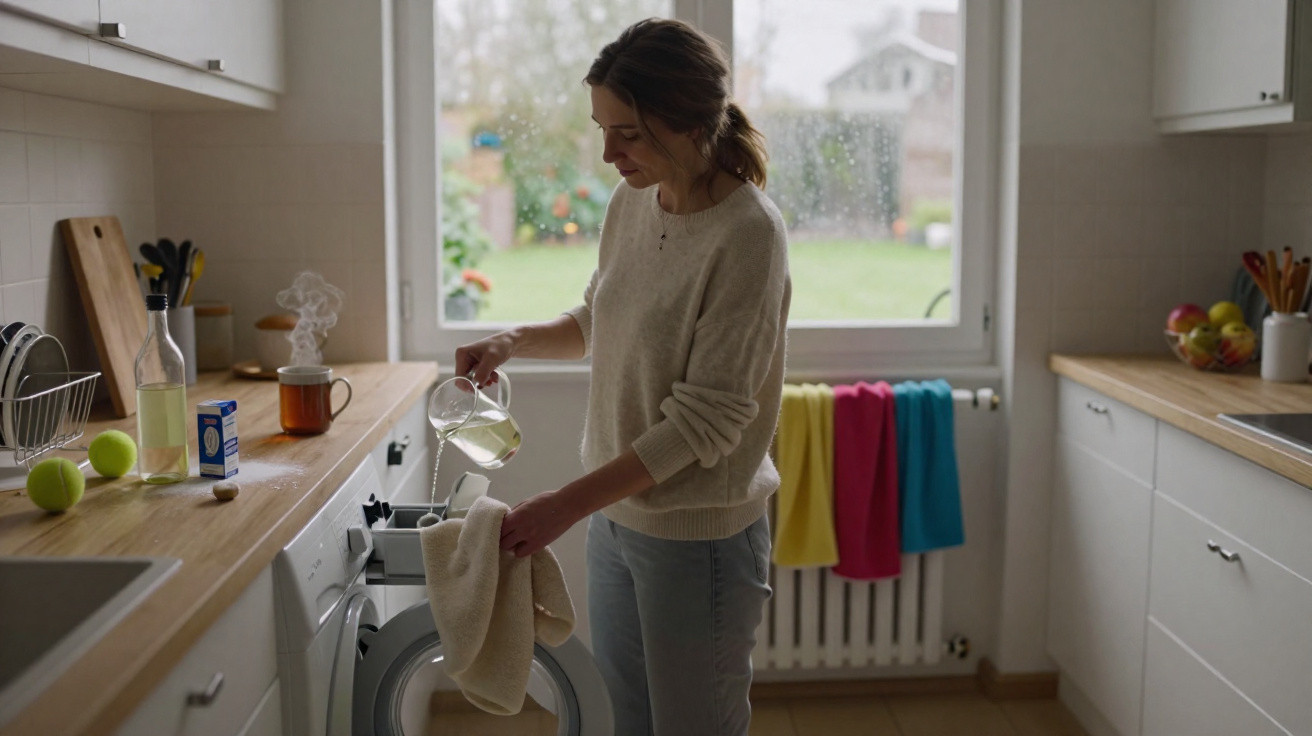
Scratchy towels, worn-out fibres and that dull, rigid texture after a few months - this was her answer. I rolled my eyes, but I still made a note of it.
I was in my mum’s kitchen, watching steam mist up the window until the garden beyond looked like a watercolour painting. Three bath towels were draped over the radiator like surrender flags: heavy, stiff and loud when patted. As Mum made tea, she explained that Carol next door had revived her towels with a vinegar rinse. There were no specialist products or costly tricks involved, only a dash from the kitchen cupboard. I had spent years dismissing these “old ways”, yet I was fed up with towels that felt like sandpaper on a chilly morning. So I asked exactly how to do it. Her reply caught me off guard.
The day the towels stopped feeling soft
It was not their texture that gave the problem away at first, but the noise. When we folded the towels on the kitchen table, they landed with a dull slap, as though their loops had stuck together. The fibres no longer had any bounce. Even freshly washed, their colours seemed faded. I tried washing them hotter and adding more fabric softener, but that only worsened matters: they became strangely waxy and absorbed even less water.
I began to notice visitors pausing after showers, drying themselves as quickly as people do when facing a biting wind. Once, I even took a towel to the launderette, persuaded by the idea that “big machines fix everything”. It returned hot, clean and just as unyielding. Then Mum brought up Carol at number 42 - the neighbour who can persuade hydrangeas to flower and insists vinegar is the most useful household item after tea bags.
Eventually, the explanation made sense. Towels stiffen because residue accumulates. Detergent remains cling to the fibres, fabric softener creates a coating, and hard water adds minerals to the combination. In time, the soft loops turn into tiny planks. The acetic acid in vinegar breaks down mineral deposits and helps remove lingering detergent. There is no fragrance and no slippery layer, simply a reset. The point is not to make towels “smell nice”; it is to return the cotton to its natural state so it can become fluffy and absorbent again.
The vinegar rinse for softer towels
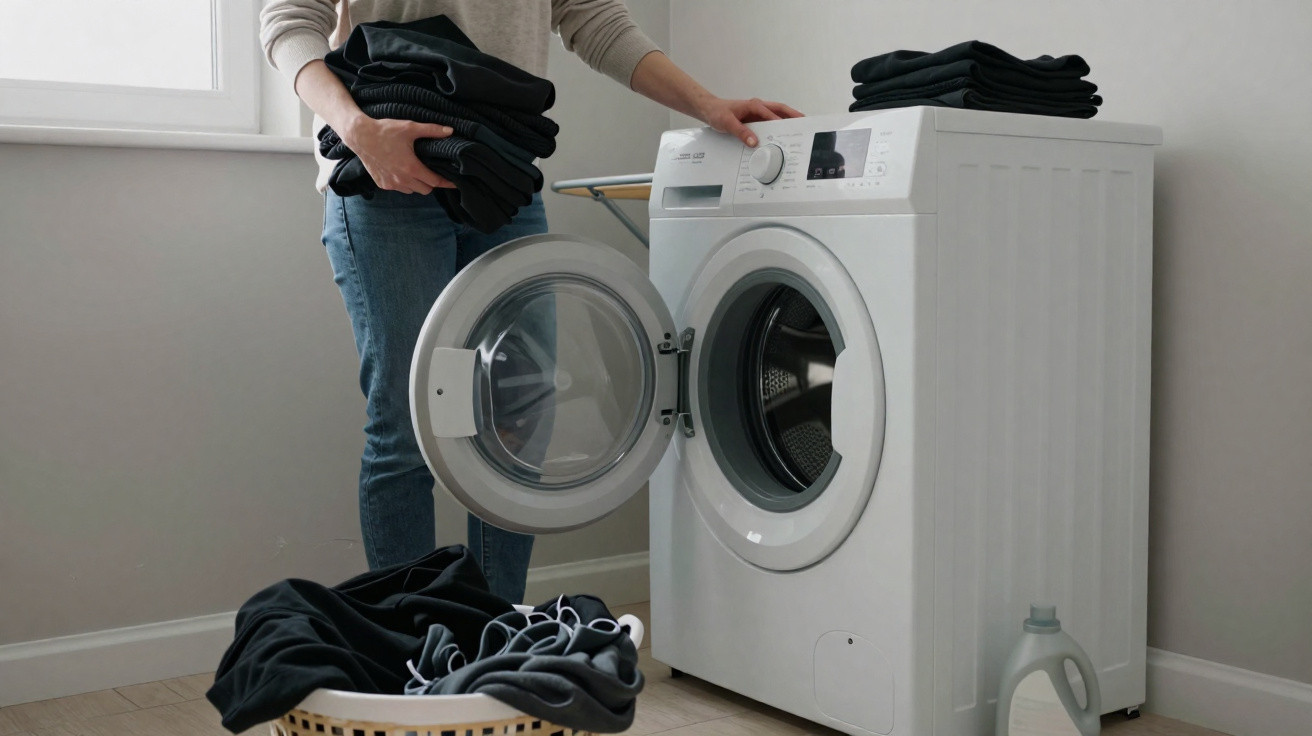
Carol’s technique is straightforward, unshowy and exact. Wash the towels as normal, leaving out the fabric softener. Once the appliance reaches its rinse cycle, pour 250 ml (around one cup) of distilled white vinegar into the fabric softener drawer. If your machine does not allow this, add it during a separate second rinse instead. For cotton towels, choose warm or hot water. Tumble-dry at a medium temperature with two clean dryer balls or a pair of tennis balls to help separate the fibres.
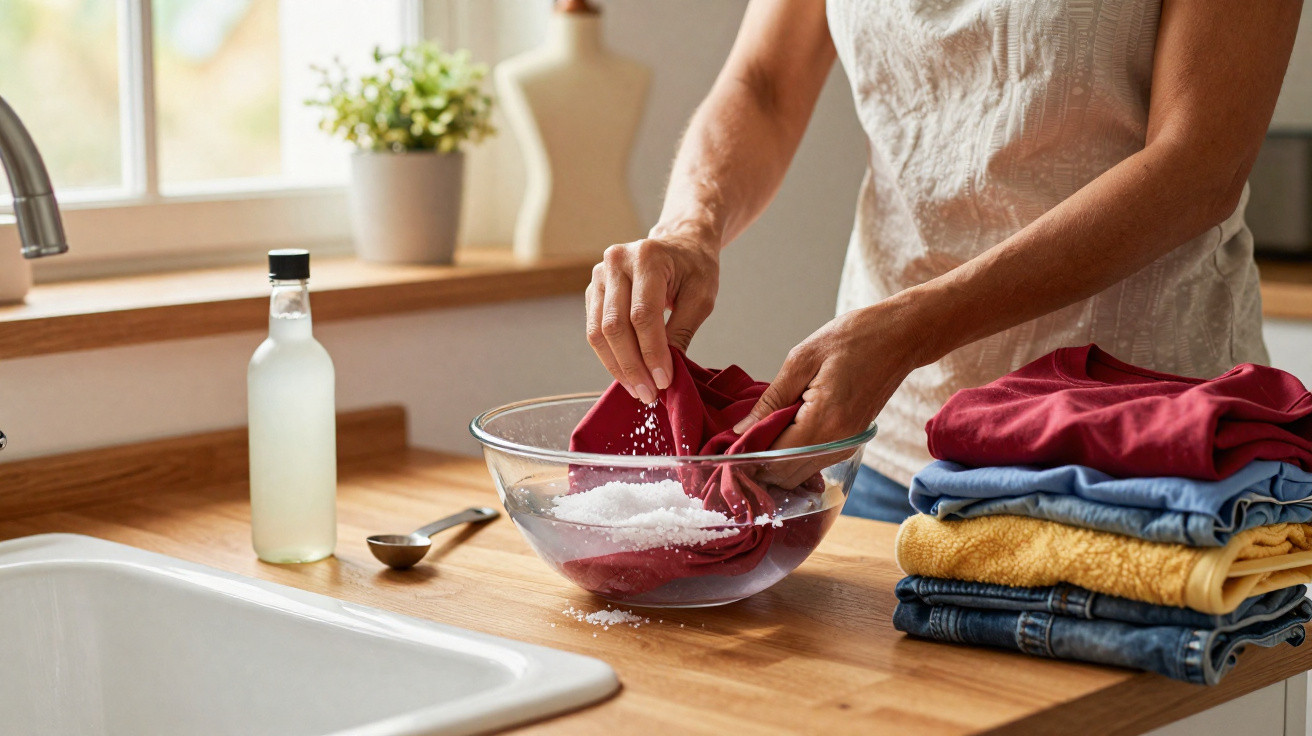
A few small changes make a difference. Cut your regular detergent quantity in half: most people use more than they need, and towels then fail to rinse properly. Where the water is very hard and there has been years of build-up, try a stripping reset: run one wash with half a cup of baking soda, rinse it out, then do the vinegar rinse. Keep these treatments separate, never in the same cycle. Avoid overfilling the drum, as towels need room to move around. Remove them when they are just dry rather than baked dry. Realistically, nobody manages that every day. But on this occasion, let the fabric breathe.
We have all experienced a small household success that feels almost miraculous. That was how I felt when I removed the first towel from the dryer after its vinegar rinse. The loops had opened up again. Its edges felt weightless beneath my fingers. When I held the towel to my face, it smelt of nothing at all - the cleanest scent there is.
“It’s not magic,” Carol told me at her gate, hands on her hips. “It’s just letting cotton be cotton again.”
- Use 250 ml of white vinegar in the rinse drawer
- Never combine vinegar with bleach - full stop
- Always avoid fabric softener when washing towels
- Dry with dryer balls and remove at “just dry”
- In hard water areas, carry out a reset every 4–6 weeks
Why the softer feel lasts
The first rinse removed an unexpected amount of residue. The towel appeared brighter, its pile lifted and the rough crackling sensation disappeared. By the second week, it was still soft, soaking up water quickly rather than pushing it around the skin. The softness returned after one wash. That surprised me more than the method itself. This was not the effect of a new product; it was simply my own towels, no longer held back.
There is sensible simplicity in leaving fragrance out of it. Vinegar does not leave an odour once dry, removes the film that holds onto smells, and does not compete with detergent. Over time, using fewer products means less coating, so fewer washes are needed to maintain the fluffiness. During hectic weeks, I leave it out and the towels remain fine. When they begin to feel worn out, I use the rinse and they perk up again. That pattern works in everyday life.
If adding “something vinegary” to your washing machine makes you uneasy, begin with 125 ml and assess the result after one load. Experiment on older towels before trying it on the plush guest set. Do not bring bleach into the process - do not mix vinegar and bleach under any circumstance. Compared with harsh chemicals, vinegar is kind to rubber seals, while modern washing machines rinse effectively. This is not about dramatic measures; it is simply about guiding the fibres back to being clean, open and able to do their job.
More than a fabric softener trick
I never thought a neighbour’s tip would change how I viewed “old ways”, but here we are. It is a modest domestic routine that feels unexpectedly reassuring: a cup of vinegar in the rinse, a careful dry and a towel that welcomes your skin instead of rubbing against it. Pass it on to the person you know who stores a collection of products beneath the sink. Or send it to a friend who has just moved to a hard-water postcode. Perhaps towels are not the only things that feel lighter once the build-up is removed.
| Key point | Detail | Benefit for the reader |
|---|---|---|
| Vinegar reset | 250 ml of white vinegar in the rinse cycle, using warm/hot water | Softens towels quickly without fragrance or residue |
| Less product | Half the usual detergent amount and no fabric softener | Boosts absorbency and reduces stiffness |
| Drying method | Medium heat with dryer balls; stop at “just dry” | Protects fibres while keeping the pile open and fluffy |
Frequently asked questions
- How much vinegar should I use? Use around 250 ml (one cup) of distilled white vinegar in the rinse drawer for a standard towel load.
- Will my towels smell like vinegar? No - the smell disappears during the rinse and drying stages. If a faint trace remains, dry them slightly longer or improve airflow.
- Can I use this on coloured or patterned towels? Yes. White vinegar is safe for coloured cotton and can help stop towels becoming dull through residue build-up.
- Is vinegar safe for my washing machine? Yes, when used in rinse-level quantities. It is milder than aggressive descalers. Do not use it in a cycle containing bleach.
- How often should I do a vinegar rinse? Use one every 4–6 weeks in hard water areas, or whenever towels become less absorbent or begin to stiffen.
Comments
No comments yet. Be the first to comment!
Leave a Comment