
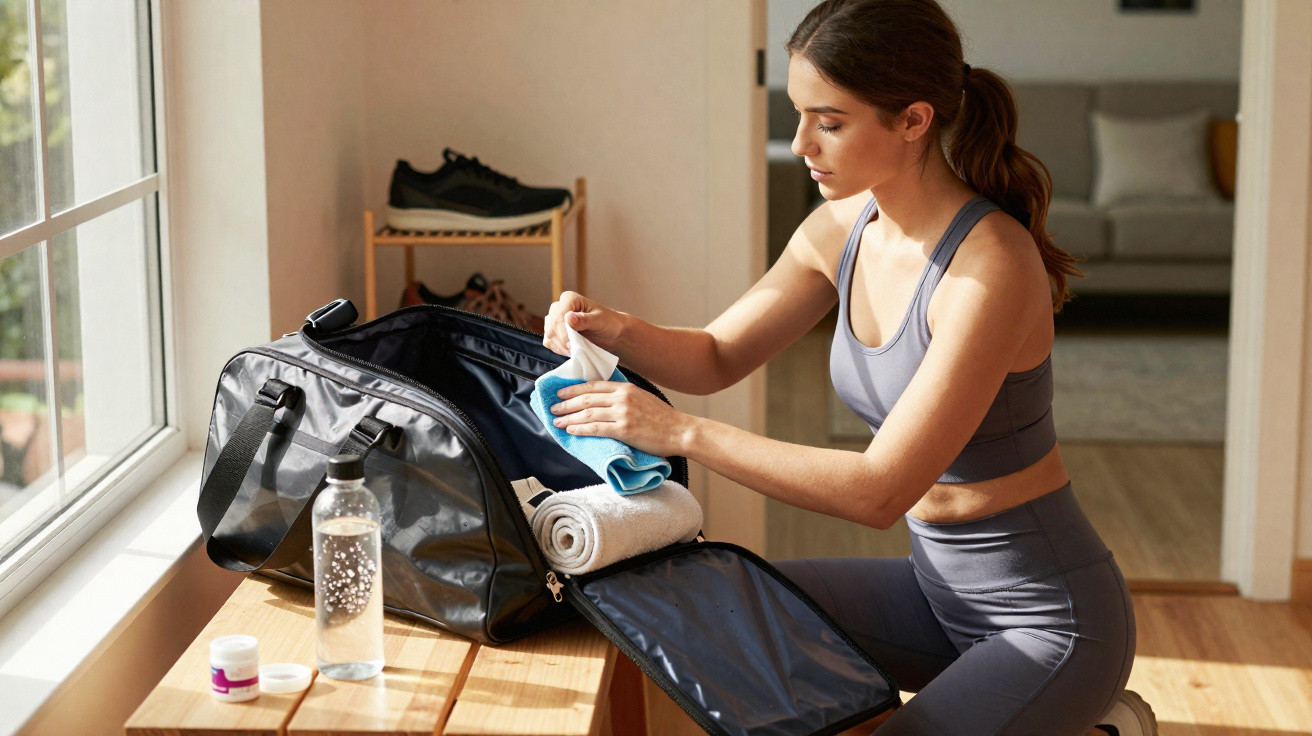
The gym was about to shut when I noticed it: a solitary gym bag collapsed in the corner, partly unzipped, its straps tangled like exhausted limbs.
Whoever owned it was long gone, yet its odour remained. There was a damp towel, battered trainers and a shaker bottle with a suspicious milky residue still inside. It was the sort of smell you register in your whole body, not merely through your nose.
Most of us carry a similar bag on our shoulder several times each week. It gets dropped on changing-room floors, pushed beneath a weights bench and abandoned in the car. Then, back at home, we place it straight on top of fresh clothes as though nothing has happened-as though it is only fabric and zips rather than a mobile ecosystem.
What is growing in that dark, perspiration-soaked cocoon is another matter entirely.
That “harmless” gym bag is a miniature jungle
You zip it up, unzip it again, and toss in your trainers, T-shirt and headphones. The process is so routine that the bag itself disappears from view. It becomes scenery: a basic carrier and the most unremarkable part of exercising.
But a gym bag’s interior offers everything bacteria want: dark conditions, heat, dampness and a steady supply of new sweat. It is rather like furnishing a tiny flat for germs and giving them the keys. Cleaning it with disinfectant wipes is not obsessive behaviour. It means cutting off the resources of that concealed little jungle before it spreads into everyday life.
Several years ago, a US fitness survey swabbed real gyms and produced a memorable finding. On average, gym equipment contained hundreds of times more bacteria than a toilet seat. The statistic made headlines, but the overlooked supporting character was the gym bag: it sits on those same contaminated surfaces before travelling directly to bedrooms and hallway hooks.
A personal trainer once told me about a client who repeatedly developed unexplained rashes on her forearms. They attempted everything: changing soaps, trying different lotions and even using another laundry service. The breakthrough came when the trainer saw her post-class routine. She put her open bag on the floor, removed her sweaty top, then rested her bare forearms on the bag’s edge while scrolling on her phone. After two years of intense weight training without ever being cleaned, that bag had become a soft, fabric-lined Petri dish.
Bacteria are indifferent to our routines and good intentions; conditions are what matter to them. Moisture from sweaty clothing and trainers seeps into the lining and stitching. Zips and mesh compartments collect dead skin and minuscule protein-shake crumbs. In that dim, poorly ventilated environment, microbes can multiply quickly-particularly staph and other skin bacteria carried in from gym and changing-room benches.
Wiping the bag interrupts the chain: fewer changing-room germs make their way into your car, onto your sofa or into your bed. One modest pass with a disinfectant wipe quietly alters the likelihood, evening after evening. It is not melodrama; it is maths.
How to clean your gym bag with disinfectant wipes effectively
The easiest routine is this: as soon as you arrive home, put down your gym bag, open it completely, remove your equipment, then wipe the bag carefully inside and out. Do not make it a rushed, guilty gesture. Work methodically over the handles, zip pulls, base panel and internal lining where clothing and trainers make contact.
Choose a disinfectant wipe that explicitly states it kills bacteria and viruses, rather than a “freshening” wipe that simply smells pleasant. Check the small print: to work correctly, many products require the surface to remain visibly wet for several minutes. Leave the bag to air-dry with every zip open, as if it needs to breathe after a long day. It takes two additional minutes, but across a year that silently prevents dozens of invisible outbreaks.
Let’s be honest: hardly anyone genuinely does this daily. There is work, children, late-night Netflix and the urge to leave everything by the door before collapsing. Aim for “often” rather than “always”. You could attach it to a weekly habit, such as a wipe-down every Sunday evening immediately after putting your gym laundry in the wash.
One woman I spoke with stores a small packet of wipes in her bag and keeps another in her car boot. When she has a heavy, sweatier training session, she cleans the bag in the car park, where the odour is most noticeable. Another man has a reminder on his phone saying, “Bag wipe + shoes out”, which appears three times a week at 8 p.m. Not because he’s obsessive, but because his nose remembered a summer of forgotten socks in July heat.
People usually make the same errors: throwing worn gym clothes inside and leaving them overnight, trapping a wet towel in a zipped bag, or putting trainers in the main compartment alongside everything else. A wipe cannot completely rescue that level of disorder. Treat it as the final move, not the whole defensive plan.
Those who maintain the habit tend to frame it as self-care rather than a chore. They mention the modest pleasure of opening a bag that smells neutral rather than marshy. A clean bag becomes part of who they are: “I’m someone who doesn’t drag locker room grime everywhere I go.” It may be subtle, but it affects how you feel in your own home.
“I used to be proud of how hard I trained,” a spin class regular told me. “Now I’m just as proud that my gym bag doesn’t knock people out when I walk into the office.”
A filthy gym bag also creates a quiet mental burden. You cringe when unzipping it at work, avoid placing it on the sofa and feel faintly guilty whenever you notice the smell. Regular wiping removes that low-level background strain. It makes the bag a useful tool again, rather than something to worry about.
- Store a packet of disinfectant wipes in, or close to, your gym bag so they are easy to use.
- Open every compartment before cleaning, including the small side pockets.
- Allow the bag to dry completely with the zips open to avoid musty smells.
- Keep trainers in a washable shoe bag, and wipe that bag as well.
- If you exercise every day, alternate between two bags so both can dry properly.
The small routine that protects more than your gym bag
Once you have spotted it, it is impossible to ignore how your gym bag travels through your entire life. It lives beneath your desk at work, sits on your lap in the car and leans against the hallway wall where children leave school bags and pets pass on their way to the door.
Every surface it meets receives a little of what is inside it. This is not a panic-worthy disaster-film scenario, but a quiet daily exchange of microscopic passengers. By wiping the bag itself, you discreetly redraw that route. You decide where sweat and bacteria belong-and where they do not.
That choice can have wider effects. You may stop tipping clothes from the bag straight onto the bed. You may begin hanging up your towel to dry rather than leaving it crumpled inside. Your children may grow up assuming that of course you clean the bag; why would you not? Hygiene changes seldom feel heroic at the time, but they gradually redefine what feels normal.
We have all known the moment when a gym bag smells so strongly that it becomes a joke, before turning into something we would rather ignore. The less amusing reality beneath it is that these bags may carry staph, E. coli and other persistent microbes, none of which care about your next personal record. A disinfectant wipe cannot promise perfection, but each use shifts the odds in your favour.
So tonight, when you leave your kit by the door, perhaps pause for a moment. Unzip the bag, take out the sweaty T-shirt and pick up a wipe. Not because you want to become the person who disinfects everything, but because you choose not to let one dark, sweaty corner of life determine how the rest of the home smells or feels. One ordinary wipe creates one slightly cleaner world.
| Key point | Detail | Why it matters to the reader |
|---|---|---|
| Gym bags harbour large amounts of bacteria | Their dark, warm and humid conditions encourage microbial growth | Recognise the hidden risk beyond unpleasant odours alone |
| Disinfectant wipes interrupt the contamination chain | Regular cleaning reduces the number of germs brought home from the gym | Keep the home, car and workplace healthier |
| A simple routine is sustainable over time | Wipe the bag for a few minutes several times a week | Protect your skin, the people around you and your comfort without spending hours on it |
Frequently asked questions
- How often should I clean my gym bag? If you exercise regularly, two or three times weekly is a sensible goal, as well as after particularly sweaty sessions or when the bag has been on changing-room floors.
- Are disinfectant wipes essential, or will baby wipes do? Baby wipes remove visible dirt but generally do not kill germs; choose wipes labelled as disinfectant with proven antibacterial or antiviral action.
- Can disinfectant wipes harm my bag’s material? Most modern bags cope with them well, but first test a small concealed patch and avoid strong bleach on delicate or coloured materials.
- Is wiping sufficient if my bag already has a bad smell? When an odour is deeply embedded, combine wiping with fully emptying the bag, air-drying it while open and occasionally washing it according to the manufacturer’s directions.
- How else can I stop bacteria multiplying in my bag? Take out damp clothing promptly, keep trainers in a separate shoe pouch, let the bag dry between uses and do not store it in enclosed humid places, such as sealed car boots.
Comments
No comments yet. Be the first to comment!
Leave a Comment