
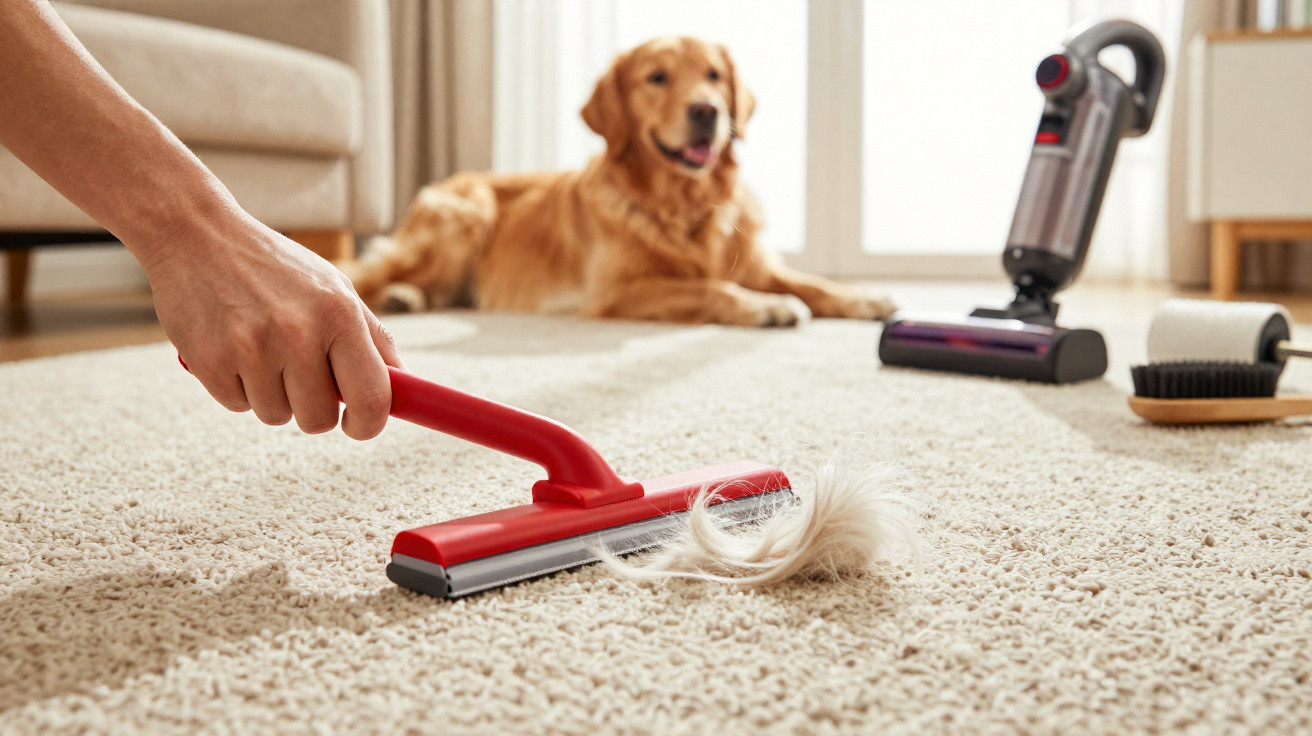
The first time you give it a go, you may struggle to believe what your own carpet has been hiding.
Pull an ordinary window squeegee over the pile with little expectation, and a grey, fluffy rope of pet hair can suddenly emerge like smoke. An hour earlier, your vacuum assured you that the floor was clean. Its brush bar whirred, the lights flashed and it made plenty of noise. Still, there it is: a concealed layer of fur that the machine simply passed over.
It is a little like performing a magic trick in your own lounge. With one inexpensive squeegee and one measured pull, your dog’s winter coat materialises in a single alarming strip. You pause, look at it, then repeat the motion simply to make sure it really happened. The carpet already seems transformed, as though you have stripped away a layer you had never spotted.
What is most surprising, though, is the reason rubber succeeds where a vacuum falls short.
Why a simple rubber squeegee beats your expensive vacuum at removing pet hair
Take a look at your carpet in the slanting light of late afternoon. As the sun catches it from the side, each hair becomes visible, stubbornly attached to the fibres. Your vacuum moves over it like a courteous visitor: collecting loose debris, brushing the top layer and leaving the embedded material behind.
A rubber squeegee is not so restrained. It grips.
As you draw a squeegee over carpet, its pliable rubber blade produces friction and static. The pile shifts and bends before springing into place again. Fur strands woven into it over weeks or even months are pulled free and gathered into clumps. The pile stands up, the colour appears richer, and you realise how accustomed you had become to a carpet that was merely “sort of clean”. After watching that fuzzy line appear, relying on vacuuming alone can feel like make-believe.
Consider a small city flat with a Labrador, a cat and a beige rug. Its owner insisted that she vacuumed three times each week. She proudly pointed to her cordless vacuum’s empty bin as evidence that she was “on top of it”. Then somebody gave her a bathroom squeegee and suggested she make one slow pass across the rug.
In under five minutes, she had collected enough fur to fill a carrier bag. Not a sandwich bag, but a full-sized shopping bag packed tightly with hair that had been sitting rent-free in the pile, resisting years of vacuuming. The dog looked mildly affronted, as though his secret extra coat had been uncovered.
That sort of test is not unusual. Some cleaning professionals reckon that, with pets that shed heavily, vacuum cleaners can leave behind 30–50% of hair embedded in thick carpet, particularly when the brush roll is worn or suction is less than ideal. Rubber, by contrast, is not dependent on airflow alone. It works through grip, drag and a little static electricity. The outcome is both deeply satisfying and mildly revolting - precisely the sort of combination people love to discuss.
There is a sound reason for it. Hair, especially from double-coated dogs, does not simply settle on top of a carpet. Every footstep twists it, works it down and wedges it between fibres. A vacuum head often sits too high, particularly on soft, plush carpets, meaning airflow is drawing from a few millimetres above the point where the fur is trapped. It will lift crumbs and dust, while the flat, persistent hairs remain attached to the pile.
The rubber blade of a squeegee alters that approach. It presses the pile down and then flexes back, producing a “raking” action that vacuum rollers seldom achieve. Static accumulates on the rubber, naturally attracting and bunching the hair together. On low-pile rugs, this creates dense, almost felt-like cords of fur. With deeper carpet, loose tumbleweed-like clumps build up ahead of the blade. In either case, you are removing what the vacuum’s power button never reached.
It is an unsophisticated, low-tech answer that relies on basic physics rather than more watts.
How to use a squeegee on your carpet without hurting your back (or losing patience)
The technique itself is straightforward, although your movement makes a difference. Choose a squeegee with a firm rubber blade and, preferably, a handle that does not force you to stoop. Plenty of people use the cheapest window squeegee they can find beneath the sink. It will do the job, but a broom-style model is easier on your back when you have more than a doormat to clean.
Tackle the carpet in smaller areas. Think of it as being split into doormat-sized squares. Set the squeegee at one side of a “square”, tilt the blade slightly towards yourself, then pull it back in one slow, firm stroke. Avoid frantic scrubbing; treat it more like mowing a very small lawn. Then pause and inspect the result.
Fur will begin collecting in strips. Lift the clumps by hand, put them into a bin bag and continue with the next pass. Vacuum once you have finished to remove the dust you have disturbed. Your first attempt will take more time, but the second and third sessions should be quicker because months of built-up underlayer will no longer be there.
Getting a few things wrong is almost a rite of passage with this method. Some people apply too much force and end up aching, while others go at a delicate rug as if they were sanding floorboards. Others assume the squeegee should slide without any resistance at all. Do not worry if the first pass feels slightly “grippy”. That pull is the rubber catching hold of the hair.
Use particular care with very old, worn or antique rugs. Try a discreet corner first and keep your strokes gentle. And do not criticise yourself if this is not a weekend ritual. Let’s be honest: nobody really does it every day.
If your back is sensitive, sit on a low stool and work in front of yourself, or choose a long-handled floor squeegee. Brief, regular sessions are better than one draining marathon. During weeks of particularly heavy shedding, some owners only address the “traffic lanes”: around the sofa, beside the bed and near the dog’s preferred sleeping place. The aim is not perfection, but visible progress.
This small cleaning trick has an oddly emotional side. One dog owner told me:
“The first time I used a squeegee on the rug, I felt half disgusted and half proud. Disgusted by what came out, proud that I’d finally beaten it.”
That combination of unpleasant and gratifying is what makes the method so easy to share. People try it “just to see” before sending pictures of fur ropes to friends. It is cheap, uncomplicated and effective, even when your vacuum is five years beyond its best.
To make the task feel manageable rather than obsessive, set yourself a few simple guidelines:
- Treat the squeegee as a monthly “deep clean” for carpets and rugs.
- Concentrate on rooms where your pet sleeps and sheds most often.
- Follow it with a quick vacuum to collect loosened dust.
- Reserve one squeegee for floors so it is not confused with the shower one.
- Finish when the fur clumps become noticeably smaller. That is the sign you have done enough for the day.
Living with fur rather than fighting it: what this odd-looking trick really changes
At face value, running a squeegee over carpet is simply another cleaning hack. Rubber meets fibre, hair comes out and social media approves. Yet seeing the volume your vacuum left behind creates a more meaningful shift. You begin to look at your supposedly “clean” rooms more honestly.
For anyone with allergies or asthma, that hidden fur layer is not merely unpleasant; it can contribute to more difficult breathing on bad days. After thoroughly using a squeegee on the rug beneath the bed, you may find that sneezing fits in the bedroom are less frequent. The air may not seem dramatically different, but there can be a quiet sense of freshness when the carpet is no longer holding an unseen blanket of dander.
Emotionally, it can reshape how you think about your home. Rather than pursuing an impossible fur-free standard while a shedding dog snores in the corner, you gain a small but tangible success. Ten minutes of unhurried, repetitive work, one bag of fur and a rug that visibly appears newer can be surprisingly reassuring. You have not been failing at cleaning; you were simply using the wrong tool for this particular task.
Everyone has experienced apologising to visitors for fur on the floor, half in jest and half from embarrassment. The squeegee method will not remove all evidence of pets from your lounge. It simply puts it back within your control, one persistent hair at a time.
| Key point | Detail | Benefit for the reader |
|---|---|---|
| Rubber catches hair | The blade generates friction and static electricity, attracting and gathering embedded hairs. | Explains why this technique works better than simply vacuuming. |
| Work in small areas | Divide the rug into “squares” and pull the squeegee slowly, section by section. | Makes the job less tiring and more effective, even across an entire lounge. |
| A complement to vacuuming | Squeegee first to extract hair, then vacuum to remove dust and fine debris. | Delivers a deeper clean, useful for allergy sufferers or households with very hairy pets. |
FAQ:
- Does using a squeegee damage carpets? On most modern carpets and hard-wearing rugs, no. Apply moderate pressure, and test a small corner first on fragile or antique items.
- How often should I use a squeegee on my carpet? For pets that shed heavily, once every one to four weeks is generally sufficient, alongside normal vacuuming between sessions.
- What kind of squeegee works best for pet hair? A rubber-blade squeegee is best, ideally one with a longer handle for floors. Window squeegees are suitable for small rugs or stairs.
- Can I use this trick on upholstery or car seats? Yes, as the same principle works. Use a smaller squeegee and gentler strokes on fabric to avoid stretching it.
- Why does my vacuum miss so much pet hair? Hair is often lodged deep between fibres, where airflow is weaker and brush rolls cannot reach it. Rubber pulls it out physically instead of depending solely on suction.

Comments
No comments yet. Be the first to comment!
Leave a Comment