
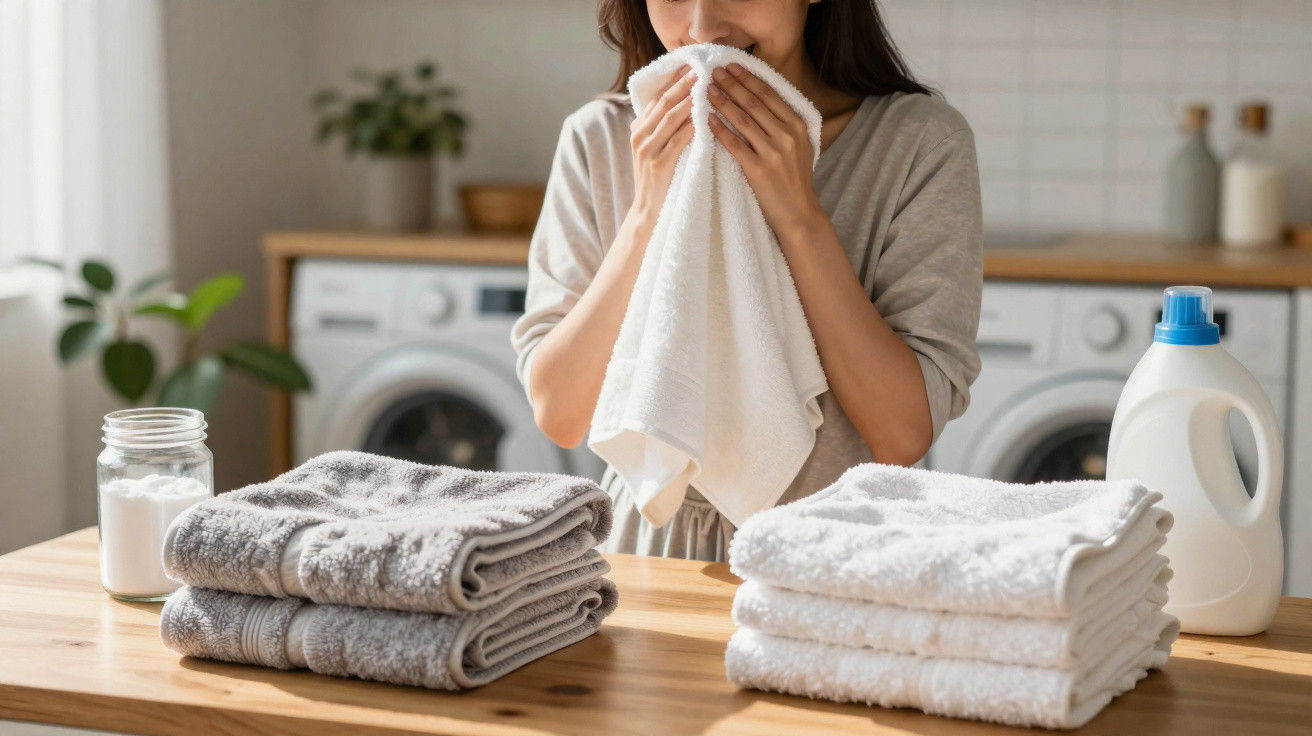
You know that small domestic disappointment: you step from a hot shower, reach for a towel that appears wonderfully fluffy… and it scratches your skin like sandpaper?
You are left dripping on the bath mat, wondering what betrayal occurred inside the washing machine. You assume you did everything properly. You washed the towels, used the “good” detergent and perhaps added a dash of softener scented like a meadow you have never actually seen.
But the towel scrapes rather than comforts. It sticks rather than wraps around you. It feels worn out, old and faintly aggrieved. You begin to question whether adverts have deceived you, or whether you somehow missed the mysterious “laundry gene” that every other adult seems to possess. There is a reason towels become rough, and it is not what most people imagine. It begins with one tiny, well-meaning habit that damages them a little more with every wash.
The moment I discovered my “clean” towels were the issue
I had the revelation in my sister’s bathroom. Staying there for a weekend, I took a towel from the airing cupboard and prepared for the familiar abrasive sensation. Instead, it felt as though I had been wrapped in a cloud that had practised yoga and kept properly hydrated. It was soft, substantial and genuinely absorbent. There was no pulling or catching against my skin. It simply felt… right.
When I returned home, I picked up one of my own freshly laundered towels from its neatly folded stack. It was rough, a little rigid, pleasantly scented and attractive enough to look at, but completely wrong to touch. I had washed it exactly as I always did: as my mum had taught me and as every advert seemed to recommend. Plenty of detergent, a generous helping of softener, a hot wash, finished.
That evening, I messaged my sister: “What witchcraft are you using on your towels?” She laughed, then replied with six words that made me stare at the screen: “I use half the detergent recommended.” Nothing else. No miracle brand, costly fabric softener or eco-guru regime. Simply less.
The unnoticed error: using too much of the “good” stuff
The understated culprit is not bargain towels, hard water or a faulty washing machine. It is putting too much detergent and softener into each wash. The mistake is easy to make: we continue adding product because we assume more cleaning product means greater softness. In reality, we are covering the fibres with a persistent, invisible residue that never fully washes away.
Detergent and fabric softener do not disappear once the programme ends. Small traces stick to the cotton loops, particularly on thick and fluffy towels. Every wash deposits another fine coating. Eventually, these layers become firm, preventing the fibres from doing their intended job: moving freely, breathing and absorbing water.
There is an irony to it. The products that claim to create cloud-like softness can gradually make towels feel like cardboard. We pursue that bottled “fresh linen” fragrance, add an extra splash “just in case”, then ask why everything feels as though it has dried outside during a sandstorm. The issue is not that we wash towels too rarely; it is that we wash them too intensely.
Why towels suffer more than T-shirts
Towels are not like T-shirts or bed linen. The deep cotton loops that make them fluffy work rather like tiny hands, grabbing whatever comes near them: water, soap, softener, minerals from hard water and even lint from other garments. Once residue has begun to collect, it becomes like Velcro for more residue. Your towel stops being merely fabric and becomes more like a sponge full of old soap and conditioner.
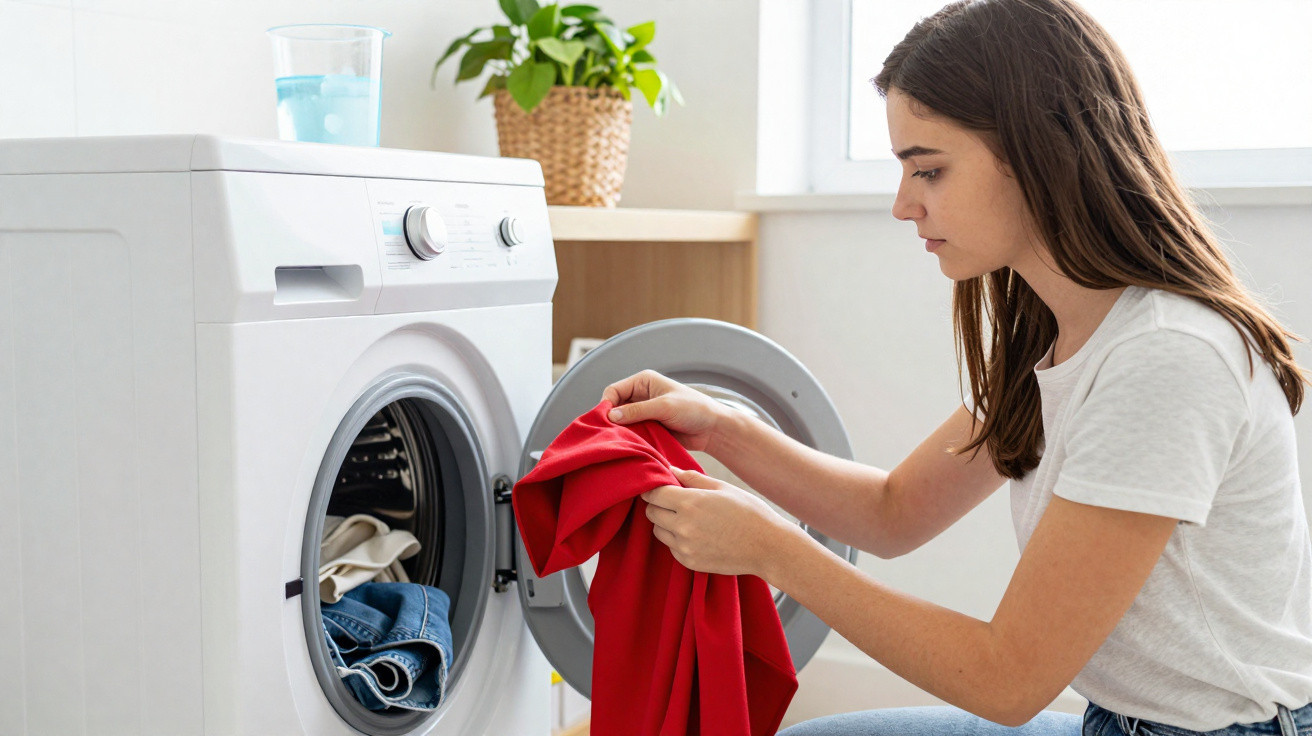
Whenever you choose a short cycle or pack the drum too tightly, the machine lacks the opportunity to rinse out all that grime. The towel may emerge smelling “clean” because it is fragranced, not because it is actually clear of residue. Across the months, the material can feel almost waxy while dry, then turn harsh after tumble drying. It is not your imagination: the fibres are genuinely being weighed down.
The uncomfortable reality of “enough detergent”
Let us be truthful: almost nobody measures detergent with laboratory-like accuracy. Most of us judge it by eye, tip the bottle, scatter in some powder and hope it will do the job. We spot muddy sports clothes or a towel marked with foundation and think, “That’s going to need a proper scoop.” Before long, a proper scoop has become an overfilled one. Then we add a little softener as well, because we prefer laundry to smell like something rather than nothing.
Detergent makers do not do much to discourage this. Their dosing caps are large, while the markings printed on them are vague enough to seem more like guidance than an instruction. There is also a quiet cultural belief that extra product means extra care: that being lavish with the liquid gold makes you a “good” grown-up who knows how to manage a household.
However, modern washing machines are designed to use less water on each cycle. That means an added slug of detergent has nowhere to go. It is agitated around the drum, only partly rinsed away, and then set into the towel by the heat of a tumble dryer or radiator. Your towels suffer during every spin. Then, without you quite noticing the turning point, they move from “well used” to “why does this feel like a Brillo pad?”
How build-up makes towels feel rough
Roughness is not only about surface texture; it is the account your fingertips give your brain about friction. Once detergent and softener coat towel fibres, the fibres lose their natural suppleness. Rather than bending and gliding smoothly over your skin, they pull across it. That pulling is the scratchiness you notice. It is not necessarily dramatic. It is the slight abrasion over your shoulders when you are still half asleep after an early shower.
The same residue also prevents towels from absorbing as they should. If water ever sits in beads on the surface instead of soaking in, your towel is probably suffocating beneath layers of build-up. You rub more firmly to dry yourself, creating additional friction and making the towel feel harsher still. It is a small daily irritation that you may dismiss and forget, although your body continues to experience it as discomfort.
Hard water is another factor, sitting quietly in the background like a supporting character. Minerals in the water attach themselves to the fibres and combine with leftover detergent. Once dry, that pairing can create an almost crisp texture. One day, you notice that a formerly plush bath sheet now makes a faint crunching sound as you fold it, rather like walking on thin ice.
The emotional side of a “bad” towel
We have all had the experience of changing towels before visitors arrive, only to regret it immediately. You hold one, feel how stiff it is and think, “That’s not exactly hotel chic.” It is a minor embarrassment, yet it touches something more significant: we expect softness, warmth and care from everyday household items. A rough towel can feel like a miniature personal failure.
For rushed parents, people living alone in compact flats, or anyone attempting to make a rented bathroom feel more homely, towels are among the few easily available luxuries. You may not own a spa, but you can own a good towel. When that modest luxury becomes scratchy, the illusion is weakened. Life is already busy and a little sharp around the edges; you do not need the laundry to add to that feeling.
The gentle solution your towels have been asking for
Here is the unexpected part: restoring soft towels usually does not require buying something new. It begins by removing things. Less detergent. Less softener. Less cramming of the drum. The answer is almost tediously straightforward, which may be why it is so often missed. There is nothing glamorous about using half a capful and choosing an extra rinse.
First, remove the existing build-up. Many people recommend washing towels on a hot cycle with a cup of white vinegar in place of softener, which can help break down residue and mineral deposits. The vinegar smell does not remain; it vanishes as the towels dry. On the following wash, add only a small quantity of detergent - truly small, rather than “my idea of small” - and avoid softener completely for a while.
Drying also makes a difference. Tumble drying on low to medium heat, with enough space for towels to move around, helps the fibres regain their fluffiness. This is especially effective if you add dryer balls or even two clean tennis balls. If you dry them on an airer or washing line, shake the towels vigorously both before and after drying to release the loops. An additional minute of slightly absurd flapping in the bathroom can leave them noticeably softer.
The single habit that changes everything
The real transformation does not come from vinegar or tennis balls. It comes from changing your thinking: accepting that the cleanest and softest towels are often achieved by using less, not more. That contradicts much of what advertising and inherited family habits have taught us. Pouring, scooping and filling are oddly satisfying actions. They make us feel as though we are doing something.
Once you begin deliberately under-dosing, you see the laundry shelf in a new way. Those large bottles start to look like practical tools rather than trophies. You begin asking, “Do my clothes need this much?” instead of “Have I been generous enough?” Towels, being straightforward little objects, respond rapidly. After only a few washes, they can go from persistently rough to quietly and sincerely soft again.
Why we keep using softener even when it fails
There is a more emotional explanation for why so many of us hold on to fabric softener. Softener is not solely about textiles; it is about fragrance and the feeling of home. That scent of “Fresh Spring Morning” when you open the cupboard carries considerable emotional weight. It reassures you that you are not failing at adulthood, even if you had cereal for supper and the recycling remains by the door.
So when towels become rough, our instinct is to add more of the product that represents comfort. More softener, a stronger fragrance, a thicker blue liquid clinging to the measuring cap. We are not really solving the problem; we are comforting ourselves. The reality is that softener often works against towels by coating the very loops meant to absorb water, helping to cause that dreaded roughness.
You do not have to abandon scent altogether. A lightly fragranced detergent, or a laundry perfume formulated to rinse away cleanly, can provide that “fresh cupboard” sensation without overwhelming the fibres. The important point is to understand softness as something produced by releasing the fabric, not saturating it with product. One bottle is not one answer.
The quiet joy of a truly soft towel
Once you finally get it right, the contrast is almost ridiculously clear. You leave the shower, reach for a towel you had nearly decided was beyond saving, and notice that it behaves differently in your hands. It drapes rather than standing stiffly to attention. On your skin, it has softness and movement again, as if the fibres are welcoming you rather than pushing back.
The first gentle wrap after several weeks or months of roughness can feel unexpectedly emotional. Everyday domestic life contains plenty of minor frustrations: the chipped mug, the creaking door, the lightbulb you continually forget to replace. A soft towel is a small sign that some problems can be solved without spending your way out of them, simply by understanding the cause and carefully reversing it.
The subtle mistake was never that you didn’t care enough about your towels. You most likely cared too much in the wrong way: more soap, more fragrance, more “care” until the fabric could no longer breathe. Once that becomes clear, it is difficult to overlook. Every overly generous glug from a bottle begins to appear slightly suspect.
From sandpaper to softness: a quiet rebellion at home
There is something subtly rebellious about using less in a world determined to sell us more. You stand over the washing machine and intentionally pour half a capful. At first it feels wrong, almost miserly. Then you remember each scratchy towel, every rigid bath sheet that appeared full but felt unkind, and close the lid with a different kind of confidence.
Your towels will not transform in a single night, but they will improve. The loops rise again. Colours appear less faded. The roughness recedes gradually from the edges towards the centre. A few weeks later, you may find yourself enjoying a small but satisfying moment: folding a towel that no longer crackles, passing your hand across it and thinking, “There you are. That’s how you were meant to feel.”
The secret was never some mysterious expensive product. It was having the confidence to believe softness can come from less: less detergent, less softener and less unquestioning faith in the packet instructions. In a steam-warmed bathroom with the fan humming quietly, holding a towel that finally feels kind again, the lesson arrives in the simplest form. You do not need more to feel better. You only need to stop accidentally getting in the way.

Comments
No comments yet. Be the first to comment!
Leave a Comment