
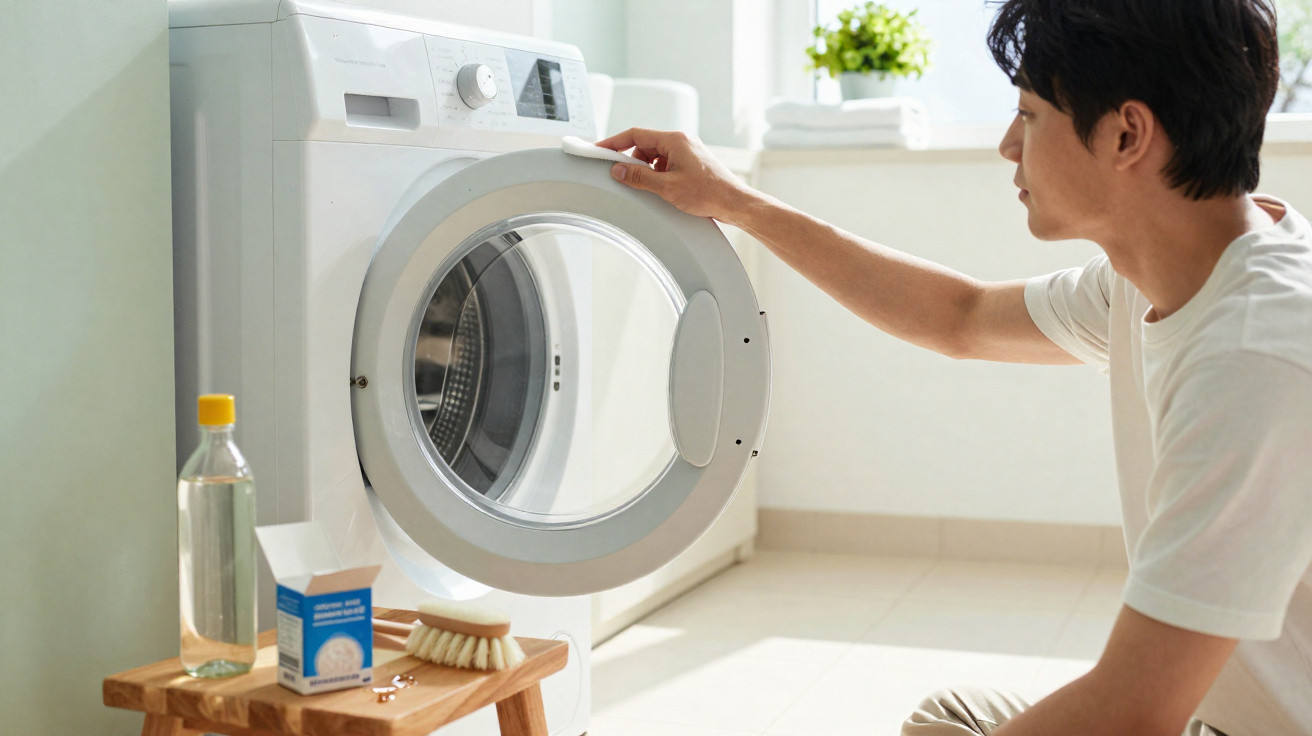
The cycle ends, the drum eases to a stop, and the familiar click of the door unlocking follows.
You open it expecting that satisfying clean-laundry smell… but a slight odour of wet dog and stale socks drifts out instead. You try another wash, this time at a higher temperature. More detergent. Perhaps a scent booster too. Yet the smell remains – or even gets stronger.
Before long, you start asking whether the washing machine is faulty, or whether everybody else's laundry smells just as bad and no one mentions it. Friends recommend vinegar, TikTok recommends dishwasher tablets, and brands insist their pods will solve everything. The puzzle deepens whenever you open the door and get that musty blast. Clearly, something is growing in there: something fond of heat, moisture and darkness.
And simply selecting the “90°C” button will not make it disappear.
Why your washing machine still smells, even after a hot cycle
Approach a supposedly clean washing machine and properly smell the drum. Ignore the fabric conditioner fragrance on the latest load and focus on the metal, rubber and air inside. That acidic, boggy scent is biofilm – the tidy name for layers of detergent deposits, skin cells, body oils and flourishing microbes stuck to concealed surfaces.
Today’s hot washes seldom reach high temperatures for long enough to remove that build-up, particularly eco programmes. The appliance may appear spotless, while grime slowly decomposes deep within the door-seal creases, detergent-drawer channel and around the filter. The hot water merely heats it. Once the door is closed afterwards, the warm and damp interior becomes a miniature spa for mould and bacteria.
A UK survey found that more than half of households noticed an unpleasant washing machine smell at least once a month. Many believed the solution was “another hot wash with extra detergent”. The reasoning sounds sensible: additional heat and soap should mean greater cleanliness. One mother I spoke to in Manchester had carried out three boil washes over one weekend in an effort to remove an odour that “hit you from the hallway”.
What she could not see was the grey slime coating the detergent drawer and the dense lint pancake lodged in the filter behind a small panel near the base. Since the drum gleamed, she believed the machine was clean. When a plumber eventually removed the filter, the odour “could have cleared the street”. Yes, she had been washing baby clothes in it every day.
It is better to view a washing machine as a kitchen sink pipe rather than a kettle. Running hot water through it does not automatically remove years of deposits from the sides. Detergent makers have encouraged colder, shorter programmes, and our washing habits have changed accordingly. As a result, more residue remains in areas with limited water flow: powder that does not dissolve completely, liquid detergent that sticks to plastic, and fabric conditioner that becomes tacky and nourishes mould.
A hot cycle works well for clothing, but does very little for the machine’s hidden workings. The folds of the seal, bends in the pipes and filters will not be scrubbed unless you clean them yourself. With every wash, part of that old sour mixture circulates back into the water, scents your towels and becomes the familiar “washing machine smell”.
How to actually get rid of the washing machine smell – and keep it gone
Begin with a deep-cleaning day, treating the washing machine as an appliance rather than a magical box. Remove the detergent drawer completely, then inspect beneath and behind it. Black marks or slime are likely to be causing the smell. Soak the drawer in hot soapy water, scrub it using an old toothbrush, then rinse and dry it.
Then open the door seal and carefully pull back its rubber edge. Absorb any pooled water and wipe away the dirt concealed in the folds. If the filter panel is accessible at the lower front of the machine, put a tray or towel beneath it, unscrew it and allow the trapped water to drain. Clean the filter thoroughly. Afterwards, run an empty maintenance wash at the hottest setting, using either a specialist washing machine cleaner or a cup of white vinegar in the drum with a sprinkle of bicarbonate of soda in the drawer.
The less exciting daily habits are where most people go wrong, allowing the odour to return. Keeping the door shut between washes traps moisture and creates an ideal environment for mould. Too much detergent leaves behind a sticky coating, while using fabric conditioner with every load blocks the system more quickly. Let’s be honest: nobody really does all of this every day.
Where possible, make a habit of leaving the door and drawer slightly ajar after every wash, even if only by a small amount. Use the measured detergent dose – the mark on the cap, rather than “a bit extra, just in case”. Once a month, run a hot maintenance programme with no washing inside. It may seem wasteful, but it costs less than replacing the machine or calling out a plumber.
“People think a smelly washing machine is broken,” says one repair engineer from Birmingham. “Nine times out of ten, it’s just never been cleaned properly inside. They clean the kitchen surfaces but forget the machine that touches every sock, bed sheet and baby grow in the house.”
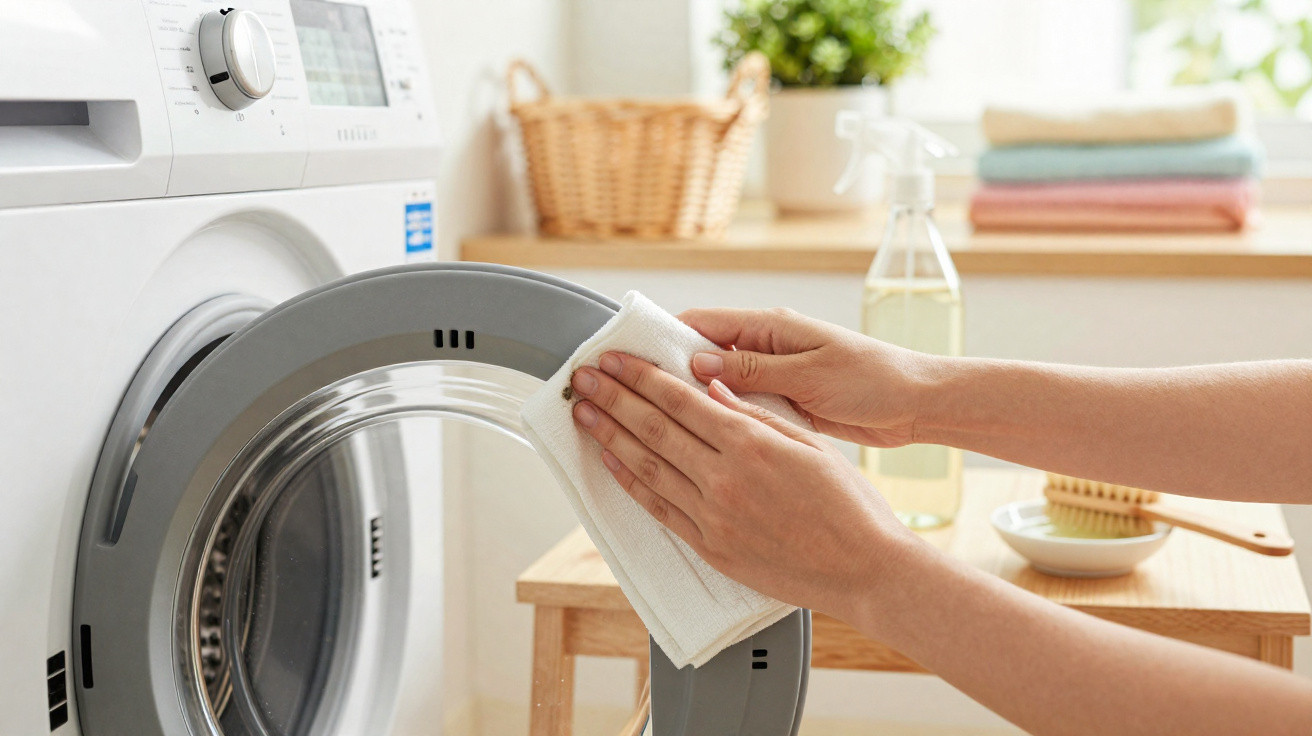
- Wipe the door seal and glass weekly with a microfibre cloth.
- Clean the detergent drawer and its housing every month.
- Run a hot, empty maintenance wash every month or after every 30 washes.
- Limit the use of high-spin programmes to reduce retained moisture.
- Consider replacing heavy liquid fabric conditioners with lighter alternatives or dryer balls.
Living with a washing machine that genuinely smells clean
There is a small yet noticeable lift in mood when laundry no longer smells “slightly off” and instead smells like… very little at all. Simply clean. You open the drum to neutral air, rather than a hint of changing room lurking beneath jasmine fragrance. Towels dry without that lingering damp smell, and the utility room is no longer somewhere you hurry through.
Understanding what happens beneath the surface is oddly satisfying too. Once you have seen the sludge that can accumulate in a filter, you begin to give the machine the same understated care you give a boiler or car. You may start wiping the seal without a second thought, or schedule the monthly hot cycle for the same day as the towels. These small routines sound fussy on paper, but become part of everyday life with almost no effort.
The conversations change as well. When a neighbour sheepishly asks whether your machine ever smells, you have useful answers rather than random hacks. The teenager whose sports kit always had a stubborn funk may finally find their leggings come out properly fresh. A flatmate convinced the landlord must replace the appliance can watch in mild horror as a filter packed with grey fluff and coins reveals the real cause.
Perhaps that is the understated reality of this ordinary household problem: we expect appliances to look after us, while they quietly require some care in return. A little attention, a little cleaning, and a willingness to open the door and smell what is really happening. From the outside, the laundry routine remains the same – tablet in, dial turned, start button pressed. Yet the air released when the cycle finishes tells a different story.
| Key point | Detail | Why it matters to the reader |
|---|---|---|
| A hot cycle is not enough | Modern cycles are shorter and cooler, and they do not reach hidden areas clogged with residue. | Explains why the problem continues despite high-temperature washes. |
| Manual cleaning is essential | The drawer, seal, filter and drum all need regular cleaning using straightforward steps. | Provides a practical plan for getting rid of unpleasant smells for good. |
| Small habits make all the difference | Leave doors ajar, dose detergent correctly, run a monthly maintenance wash and use less fabric conditioner. | Helps prevent smells returning without spending hours on the task or a fortune. |
FAQ
- Why does my washing machine smell even after a 90°C wash? Because hot water mainly circulates through the drum, rather than the hidden corners where biofilm, detergent deposits and mould are attached. These areas require manual cleaning and regular maintenance washes.
- Is it safe to use vinegar and bicarbonate of soda in my machine? For most machines, moderate quantities are safe. A cup of white vinegar in the drum and a couple of tablespoons of bicarbonate of soda in the drawer can help, but do not do this every week and always check the manufacturer’s guidance.
- How often should I clean the filter? Every one to three months is a sensible routine for a typical family washing machine. Monthly cleaning is more advisable if you have pets, wash lots of fluffy items or live in a hard-water area.
- Can smelly washing machines make clothes smell bad even when they’re “clean”? Yes. Bacteria that cause odours and mould spores can remain in the appliance, transferring subtle stale smells to clothes, especially towels, gym kit and synthetic fabrics.
- Is it worth buying special washing machine cleaner products? They may be useful, particularly for an initial deep clean, but they are not magical on their own. The biggest improvement comes from combining them with physical cleaning of the drawer, seal and filter, alongside better daily habits.





Comments
No comments yet. Be the first to comment!
Leave a Comment