
The smell was the first warning.
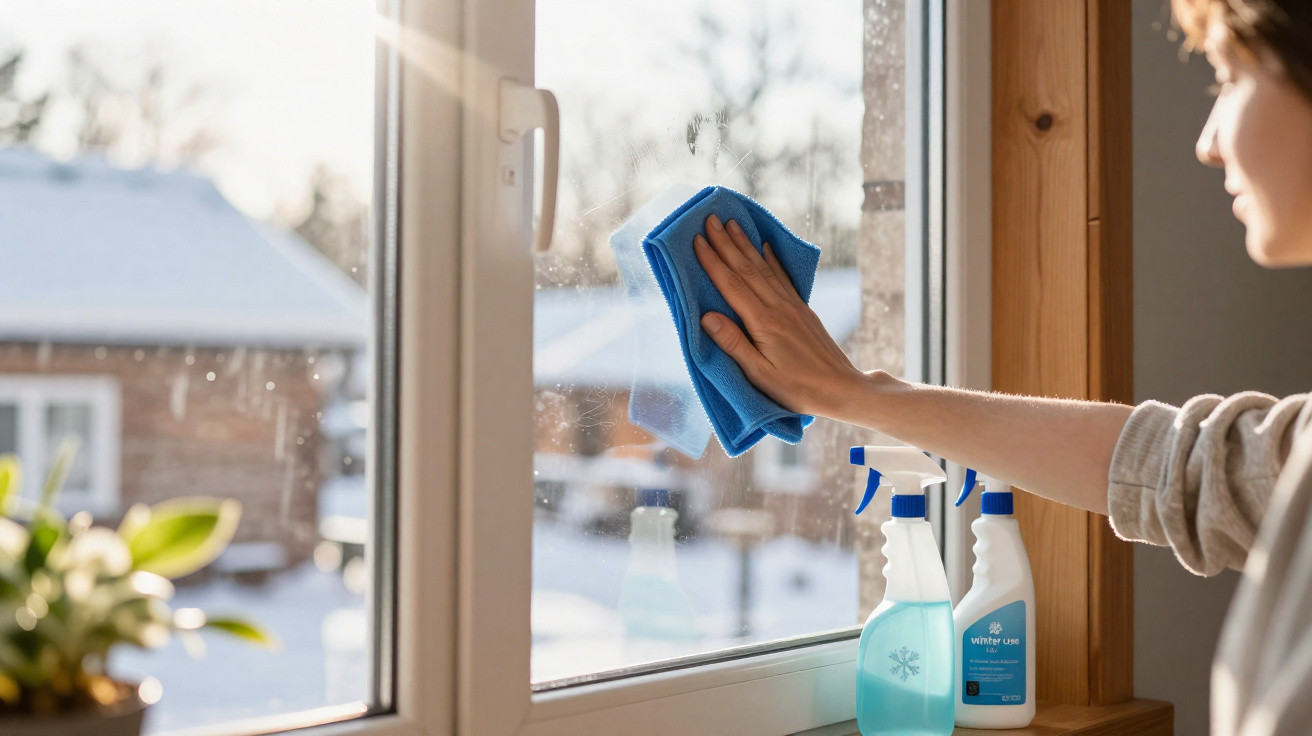
It was that harsh, supposedly “clean” scent that suggests somebody has been scrubbing vigorously for winter. In a compact city flat, a woman cleaned her misted-up windows with the familiar blue glass cleaner kept beneath so many kitchen sinks. Every time she opened the window slightly to clear the steam, January’s air stung her fingers. With visitors due, she worked more quickly, determined to get the panes perfectly clear.
An hour later, daylight faded and the streetlights came on. From the sofa, the window appeared immaculate. Then a car rounded the corner and its headlights passed through the room, exposing the reality: oily rings, ghostly streaks and odd cloudy marks that had not been visible that morning. She sighed, assuming she had “just missed a spot”. But that was not the problem.
What she did not realise was that her preferred winter cleaning product had been quietly reacting to the cold. The real contamination could not be seen.
This everyday winter spray is less harmless than it appears
Each winter, purchases of glass and multi-surface sprays rise sharply. With shorter days, weak sunlight and grime building up on windows, that dull film becomes much harder to overlook. People reach for the same brightly coloured bottle they have trusted for years, relying on its familiar claim of “streak-free shine”. The routine can even feel reassuring: spray, wipe, breathe in the artificial ‘fresh’ fragrance, and consider the job finished.
However, cold air alters the result. When these cleaners land on a chilled windowpane or a metal surface beside a draughty window, the formulation acts differently from how it would in June. Droplets remain in place for longer. Solvents evaporate at different rates. Minute particles stick in places where they should not. To the unaided eye, the surface may appear fine. Yet winter sunshine or car headlights at night can abruptly reveal what is really there.
A London commuter learnt this on a grey Tuesday in February. After using a strong glass spray on the inside of his car windscreen, he went outside into freezing conditions to remove ice from the exterior. The cabin then misted up a little. Running late for work, he got back in and drove away. As the heater warmed the glass while the air outside remained icy, his supposedly clean windscreen developed a blurred film when approaching headlights appeared. His eyes had to work harder, and visibility worsened at precisely the moment he needed it to be clearest.
That smeary glare was not simply dirt left behind. It was invisible residue made more obvious by winter conditions. Research into indoor air quality has indicated that ordinary glass cleaners may leave surfactants and fragrance compounds on surfaces. During warmer weather, these can gradually degrade or disappear during subsequent cleaning. In cold, dry conditions, they are more likely to remain in place, attach themselves to dust, react with humidity and turn glass into a screen that diffuses light.
So which ingredients react poorly to the cold? Many traditional blue glass cleaners and “all-in-one” winter sprays use alcohols alongside ammonia or ammonia-like compounds to dissolve grease. On a warm surface, they tend to evaporate quickly and relatively consistently. On a cold surface, they linger unevenly. Lower temperatures slow evaporation, leaving some droplets wet while others dry first. The chemicals may then shift across the surface and create thin, patchy layers. Add fine household dust and condensation from breathing, and the result is an ideal formula for that unexplained milky haze.
The unsettling aspect is that it may not be visible in ordinary daylight. It often appears only when a particular light source - low sunlight, passing traffic at night or an anglepoise lamp - strikes at the right angle. You then continue applying the same cleaner, coat after coat, gradually creating a film you never intended to leave behind.
How to clean in winter without leaving an invisible film
The positive news is that there is no need to discard half the cleaning cupboard. Winter simply calls for a different approach. Begin with timing: clean glass and smooth surfaces when they are close to room temperature, rather than immediately after opening a window fully or switching off the heating. That one adjustment affects how the liquid spreads and how it dries.
Then reduce the amount of product, rather than lowering your standards. Two or three brief sprays for each window should be sufficient. Allow the mist to sit for five to ten seconds, before wiping it away with a genuinely clean, dry microfibre cloth. A cloth that is even slightly damp or greasy from the previous week’s cleaning will merely spread the residue around. In particularly cold areas, a basic solution of warm water with a tiny drop of washing-up liquid on one cloth, followed by a separate dry cloth, can outperform the eye-catching blue bottle during winter.
On vehicle glass and mirrors, this subtle residue is not merely an aesthetic issue. It can directly affect both safety and comfort. One Canadian survey of winter driving routines found that a significant proportion of drivers admitted they “kinda” cleaned their windscreen before relying on the demister to “sort it out later”. It is easy to imagine how many later reported glare and “mysterious fog” while driving at night.
One family in Oslo even suspected that their car headlights were failing, because the father had to squint so much on winter evenings. The real cause was the inner surface of the windscreen, which had accumulated months of enthusiastic cold-weather glass spraying. After removing the layer with warm water, several drops of vinegar and a fresh microfibre cloth, the change was stark. Streetlights appeared crisper and oncoming traffic was less dazzling. They did not need replacement bulbs; they simply needed less invisible residue between their eyes and the road.
The same residue issue plays out quietly inside homes. Kitchen windows near extractor fans, bathroom mirrors following hot showers and tablet screens cleaned “quickly” with a household spray can all acquire a thin chemical layer. During winter, when windows are kept shut to retain warmth, those deposits remain for longer. They pick up fingerprints, attract cooking vapours and draw in the finest dust circulating through stale indoor air.
The science behind this haze may sound dry in writing, but in reality it feels surprisingly personal. Winter air is generally drier, and when product droplets land on a cold, dry surface, their components can separate. The water content freezes or cools quickly, while active cleaning ingredients remain slightly mobile. They move into microscopic scratches and gather in patterns that remain unseen until a temperature change or particular lighting angle exposes them. Ammonia-based cleaners are especially likely to produce this uneven effect on chilled glass.
Surfactants - the molecules that make water “wetter” and help loosen grease - do not simply disappear once the water has evaporated. Small quantities remain attached to the surface. In summer, additional humidity or more regular cleaning can remove them. In winter, those same molecules may create a lasting film. Over time, they trap indoor pollutants such as cooking vapours and smoke particles. What began as a harmless wipe for gleaming windows can therefore become a sticky screen between you and the world outside.
Smarter winter cleaning habits for genuinely clear surfaces
The easiest winter improvement is to move from a “spray first, wipe second” approach to “cloth first, product second”. Use a dry microfibre cloth initially to remove loose dust and old deposits. Only if the glass still appears greasy should you add a small amount of cleaner. This gentle “dry then damp” method limits the chemicals left behind and prevents fresh product from being layered over last month’s film.
If stubborn winter haze has formed on windows or car glass, use a two-stage process. First, remove the build-up. Apply lukewarm water mixed with a very small drop of washing-up liquid using one cloth, then dry the surface completely with another. Only then should glass cleaner be used, preferably one marked ammonia-free. Clean in overlapping strokes from top to bottom, turning the cloth frequently so that microscopic residue is not pulled from one area of the pane to another.
We have all heard that rooms should be aired regularly in winter. Let’s be honest: hardly anyone actually does it every day. Even so, opening the room for just five minutes after a cleaning session can make a noticeable difference. It allows evaporated solvents to escape rather than remain indoors and later settle on other surfaces as they cool. Smaller items should not be overlooked either: spectacles, phone screens and even TV remote controls can quickly collect the same sticky layers when multi-surface sprays are used on nearby furniture.
“Once I stopped drowning my windows in blue spray and started using two clean cloths and warm water first, the winter haze just… stopped coming back,” says Karen, 42, who cleans holiday rentals in a snowy mountain town. “My guests kept asking if I’d changed the glass. No, I’d just changed the routine.”
For anyone who prefers a simple, clear checklist, it is useful to divide this winter cleaning change into several basic principles. This means there is no need to overthink matters whenever you pick up a bottle. Follow the same understated routine and allow the science to work in your favour.
- Apply less product in cold weather, while prioritising clean, dry cloths.
- Let surfaces warm slightly by cleaning with the heating on, rather than immediately after airing the room.
- Remove established residue once at the beginning of winter using soap and water.
- Choose ammonia-free sprays or a DIY mixture for car glass and bedroom windows.
- Air rooms briefly after intensive cleaning sessions.
| Key point | Detail | Benefit for the reader |
|---|---|---|
| Cold surfaces slow evaporation | Cleaning agents dry unevenly, leaving thin films | Explains why “clean” glass can still appear hazy in winter |
| Less product, more cloth | Use minimal spray and fresh microfibre cloths in two stages | Cuts invisible residue and reduces cleaner use |
| One thorough “strip clean” each season | Warm water + a tiny amount of washing-up liquid resets glass and mirrors | Removes old chemical build-up and improves visibility |
Why this invisible film matters more than we care to acknowledge
There is something quietly disturbing about recognising that your house and car may be coated in a film you cannot see - and that the very products sold to remove dirt created it. It touches on the uncomfortable sense that modern life is filled with “almost clean” surfaces: shiny at first glance, but carrying substances we never consciously agreed to keep. On a dark evening, when low sun catches the living-room window and suddenly exposes strange arcs and cloudy streaks, it can feel as though you have discovered a secret you never wanted to know.
More practically, winter residue encourages us to reconsider what “clean” really means. Is it a chemical smell and a wet shine that disappears rapidly? Or is it glass that does not flare into blurred halos when your teenager drives home through sleet and headlights at night? Those are not the same outcome. One concerns appearance at a single point in time. The other is about how a surface performs quietly under changing light, temperatures and pressures.
This is where the small adjustments make a difference: the extra five seconds taken to dry a window correctly; rinsing a cloth rather than reusing one that has sat in the cleaning basket since autumn; stripping off old layers once each season instead of acting as though they do not exist. None of this is glamorous. It does not resemble the sparkling, fast-forward cleaning videos filling your feed.
Nevertheless, these habits genuinely improve everyday winter life. There is less glare while driving home after a late shift. Laptop screens develop fewer unexplained smudges during long, dark evenings. A bathroom mirror does not turn into a patchwork of fog the moment a shower creates steam. These are modest, almost imperceptible improvements - until you realise that you are no longer squinting at the world through a thin chemical veil.
We have all been conditioned to use the same blue bottle and repeat the same routine, trusting that “what everyone uses” must be correct. Cold air quietly reveals the flaws in that assumption. It shows what the usual product actually leaves behind. Once you have spotted that winter film under the wrong lighting, it is difficult to ignore it again. There is no need to panic; it is simply an invitation to pay closer attention to the surfaces that stand between you and everything else.
FAQ
- Which common winter cleaning product are we really talking about? This mainly refers to traditional blue glass cleaners and multi-surface sprays using alcohol and ammonia or similar agents. They work quickly on warm glass, but are more likely to leave invisible films in cold conditions.
- Is the residue dangerous for my health? For most people, this residue is more of a comfort and visibility concern than a direct health risk. However, it may retain indoor pollutants and fragrances, which can trouble people with asthma, allergies or chemical sensitivities.
- Why do I see haze only at night or in low sun? Residue scatters light at particular angles. Headlights, streetlights and low winter sun can strike the thin film in exactly the right way, making streaks and halos suddenly visible, while softer, diffused light keeps them almost hidden.
- Are DIY cleaners better in winter? A straightforward blend of water, a tiny drop of washing-up liquid and, occasionally, a little vinegar can work extremely well. These mixtures generally leave less sticky residue, particularly when used with clean, dry microfibre cloths and wiped away thoroughly.
- How often should I “reset” my glass to remove build-up? Once or twice over winter is normally sufficient. Carry out a deliberate strip clean: start with warm water and mild soap, dry fully, then use minimal glass cleaner only if required. Afterwards, use products sparingly and take greater care of your cloths.



Comments
No comments yet. Be the first to comment!
Leave a Comment