
A dash of bleach, a spell in the washing machine, a TikTok-famous paste that transforms grimy soles into brilliant white. The before-and-after images seem unbelievable. Your worn-out trainers appear to be just one miracle cleaning trick away from a new lease of life.
But there is a downside. Buried in the comments are stories of yellow marks, weakened glue, headaches caused by fumes and sore skin. Other people question whether sending all that bleach down the drain can genuinely be called “eco” in any sense. The method certainly delivers results. The real issue is what those results cost.
Between the gleaming trainers and their unseen impact, a fresh kind of guilt is taking hold: trainer shame mixed with climate anxiety.
Why this “magic” trainer whitening trick is everywhere right now
You will have seen the videos: someone records their dirty white trainers in a bathroom basin. They add bleach, whitening powder and laundry detergent, scrub furiously, then put the lot through a hot wash. After a ten-second transition, the shoes emerge dazzling white, as though they have just been taken from the box.
The soundtrack is pleasing, the lather signals cleanliness and the transformation is hard to resist. Your mind immediately says, I want that. It promises to remove months of grime, urban dust, festival mud and night-bus marks in a single hit.
On a personal level, the appeal is obvious. Trainers that look fresh can feel like a small reboot for your entire life. Starting a job? Going on a big date? Returning to university? Spotless trainers can seem like a form of armour. That makes us especially open to a social-media stranger offering a shortcut supposedly used by “everyone”.
Look through the replies to these viral clips, however, and another picture emerges. Some viewers say their trainers yellowed a week afterwards. Others report roughened fabric, prematurely split soles or clouded air bubbles. A few describe a sore throat after cleaning in an unventilated bathroom, or rashes where bleach splashed onto their hands or ankles.
Brands are concerned behind the scenes as well. A number of sportswear firms have issued discreet advice against powerful chemicals and high-temperature washing, as both can damage adhesives and synthetic fibres. They do not mention TikTok tutorials directly, but their point is unmistakable: “shock cleaning” your shoes shortens their lifespan.
There is an environmental cost too. Bleach and chlorine-based whitening products do not simply disappear after going down the plughole. In older properties and places with less sophisticated water treatment, residues can reach rivers and coastal water, affecting aquatic life and potentially creating more toxic by-products. Running hot, intensive washes solely for trainers also quickly raises your water and energy use.
Initially, the trick may seem “eco” because it prolongs the life of shoes rather than requiring a new pair. Yet when glue breaks down sooner or material becomes thinner, you end up replacing them earlier regardless. That means further manufacturing, transport and waste. Quietly, the hack becomes part of the fast-fashion cycle it claims to oppose.
How to get nearly the same results without ruining your trainers or the planet
The encouraging news is that trainers can be cleaned remarkably well without a nuclear-level mix of chemicals. This approach is slower and less dramatic on camera, but it is gentler on your shoes and the water system alike. Think of it as a “spa day” rather than a chemical peel.
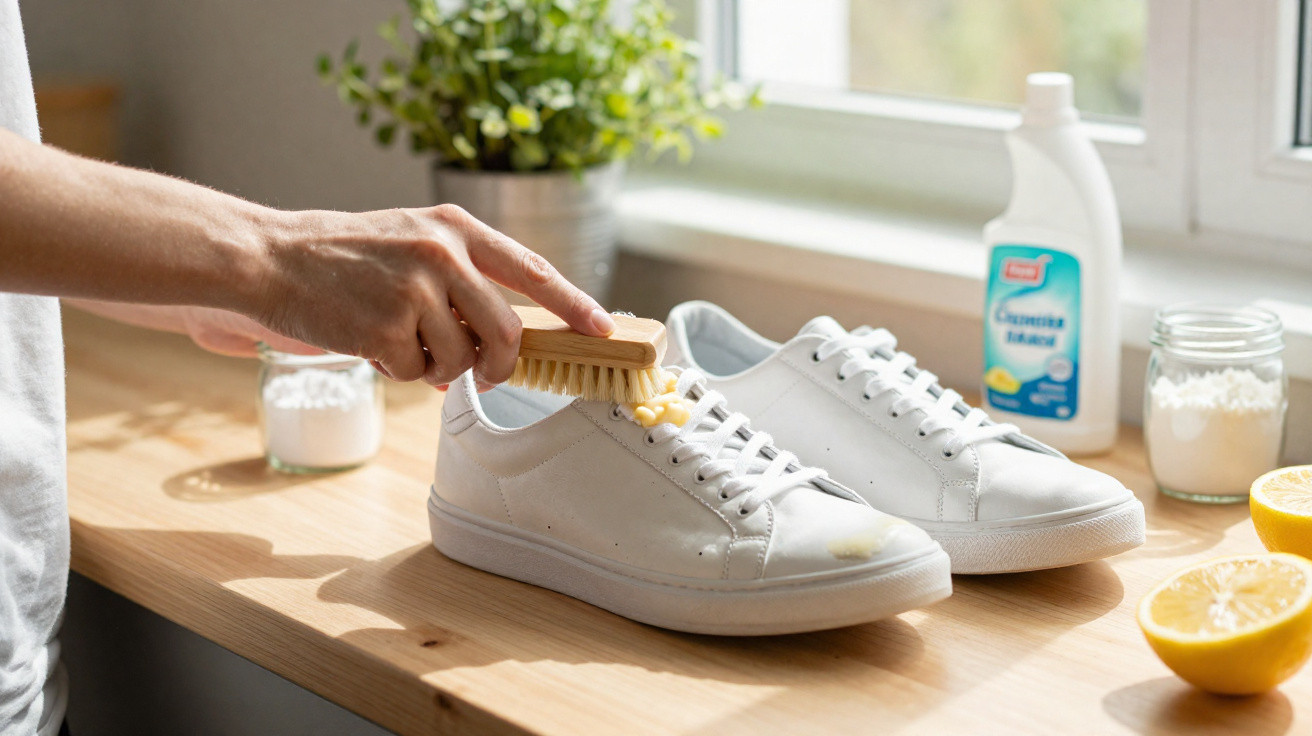
Begin with the basics. Use an old toothbrush to brush away dry mud and dust. Take out the laces and insoles. Combine lukewarm water with a small squeeze of mild laundry detergent or washing-up liquid, plus a teaspoon of bicarbonate of soda. Dip in the brush, clean the fabric using small circular movements, then wipe it over with a damp cloth.
For white rubber soles, a paste of bicarbonate of soda and white vinegar can be highly effective. Apply it, leave it for ten minutes, scrub, then rinse. Allow the trainers to air-dry in the shade rather than in direct sunlight, which is well known for turning white fabric yellow. They may not look perfectly “brand new from box”, but the finish is often impressively close.
This milder routine needs a little more time, which is where many of us struggle. On a hectic Sunday evening, putting trainers through a hot wash with strong bleach can feel like the simpler option. Let’s be honest: nobody really does the careful method every day. Life is messy, and trainers are too.
It helps to set a more realistic standard. Rather than chasing impossible snow-white perfection, aim for “fresh enough to feel good walking into Monday”. If possible, alternate between two pairs, so you do not feel driven to over-wash one favourite pair until it falls apart. If you still want an added hit of white, choose targeted stain pens or oxygen-based, rather than chlorine, whiteners, and apply them only to the worst areas.
Many of us also feel an unspoken embarrassment about dirty trainers. During a commute or in an open-plan office, it may seem as though everyone is silently noticing the mud on your soles. We have all had that moment when we look down at our shoes and feel slightly… neglected. Viral cleaning tricks are designed to tap directly into those feelings.
“The problem isn’t wanting clean trainers,” says London-based sustainability coach Hannah Reeves. “It’s the fantasy that we can erase every stain instantly with no consequence. We’re encouraged to clean in a way that’s invisible to us but very visible in the waste stream.”
This is where modest, practical changes can make a difference. You do not need a spreadsheet or an entirely new personality; you only need a few simple rules that make the less harsh choice the convenient one.
- Store an inexpensive soft brush and a small cleaning kit near the front door, making a 60-second scrub an easy routine.
- Replace chlorine bleach with oxygen-based powders for fabric, treating individual marks rather than soaking the whole shoe.
- Reserve machine washing for genuine emergencies, and always use a cold, gentle cycle with a laundry bag.
These habits are not particularly glamorous. They are unlikely to go viral. But they can quietly help your trainers last another year while keeping a few litres of harsh chemicals out of the water system.
The hidden cost of “brand-new” white trainers
The true compromise behind that controversial whitening method is not obvious at first. Your trainers may look amazing in the mirror, while their construction has already begun to deteriorate. Adhesive gradually loses its hold. Air units become cloudy. Mesh turns brittle. A month later, they feel less comfortable and you are looking for a replacement pair sooner than expected.
From an environmental perspective, trainers are among fashion’s most difficult products to recycle. They combine plastic, rubber, foam, textiles and adhesive. Most are sent to landfill or incinerated. Every additional pair forced into that system by harsh cleaning has a carbon history - oil extraction, manufacturing and transport - that never appears in a 15-second cleaning video.
Health is another concern. Bleach and aggressive whitening products give off fumes, particularly in poorly ventilated small bathrooms. Even if you “only” notice a tight chest or a stinging nose, your body is doing the maths for you. Repeated contact can irritate the lungs and skin, while mixing products carelessly is a recognised way of producing dangerous gases. The hidden cost is not only environmental; it affects you personally too.
So what are we actually pursuing when we take these risks for whiter trainers? A feeling: the sense of being “put together”, clean and respectable. That is entirely human. But the same feeling may be available through a gentler clean, a pair that is “good enough”, and the quiet satisfaction of using fewer harsh chemicals.
Maybe the real flex isn’t trainers that look box-fresh every weekend, but trainers that have survived five winters and still look like you respect them.
And that is what no viral hack can capture: the slow, unglamorous maintenance that adds years to something you already own.
| Key point | Details | Why it matters to readers |
|---|---|---|
| Avoid chlorine bleach on fabric | Chlorine bleach may weaken fibres, cause white textiles to yellow over time and irritate the skin and lungs in rooms with poor ventilation. | Your trainers remain structurally sound for longer, while reducing the risk of yellow marks and breathing problems. |
| Use cold, gentle machine cycles rarely | When machine-washing trainers, use a laundry bag, remove the laces and insoles, and select a short cold wash with mild detergent. | This limits harm to glue and cushioning, so you do not need to replace shoes months sooner than intended. |
| Switch to oxygen-based cleaners for stains | Oxygen whiteners tackle organic stains without chlorine’s harsh by-products; use a brush to apply them to specific areas instead of soaking. | It provides brightening power with a lower environmental burden, reducing the amount of chemicals entering your drain. |
| Air-dry in shade, not in direct sun or on radiators | Strong heat and UV light can distort soles, split glue and yellow white fabric, even when the shoes initially appear to have dried well. | Your trainers stay comfortable and presentable for longer, saving money and preventing unnecessary purchases. |
FAQ
- Is it ever safe to use bleach on trainers? A very small quantity of diluted bleach can work on rubber soles, but using it on fabric is risky. If you do use it, clean in a well-ventilated area, wear gloves, avoid coloured sections and rinse thoroughly. For uppers, most experts now favour mild detergent and oxygen-based products instead.
- Can I put my trainers in the washing machine? Yes, although only infrequently and carefully. Remove the laces and insoles, put the shoes into a laundry bag, add a couple of towels to balance the drum and choose a cold, gentle cycle. Regular machine washing reduces a trainer’s lifespan, so treat it as a last resort rather than a weekly routine.
- Why do my white trainers turn yellow after cleaning? Yellowing commonly happens when bleach reacts with fabric or when shoes dry in direct sunshine. Leftover chemicals may oxidise over time, giving the material an aged appearance. Rinsing well and drying on a clean towel in the shade helps lower the risk.
- Are “eco” sneaker cleaners really better for the environment? Many are, particularly biodegradable options that are low in fragrance and contain no chlorine or optical brighteners. Even so, “eco” is a broad term, so reading the ingredient list and using the product sparingly matters more than the label by itself.
- How often should I deep-clean my trainers? With everyday use, every 4–6 weeks is generally sufficient, with quick spot cleaning between deeper cleans. Constant full scrubs or machine washes wear trainers out more quickly. Brushing them off for 60 seconds when you arrive home delays the need for intensive cleaning.
- Is it greener to clean aggressively or just buy new trainers? In most situations, cleaning gently and making what you own last longer has a lower environmental impact than purchasing replacements. Harsh methods that ruin shoes prematurely send you back into manufacturing and shipping cycles, which have a far greater carbon cost than some extra elbow grease.
Comments
No comments yet. Be the first to comment!
Leave a Comment