
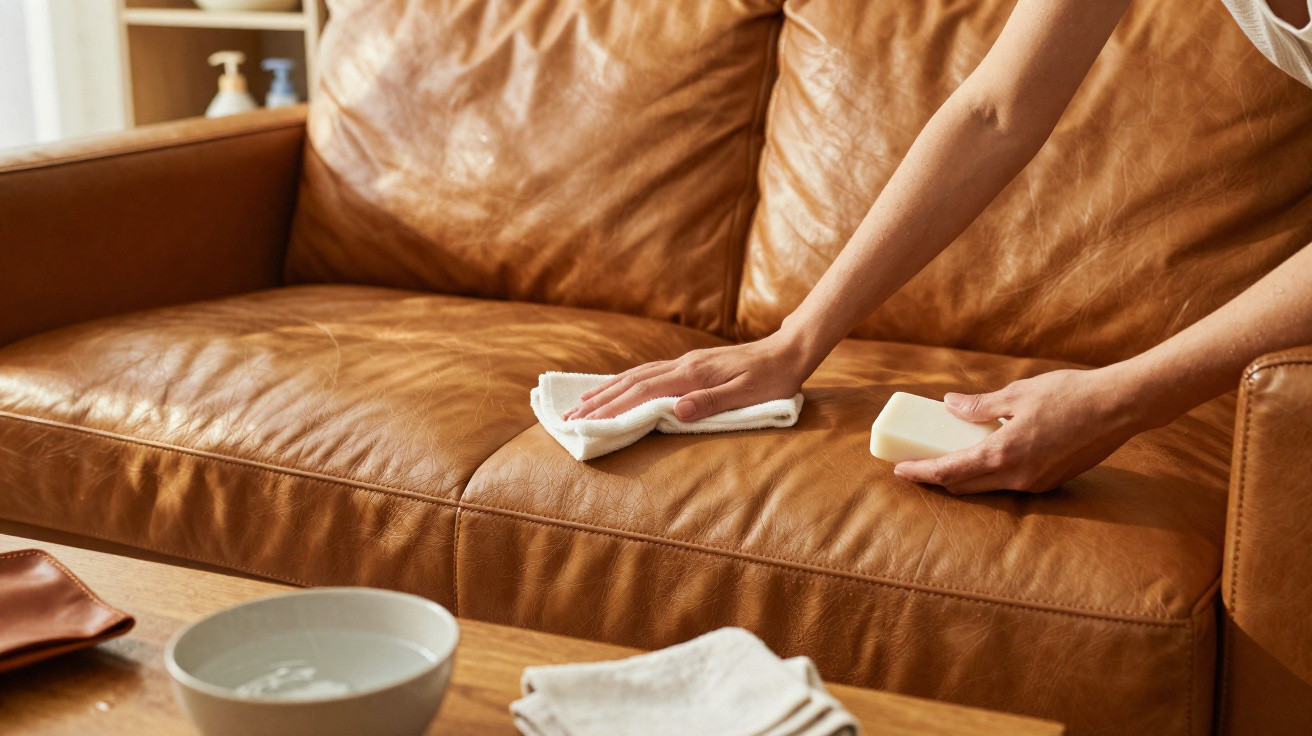
The leather sofa had acquired that unmistakably worn-out look familiar to anyone who has thought, “Wow, that was pristine when we bought it.”
Fine cracks marked the armrests, its former glow had become a flat sheen, and pale outlines of coffee mugs and Sunday meals lingered on the surface. My friend Emma stood beside it, holding a £25 leather conditioner in one hand and a half-empty bottle of another product in the other, frustrated by how much she had spent through the years. Her mum came in, gave a quiet laugh, disappeared to the bathroom and returned with a modest household staple. Ten minutes later, the sofa looked unexpectedly revived. There was no logo or premium packaging involved, only something that may already be under your kitchen sink.
The humble product hiding under your sink
The supposed miracle product is simple: plain, white, fragrance-free bar soap with lukewarm water. It is not an expensive glycerine saddle soap or a spray from a leather specialist, but the ordinary sort of soap you might keep in a guest bathroom. Applied correctly, it removes skin oil, urban dust and food grease from leather, then lifts away without the tacky residue that certain costly cleaners leave behind. This is the sort of tip passed down by grandparents and found in traditional upholstery workshops, rather than promoted in polished Instagram adverts.
Making a gentle lather and working it in with a soft cloth produces a subtle result. The leather is not merely cleaner: it recovers the supple, pleasant feel your hands instantly remember. Instead of fretting about using the “wrong products”, you can see the material respond as you work. This is usually the point when people ask, rather doubtfully: “Wait… that’s literally just soap?”
Emma’s sofa was not the first item to prove the point. A few weeks beforehand, a reader sent photographs of a leather handbag she believed was “beyond saving”. She had bought it for her first proper job, and it had endured rush-hour journeys, leaking pens and three drizzly winters. Two specialist leather foams and a “revitalising” spray that smelt of chemicals and regret had failed to help. The grey cast on the handles, where she always held the bag, would not budge. One evening, however, she watched an old cobbler from Leeds demonstrate the bar soap method on a battered briefcase. After hesitating, she tested it beneath the strap and saw years of grime transfer into the cloth.
She cleaned carefully, centimetre by centimetre, afraid of applying too much pressure. Within 20 minutes, the handles were closer in colour to how they had looked on the day she bought the bag. They were not new again - which would have seemed artificial - but they were clean, matte and respectable. She sent over a before-and-after image, the sort people eagerly share with friends alongside a “You have to see this” message. It is one of those small household victories that leaves you quietly pleased for the rest of the week.
There is straightforward reasoning behind this tale of inexpensive products outperforming costly ones. Leather is essentially treated skin. It does not need to be covered in silicone or harshly stripped each month with solvent-based products carrying luxury branding. Mild surfactants in basic soaps release the oils, perspiration and grime from the street that collect on its surface, while water removes them. There is no need for a mysterious serum.
Plenty of premium products contain fragrance, colourants and extra conditioners that may feel luxurious, but can sometimes disrupt leather’s natural finish. Used sparingly, soap and water work with the existing topcoat found on modern leather items. Rather than adding an artificial layer, they expose the condition already there. That’s why a £1 bar can quietly outperform a £20 bottle that promises the moon in four languages. After seeing the outcome yourself, those marketing promises can start to seem rather noisy.
How to clean a leather sofa with bar soap without damaging it
The successful approach begins with moderation. Choose a plain white bar of soap - fragrance-free where possible - then either shave away a small curl with a knife or lightly rub the bar over a clean, damp microfibre cloth. You want only the faintest lather, not an abundance of foam. Excess bubbles generally mean too much water, which leather dislikes almost as much as radiators and strong midday sunlight.
Begin with an inconspicuous area: beneath a cushion, on the rear of a belt or inside a handbag flap. Massage the area gently in small circles, then use a second cloth that is only barely damp to remove the soap straight away. Finish by patting it dry with a towel. When the colour remains stable and the surface feels smooth, you can proceed to visible areas. Work in sections no larger than your hand. Leather responds best to patience rather than force.
This is the stage at which many people go wrong: they become enthusiastic, scrub with too much force or saturate the leather. With a sofa that has been neglected for years, it is tempting to “really go for it”, as if effort alone could remove a decade of school shoes and takeaway spills. That is how tide marks and dark areas appear. Treat it as drawing dirt out rather than waging war on it. Work slowly, observe the leather’s reaction and pause when needed. Let’s be honest: nobody really does this every day.
If the cloth begins to drag, pause. Add the slightest extra moisture, rather than additional soap. Do not worry if the leather initially appears a little matte either. After drying, a light buff with a soft cloth generally brings back its natural sheen - cleaner, softer and less plastic-looking than the finish left by many commercial “gloss-enhancing” treatments.
“Most damage we see,” says a London leather restorer who’s been at it for 30 years, “doesn’t come from dirt. It comes from people attacking the dirt with the wrong thing. Gentle cleaning, done once or twice a year with simple soap, would save half the items that end up on my workbench.”
Recognising that care need not involve excessive complication can bring a change in perspective. Rather than searching online for lengthy lists of banned ingredients, you start noticing texture, scent and the feel of the surface once it has dried. Anxiety - “What if I ruin this?” - gives way to interest: “What does this piece of leather actually need today?” That shift makes a home feel more considered and less like a showroom you are frightened to mark.
- Use: plain, white, low-fragrance bar soap + lukewarm water + a soft microfibre cloth
- Test first: always use a hidden patch first, then wait 20–30 minutes before cleaning the remainder
- Avoid: coloured soaps, harsh degreasers, baby wipes, alcohol-based cleaners and soaking
- Finish: remove all residue, dry gently, then buff with a clean, dry cloth
- Frequency: carry out a light clean once or twice yearly, and spot-clean after accidents
Why this small leather-cleaning trick resonates
There is a reason this tip travels quickly through group chats. It speaks to the low-level annoyance of paying for supposedly correct products that never quite work, while an everyday item performs better without fuss. More deeply, it offers a small sense of control over the endless stream of purchases we are told are needed to maintain the possessions we already have. A modest bar of soap restoring a scuffed sofa to something you want to sit on again cuts through much of that noise.
It can also alter the way you feel about your belongings. That leather jacket pushed to the back of the wardrobe, associated with former nights out and earlier versions of yourself, takes on a different character when you restore it yourself. Seeing grey creases soften carries an emotional weight, particularly when you realise that the item was not “ruined”, merely overlooked. On a peaceful Sunday, with a bowl of water on the coffee table and a folded towel across your lap, leather cleaning can feel surprisingly meditative. You are doing more than scrubbing: you are choosing what deserves another life.
In practical terms, this low-tech method is welcome news for anyone exhausted by discarding cracked handbags or worn-looking chairs. A proper conditioner may still be useful from time to time, especially for high-quality full-grain leather that needs nourishment as well as cleaning. However, the main work - removing grime and bringing back a surface you want to touch - can be managed with something cheaper than a takeaway coffee. This small revelation often encourages people to view their homes differently, considering what else could benefit from care rather than replacement.
| Key point | Detail | Benefit for the reader |
|---|---|---|
| Basic soap is often enough | A simple neutral white soap cleans leather without harming it | Immediate savings on specialist products and fewer chemicals at home |
| The method matters more than the brand | Gentle washing, minimal water, small sections and careful drying | Lowers the risk of tide marks, discolouration and stiff, cardboard-like leather |
| Maintenance extends the life of belongings | Regular cleaning helps prevent splits, cracking and premature replacements | Protects favourite items, reduces waste and avoids major unexpected purchases |
FAQ:
- Can I really use any bar soap on leather? Stick to plain, white, low-fragrance soap with no bright dyes or exfoliating grains. Highly perfumed or coloured bars can stain or leave residue.
- Will bar soap dry out my leather? Used sparingly and wiped off properly, it shouldn’t. For high-end or very dry leather, follow with a light leather conditioner once the surface is completely dry.
- Is this safe for all types of leather? It works best on finished, coated leathers like most sofas, bags and jackets. Avoid on suede, nubuck and unfinished, raw leather – those need specialist care.
- How often should I clean leather this way? For everyday pieces, once or twice a year is usually enough, with quick spot-cleans when spills happen. Over-cleaning can be as unkind as neglect.
- What if I see colour on the cloth while cleaning? Stop immediately and let the area dry. Some leathers are poorly sealed and can lose dye. In that case, test any product extremely cautiously or speak to a professional restorer.
Comments
No comments yet. Be the first to comment!
Leave a Comment