
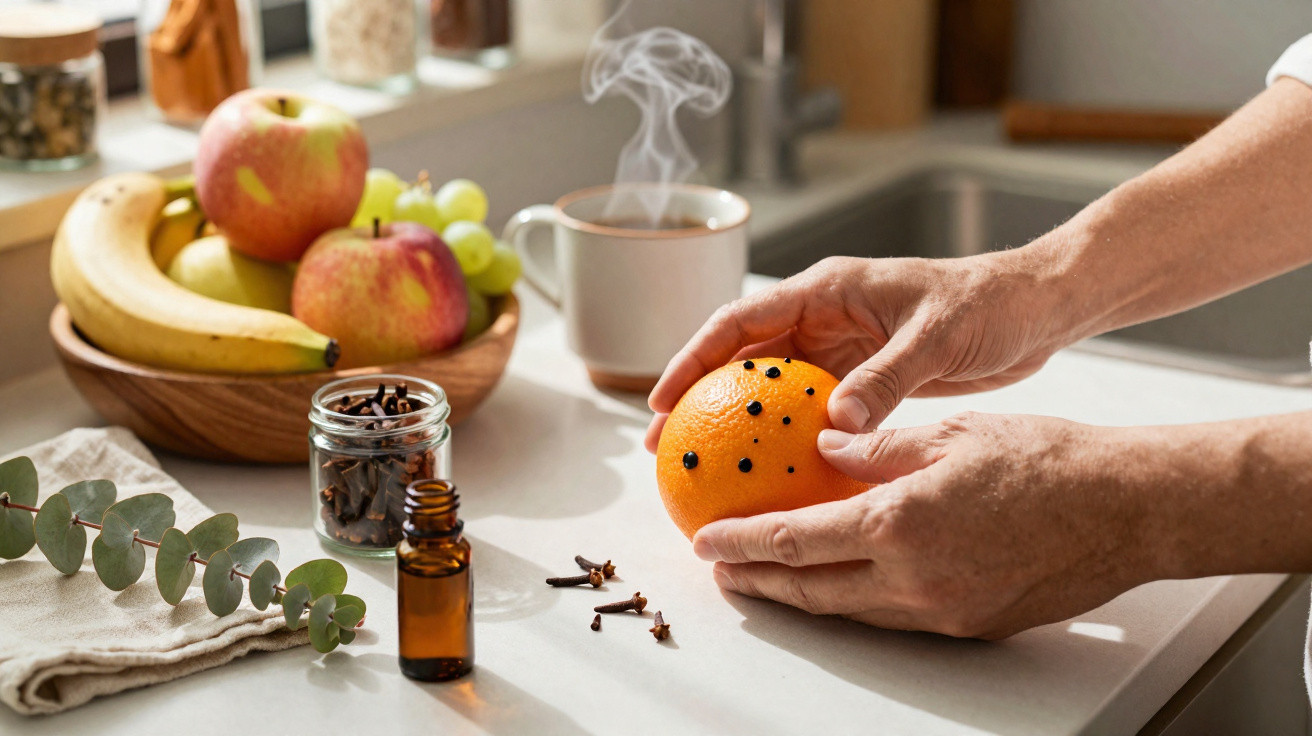
With one simple kitchen scent, you can stop their surge without using chemicals.
It often takes just a weekend for it to happen: the kitchen looks clean, yet a cloud of tiny flies is suddenly circling the fruit bowl, the sink and the food-waste caddy. The good news is you don’t need harsh chemicals or pricey traps. A smell from everyday cupboard staples can throw the insects off, drive them out of the kitchen and, as a bonus, make the room smell fresher.
Why these tiny flies love your kitchen so much
The irritating little specks we usually call “fruit flies” follow a clear scent trail. Ripe or rotting fruit, an uncovered glass of wine, a lukewarm bin - all of it sends unmistakable signals to them.
- Fermenting fruit releases ethanol and acetic acid.
- Open wine, leftover juice or beer contains similar aroma compounds.
- Damp drains and poorly rinsed bottles provide breeding sites.
- Potting compost that stays constantly wet is attractive as well.
A single female fly can lay about 35 eggs a day. With a lifespan of two to three weeks, that quickly adds up to several hundred offspring - and they continue multiplying at the same pace. That’s why a handful of flies can turn into a real infestation in no time.
Many people then reach for sprays. However, the French health authority ANSES has warned for years about the impact insect sprays can have on indoor air in enclosed rooms. Residues can settle into fabrics, on surfaces and in household dust - and a kitchen is about the last place you want that.
"A natural scent that blocks the fruit flies’ ‘noses’ tackles the problem at the root - without spray mist, without poison."
The secret weapon from the spice rack: cloves
The key trick relies on an old classic: cloves. Their effect is mainly down to a compound called eugenol. The aroma is so strong that it masks the signals fruit flies normally lock on to.
Put simply: the tiny insects can no longer properly detect the “smell of a party” - fermentation, alcohol and acetic acid. Their navigation falls apart, they struggle to find food, and they move elsewhere.
This works best when you pair cloves with citrus fruit. An orange or lemon acts as a natural diffuser: the moisture in the flesh helps carry the clove aroma through the room, creating an olfactory “protective shield” around hotspots such as the fruit bowl, the sink or the bin.
"The blend of citrus and clove masks fermentation smells, drives off fruit flies and makes the kitchen feel noticeably fresher."
Quick guide: how to use the anti-fly scent in the kitchen
Option 1: the quiet, long-lasting fix with citrus and cloves
For day-to-day use, a simple, unobtrusive approach is enough:
- Cut a lemon or orange in half.
- Push 15 to 20 cloves into each half.
- Put the halves where the flies are most active:
- next to the fruit bowl,
- on the edge of the sink,
- on or beside the lid of the bin.
- Replace the fruit every three to four days, once it starts to dry out.
For people, the smell stays pleasantly subtle as long as you’re not putting your nose right over it. For fruit flies, it creates an impenetrable curtain of scent. Many people report that the small swarms shrink noticeably within a few days.
Option 2: the “shock effect” with simmered vinegar
If you come back from holiday or host a big celebration and discover a full-blown invasion, a stronger version can help:
- Pour 250 millilitres of white household vinegar into a pan.
- Add about 10 cloves.
- Let it gently simmer for 15 minutes.
- Turn off the hob and leave the pan in the room so the vapour can spread.
The rising steam settles over the room like a scent barrier. Many flies retreat - or simply die - because they can no longer “read” the conditions properly. Combined with clove-studded citrus placed at problem areas, the kitchen usually stays calmer over the longer term.
Other scents fruit flies dislike
Alongside cloves, several other plants and oils can deter fruit flies when used correctly.
A strong ally: eucalyptus
Eucalyptus leaves contain essential oils that many insects find unpleasant. Here’s how to make a brew for the kitchen:
- Add 150 grams of fresh or dried eucalyptus leaves to 5 litres of water.
- Boil for around 15 minutes.
- Allow it to cool, then strain.
- Decant the liquid into a spray bottle.
You can mist worktops, the area around the sink, bin lids and window sills with this solution. The scent fades fairly quickly for people, but insects avoid the treated surfaces for much longer.
Gentle helpers: essential oils to deter unwanted crawlers
If you prefer ready-made oils, there are several options that fit easily into everyday kitchen life in small doses.
- Lavender oil
- Peppermint oil
- Citronella oil
- Tea tree oil
- Geranium oil
A few drops on a small sponge, a cotton pad or a cork is enough. Place these mini scent sources by windows, next to the fruit bowl, along the sink edge, or directly on the bin lid. Use the oils sparingly so the smell doesn’t become overpowering - especially in smaller kitchens.
Without a clean kitchen, even the best scent only works briefly
All the scent tricks in the world won’t do much if the real attractants are still sitting out. If you want to get rid of fruit flies for good, you need to remove their “party zone”.
"Scent barriers work best when you pair them with simple hygiene steps - that’s when the balance tips clearly in your favour."
These routines slow the infestation for the long haul
- Maintain drains: Regularly tip coffee grounds into the drain and flush with hot water. Occasionally follow with a mix of bicarbonate of soda and white vinegar, leave briefly, then rinse through with hot water.
- Keep the bin clean: Wash the inside with black soap or washing-up liquid, let it dry thoroughly, and always keep the lid closed. Take food waste out more often, in smaller amounts.
- No standing water: Empty plant saucers, and don’t leave damp cloths in the sink - hang them up to dry.
- Separate ripening fruit: Store bananas, kiwis, peaches, tomatoes, figs and pears separately once they soften - ideally cool or covered.
- Seal wine and juice: Close bottles tightly with a cork or screw cap, even if there’s only a small amount left in a glass.
An interesting side effect is that many of these habits don’t just reduce flies - they also cut down mould spores, food odours and a range of other volatile compounds in indoor air. People who are sensitive to mixed scents often notice after a few days that the air feels “clearer”.
How safe are these home remedies, really?
Cloves, citrus fruit, vinegar and eucalyptus are generally far gentler on indoor air than conventional insect sprays. Even so, it’s worth using them thoughtfully, particularly around children, pets or anyone with allergies.
- Keep clove-studded citrus out of reach of toddlers and pets.
- With essential oils, a small amount is enough; use strongly scented blends only for short periods.
- Don’t leave the clove vinegar simmering unattended, and air the room briefly afterwards.
For people with sensitive airways, an intense fragrance can cause short-term irritation. In that case, start with a single clove-and-citrus half near the bin and test the effect before adding multiple scent sources at once.
When you apply the methods consistently alongside solid kitchen hygiene, most people notice within a few days that the familiar swarms over the fruit disappear, the air smells fresher, and the urge to reach for harsh chemicals fades away.


Comments
No comments yet. Be the first to comment!
Leave a Comment