
A freshly made bed, clean sheets… yet they feel rough, dull and almost squeaky. When limescale takes hold, detergent alone is no longer enough. This old grandmother trick has been updated without rose-tinted nostalgia to restore softness and brightness to your sheets.
I hold a folded sheet to my cheek and hear that faint, scratchy squeak that only hard water creates. Beneath the laundry detergent fragrance is a distinctly chalky note.
My nan would lift a pan of steaming water, with vinegar misting the windows, and plunge cotton into it like tea bags. I now take the same approach with a modern adjustment and a level head: no boiling and no faff, simply a little chemistry in the sink.
The answer is already in your kitchen cupboard.
Why limescale takes the brightness from quality sheets
Hard water deposits a calcium coating on fibres: invisible to the eye, but unmistakable against the skin. It sticks to the threads, holds on to detergent residue and diffuses light, leaving white sheets grey-looking and colours lifeless. This is why cotton can feel crisp in all the wrong ways.
Across the South and East of England, around 60% of households deal with hard water every day. A reader from Kent replaced her usual fabric softener with a vinegar rinse and said her percale sheets no longer squeaked. After one wash, their sheen returned as if by magic.
The science is straightforward. Calcium carbonate is alkaline and readily attaches itself to fabric. A mild acid breaks down this coating, releases trapped surfactant and allows the fibres to sit more smoothly, so they reflect light properly again. Use too much softener, however, and it creates an additional waxy layer that conceals the issue instead of solving it.
The updated grandmother trick for limescale, step by step
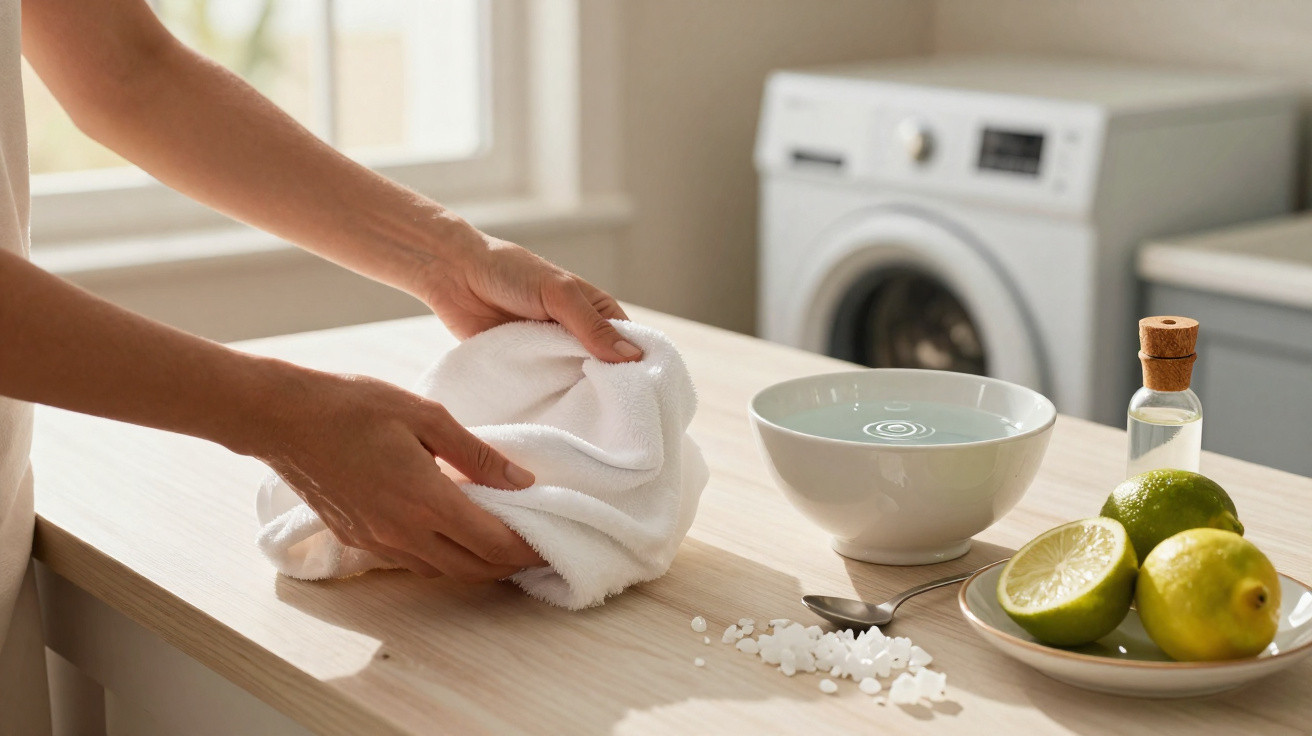
Treat this as a two-stage process: begin with an acid-first soak to loosen the limescale, then use a gentle wash to remove it. Fill a basin with warm water (about 40°C), dissolve 2 tablespoons of citric acid or add 250 ml of white vinegar, then immerse the sheets for 30–45 minutes. Give them a quick rinse before machine-washing them at 40°C with a small amount of fragrance-free detergent.
If lingering smells are a problem, put 1 tablespoon of bicarbonate of soda in the drum and add 100 ml of white vinegar to the softener drawer for the last rinse. There is no cloud of perfume, just genuinely clean laundry. Dry the sheets on a line in the shade to safeguard their brightness, or tumble-dry them with wool dryer balls to plump up the fibres. This is the part that seems like magic.
We have all experienced a bed that looks as smooth as one in a hotel but feels like sandpaper. Where water is especially hard, carry out the acid soak every three to four washes, rather than with every wash. Let’s be honest: nobody actually does that every day.
Common mistakes and simple changes that make all the difference
Never combine vinegar with bleach or oxygen whiteners in one cycle. They serve separate purposes and should not be used together. Be sparing with acid on sheets with elastane edging or fine decorative trims; for these, a brief 20-minute soak will do.
Avoid rich, heavy fabric softeners. They bind the fibres together and trap the dull finish. For linen and bamboo blends, choose citric acid and lower temperatures to keep the weave supple and draping well. With newly purchased coloured sheets, first try a little acid solution on an inconspicuous corner.
Hard water leaves clues that are easy to spot: scratchy towels, cloudy glassware and a mark inside the kettle. If possible, tackle it at its source. Install a simple in-line filter on the washing machine, or run a washing machine descaler through an empty 60°C cycle once a month, preventing dissolved limescale from simply settling back onto your laundry.
“Acid before alkali is the tidy way: lift the mineral, then clean the cloth,” says a textile conservator who treats historic linens in London. “You’re not adding softness. You’re removing the grit that hides it.”
- Citric acid is more powerful and has no scent, while white vinegar is milder and less expensive. Both are effective.
- Use a short soak for elasticated fitted sheets and a longer soak for dense cotton sateen.
- Dry laundry away from direct sunlight to preserve bright whites and accurate colours.
- In tumble dryers, wool balls outperform softener sheets when it comes to softness.
- Reserve bleach for stains, and never use it alongside vinegar.
A simple routine that helps your linen last longer
There is a particular reassurance in a technique that combines old and new. It takes the foundations of nan’s kitchen method and gives them a cleaner, lighter approach suited to modern fibres. There are no boiling pans or mysterious mixtures, only a pause in acid followed by a calm wash.
Once the difference is familiar, you begin to notice the behaviour of fabric itself: cotton can breathe once more, and a duvet settles without the stiff crackle that disrupts sleep. No softener needed, just the removal of mineral grit.
Then it becomes something to pass on: another link in the family chain, shared with a knowing smile and a jug of vinegar beneath the sink. When somebody next rubs a sheet against their cheek and hears that revealing squeak, you will have an uncomplicated solution ready.
| Key point | Detail | Benefit for the reader |
|---|---|---|
| Acid soak first | 2 tbsp citric acid or 250 ml white vinegar in warm water, 30–45 minutes | Removes the limescale coating that leaves sheets dull and rough |
| Gentle wash, light detergent | 40°C cycle, optional 1 tbsp bicarbonate in drum, vinegar in rinse drawer | Washes away minerals without residue or a heavy perfume load |
| Dry smart | Line-dry in shade or tumble with wool balls; avoid harsh sun | Maintains colour and a soft feel while preventing stiffness |
FAQ
- Will vinegar make my sheets smell like a chip shop? A thorough rinse removes the odour. Any slight trace disappears as the fabric air-dries.
- Citric acid or vinegar - which is better? Citric acid is stronger and odourless, making it ideal for very hard water. Vinegar is easy to find and mild. Both break down limescale.
- Is this suitable for coloured sheets and prints? Yes, for most cotton and linen sheets. Test vivid dyes first, and reduce the soak to 20 minutes if you are uncertain.
- How often should I soak the sheets? In hard-water areas, every three to four washes is sufficient. With soft water, once a season will keep sheets bright.
- Can I use this alongside bleach or optical brighteners? No. Acids and bleaches must be kept for separate cycles. If needed, use oxygen whiteners on another day.



Comments
No comments yet. Be the first to comment!
Leave a Comment