
Anna pulled open the detergent drawer with one hand while holding her phone in the other, then paused at the sight of the small, stubborn plastic flap at the back. She brushed away the dried powder surrounding it, thought twice, and slid the drawer shut without investigating the unfamiliar part. As usual.
Her jeans emerged looking faded, while the towels felt coarse. She blamed the detergent, its manufacturer and even the water supply in her block of flats. It never crossed her mind that the inconspicuous plastic component she had overlooked for years might be responsible.
Most people cannot name this part, never mind explain its purpose. But it quietly determines whether laundry comes out brilliantly clean or merely “meh”.
The hidden part in your washing machine drawer
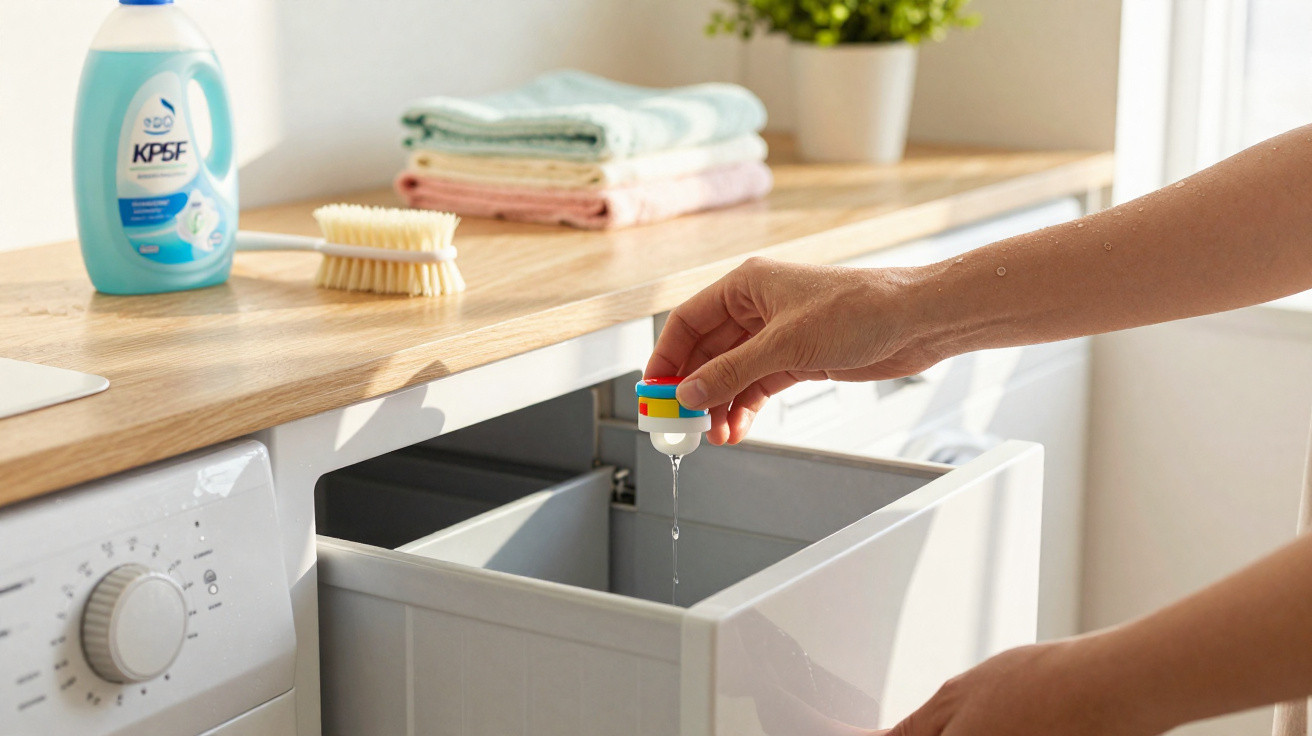
Pull open the washing machine drawer and examine it carefully. Most modern appliances have three sections: one for pre-wash detergent, one for the main wash, and a smaller compartment, often containing a blue or otherwise marked plastic part that appears almost ornamental.
That supposedly “decorative” item is generally the fabric softener siphon insert. It may be a cap, a small tower or a removable flap with a tiny opening. Although its form differs between manufacturers, its function remains the same. It is effectively the drawer’s control centre, discreetly managing when and how fabric softener enters the drum.
Without it, the product will not be dispensed at the correct point in the cycle - or may not be dispensed at all.
In a suburban laundrette on a wet Tuesday, a technician removed one and held it out in his palm, like a magician exposing a card trick. He showed a customer that her softener compartment was still almost full after the programme had finished. “You see? It never left,” he said calmly, turning the part over to reveal a hardened layer of sticky blue residue.
For months, she had complained that her clothes “never smell like the bottle”. She had switched brands, used twice as much product and dried her laundry on the balcony. All along, the problem was a blocked siphon insert in the drawer.
Manufacturers receive countless calls about supposed “detergent problems” that have nothing to do with detergent. One large European brand reported that a substantial proportion of complaints involving poor rinsing or fabric softener “not working” result from drawer components being incorrectly fitted or insufficiently cleaned.
From a technical perspective, the small component forms a siphon system. During the softener stage, water enters the compartment and gradually raises the liquid level. When it reaches a set height, the insert’s design creates a small rush of water, drawing the whole contents into the drum in one movement.
When the insert is absent, fitted upside down or clogged with residue, this siphon action cannot occur. Water dribbles through instead of properly flushing the compartment. The softener may therefore leak out too soon, or remain in place until you open the drawer and find it still full.
This is why the same washing machine can suddenly seem “weaker” despite no obvious fault. Very often, this overlooked component has simply stopped working as intended.
How to use the fabric softener siphon insert correctly
Start by pulling the drawer out completely. Many machines require you to press a small catch before it can be fully removed. Hold it in your hands as though you are examining it for the first time. Locate the fabric softener section - usually identified by a flower symbol or the “III” marking - then find its removable insert.
Remove it and rinse it beneath hot water. Use your fingers or a soft brush to gently clear the small hole or slot. You may be surprised by how much slime and product residue comes away. Once clean, click or slide the part back into precisely its original position, checking that it lies flat and is secure.
For the next wash, stay below the maximum fill line. The small ridge or marking inside the compartment is not there for appearance. Filling beyond it activates the siphon too early, releasing the softener at the wrong point in the programme.
Let’s be honest: hardly anyone does this every day. Most people never take the drawer out at all. They add the products, close it and hope everything works. So when towels become rough and T-shirts seem older than they should, few people think to inspect that quiet plastic component.
The usual mistake is assuming that “more product equals better wash”. As a result, people flood the small compartment. Fabric softener then drains away during the pre-rinse rather than the final rinse. The outcome is clothing with a strong scent but little softness, alongside a machine that gradually accumulates residue.
Another widespread mistake is discarding the insert during a major clear-out of spare parts and accessories. Some people assume it is packaging or a detachable transit component. Once removed for good, the softener can no longer be dosed properly and the entire system loses its accuracy.
One washing machine engineer explained it like this:
“On the phone, people are convinced their machine is dying. In half the cases, I just ask them to clean or reinstall that little insert in the drawer. Ten minutes later, their ‘broken’ machine magically works better.”
In practical terms, this is what the component changes in everyday use:
- It ensures the softener enters during the final rinse rather than beforehand.
- It stops product from remaining trapped in the compartment indefinitely.
- It helps prevent thick deposits that can develop a musty smell over time.
- It makes sure every capful of softener reaches your laundry rather than going down the drain.
Once you have watched it work - with the product level dropping at exactly the right moment - you will never see the drawer in quite the same way.
What happens when you look after this small washing machine part
There is an amusing change once you finally understand the purpose of this component. You begin pulling out the drawer with a new level of awareness. Instead of pouring products in at random, you treat the compartments as purpose-built tools rather than indistinct plastic containers.
Some people say their machine feels “newer” after the drawer has been properly cleaned and the siphon insert put back in place. The fragrance of the softener suddenly matches the promise on its bottle. Towels feel less like cardboard when they come out. Whites do not turn yellow as quickly, because detergent and softener perform their jobs at the proper stages rather than combining into a muddled mixture.
This small component also reshapes the way you think about maintenance. That brief monthly routine - remove it, rinse it and click it back into place - can quietly help extend the life of your machine, without requiring any technical knowledge. It takes no longer than a song on the radio.
| Key point | Detail | Benefit for the reader |
|---|---|---|
| Identifying the part | A small insert or cap in the fabric softener compartment, often removable and marked | Knowing what to check when washing seems less effective |
| Regular cleaning | Rinse with hot water and lightly brush it once or twice a month | Better fragrance and softness, while reducing “phantom” faults |
| Correct dosing | Do not exceed the “max” line so the siphon can work | Avoiding wasted product and making the most of every wash cycle |
FAQ:
- What is this removable part in my softener compartment actually called? It’s usually referred to as a fabric softener siphon insert or softener cap, and it controls the moment when the product is released into the drum.
- Can I run the machine without this insert? Yes, the machine will still turn, but the softener will often empty too early or not leave the compartment properly, which means poorer washing and rinsing results.
- How often should I clean the drawer and this insert? For most households, once a month is enough, more often if you use thick softener or wash at low temperatures a lot.
- Why is my softener compartment always full after the wash? Most of the time, the siphon insert is clogged, incorrectly positioned, or missing, so the flushing effect can’t happen during the rinse phase.
- Does this apply to all washing machine brands? The shapes and symbols vary, but almost all drawer-type machines use a similar siphon system for the softener compartment, whatever the logo on the front.


Comments
No comments yet. Be the first to comment!
Leave a Comment