
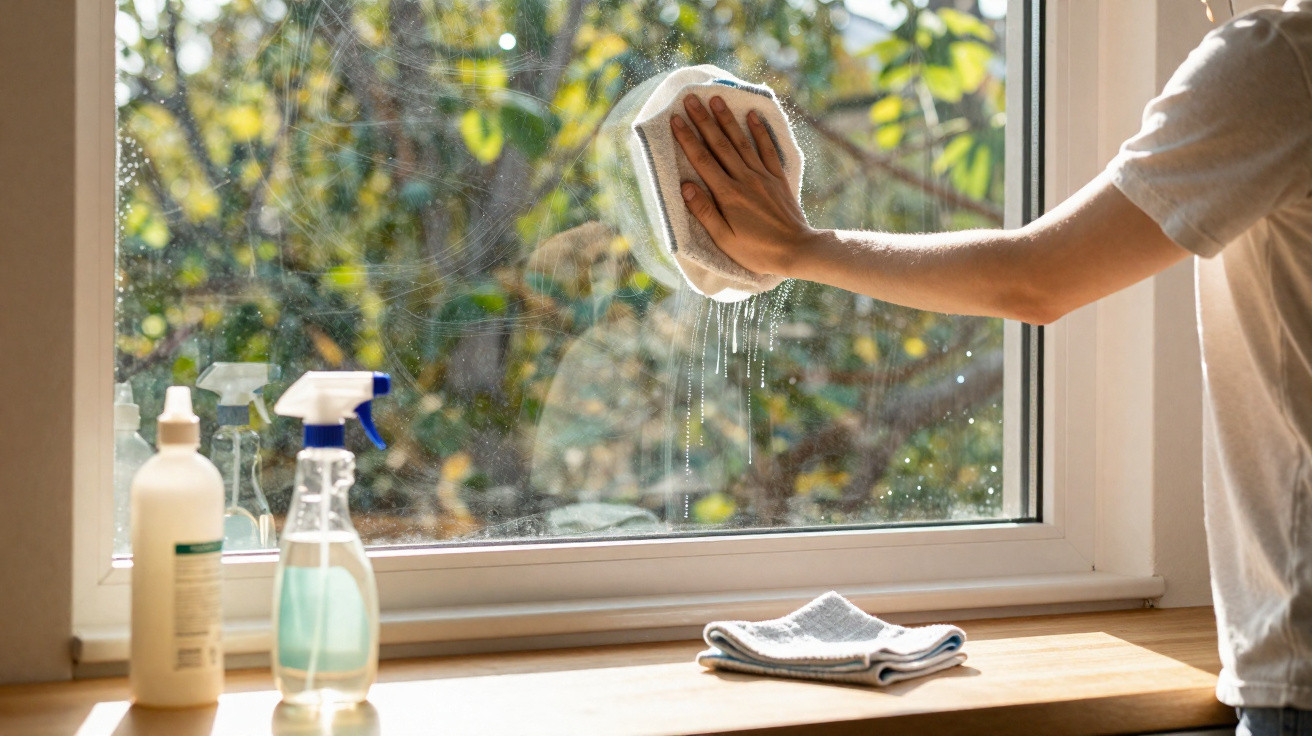
A straightforward cleaning routine is rapidly gaining followers across social feeds and group chats.
Homeowners say it leaves window panes clearer while using fewer products and requiring less scrubbing. Rather than relying on elbow grease, the technique depends on good timing, basic chemistry and a gentle hand. Here is how it works, why streaks repeatedly appear, and how to adjust your routine to prevent them properly.
Why streaks keep coming back
Streaks are not usually caused by dirt alone. They develop when residue remains on the glass after wiping. An unsuitable cloth can shed microfibres, hard water can leave mineral deposits, and greasy films may be spread around instead of removed.
Heat compounds the issue. In direct sunlight, the liquid evaporates before it has time to loosen the build-up. Wiping a partly dry pane then produces drag marks. Heavily fragranced products and other additives may also leave behind a misty layer that makes glass look dull.
Streaks signal residue and rushed evaporation, not a lack of effort.
The simple three-part formula
This viral routine reduces the cleaning kit to three ingredients: water, white vinegar and a small amount of household ammonia. Each has a distinct purpose. Water carries the mixture and wets the surface, vinegar tackles minerals, and ammonia deals with greasy fingerprints and city soot.
| Job | Water | White vinegar | Household ammonia | Notes |
|---|---|---|---|---|
| Regular interior panes | 500 ml (2 cups) | 30 ml (2 tbsp) | 5 ml (1 tsp) | If your water is hard, use filtered or demineralised water. |
| Greasy kitchen glass | 500 ml (2 cups) | 45 ml (3 tbsp) | 10 ml (2 tsp) | Ensure good ventilation; wipe without delay to prevent haze. |
| Coated or tinted glass | 500 ml (2 cups) | 30 ml (2 tbsp) | 0 | Leave out ammonia and test a corner first. |
Go light on concentration. A mild solution dries clean and limits residue.
Water, the carrier
Water dampens dust so that it lifts away instead of smearing over the pane. It dilutes the solution and helps it cover the glass evenly. Where limescale is a common issue, filtered or demineralised water can help reduce mineral spotting on larger windows.
White vinegar, the mineral fighter
White vinegar breaks down deposits of calcium and magnesium. It loosens old cleaning-product films and reduces mild cloudiness. Its smell dissipates quickly when there is airflow. It may also discourage insects around window frames, reducing the likelihood of fine droplet trails appearing later.
Household ammonia, the degreaser
Used in very small quantities, ammonia cuts through oils, smoke deposits and traffic grime. Because it is alkaline, it can lift grease without scrubbing when properly diluted. Always provide ventilation and avoid using it on delicate coatings. Never combine it with bleach or chlorinated products.
Step-by-step method for a clear finish
Choose the right time to clean. Stay away from the hottest part of the day and from direct sunlight. Cooler glass allows the mixture to work before it dries too quickly.
- Remove dust first: When panes are dusty, wipe them with a dry microfibre cloth before cleaning. This avoids creating mud-like smears.
- Spray sparingly: Apply a light, even mist from top to bottom. Soaking the glass delays drying and increases the risk of streaks.
- Wipe in straight lines: With a clean, dry microfibre cloth, make straight top-to-bottom passes. Turn the cloth over regularly.
- Use a squeegee if needed: On large panes, draw a squeegee across in overlapping strokes, wiping its blade after every pass.
- Make a polishing pass: Use a second dry microfibre cloth to buff areas that catch the light, along with the edges and corners.
Two cloths beat one: one for the first wipe, one dry for the final polish.
Pro tricks that prevent streaks
Looking after cloths is important. Wash microfibre cloths without bleach or fabric softener, as these products block the fibres and reduce their absorbency. Let them air-dry, and keep a dedicated set exclusively for glass.
A lighter dose is more effective. Stronger solutions do not improve cleaning results on glass; they simply leave more residue to smear. Stick to the mild ratios above and prioritise your technique.
Clean one section at a time. Mist it, wipe it and move on before it dries patchily. Replace your cloth when it starts to feel damp. A damp cloth drags across the pane and leaves shadowy marks.
Safety rules you must respect
- Open windows on opposite sides of the space to create cross-ventilation before beginning.
- Wear gloves if cleaning products irritate your skin.
- Test a small corner first when glass has films, tinting or anti-reflective coatings.
- Keep ammonia stored separately from bleach and pool chemicals.
Never mix ammonia with bleach. The combo releases dangerous gases.
When glass is very grimy
For heavily soiled glass, use a two-pass approach. On the first pass, mist and wipe away the thickest film without trying to achieve a perfect finish. For the second, apply another light mist and polish with a clean, dry microfibre cloth. This stops you from continually moving the same dirt around the pane.
Stubborn residue often collects around the edges. Wrap a microfibre cloth around a plastic scraper or an expired bank card, then run it along the frame line to remove deposits that could otherwise seep back onto the clean glass.
Why this recipe works
The mixture meets three cleaning needs at once. Water moistens dust and spreads the solution, while vinegar lowers the pH and loosens mineral films responsible for dullness. Ammonia boosts the cleaning action against oils without leaving a surfactant layer when used mildly. Combined with clean microfibre cloths and well-timed wiping, this lets the pane dry without residue left behind to smear.
Extra gains that may sway your routine
This method can substantially reduce both cost and waste. One spray bottle and a few cupboard ingredients can replace several specialist cleaners. It also reduces lingering fragrances in indoor air, which can attract dust. For an ammonia-free option, use 10 ml of isopropyl alcohol for every 500 ml of water and 30 ml of vinegar. It evaporates quickly on mirrors and glass that is safe for phones.
Adapt the method to the type of glass. Low-e, tinted and mirrored surfaces can be cleaned using the water-and-vinegar mixture alone. Before cleaning exterior panes beside busy roads, rinse them with plain water to remove grit. This limits fine scratches and allows the cleaner to focus on the film that is actually visible.
The season and local climate also affect the process. In dry heat, mist smaller areas so evaporation does not get ahead of you. In humid weather, use less solution and apply firmer pressure to the squeegee. In homes prone to condensation, clean the frames and weep holes at the same time; blocked drainage channels can send dirty drips back over freshly cleaned panes.
To maintain a simple routine, set a schedule rather than waiting until glare exposes the streaks. A quick monthly clean indoors and a quarterly clean outside will keep residue layers thin. Thinner films come away more easily, meaning fewer wipes, less product and a clearer view as the light changes.



Comments
No comments yet. Be the first to comment!
Leave a Comment