
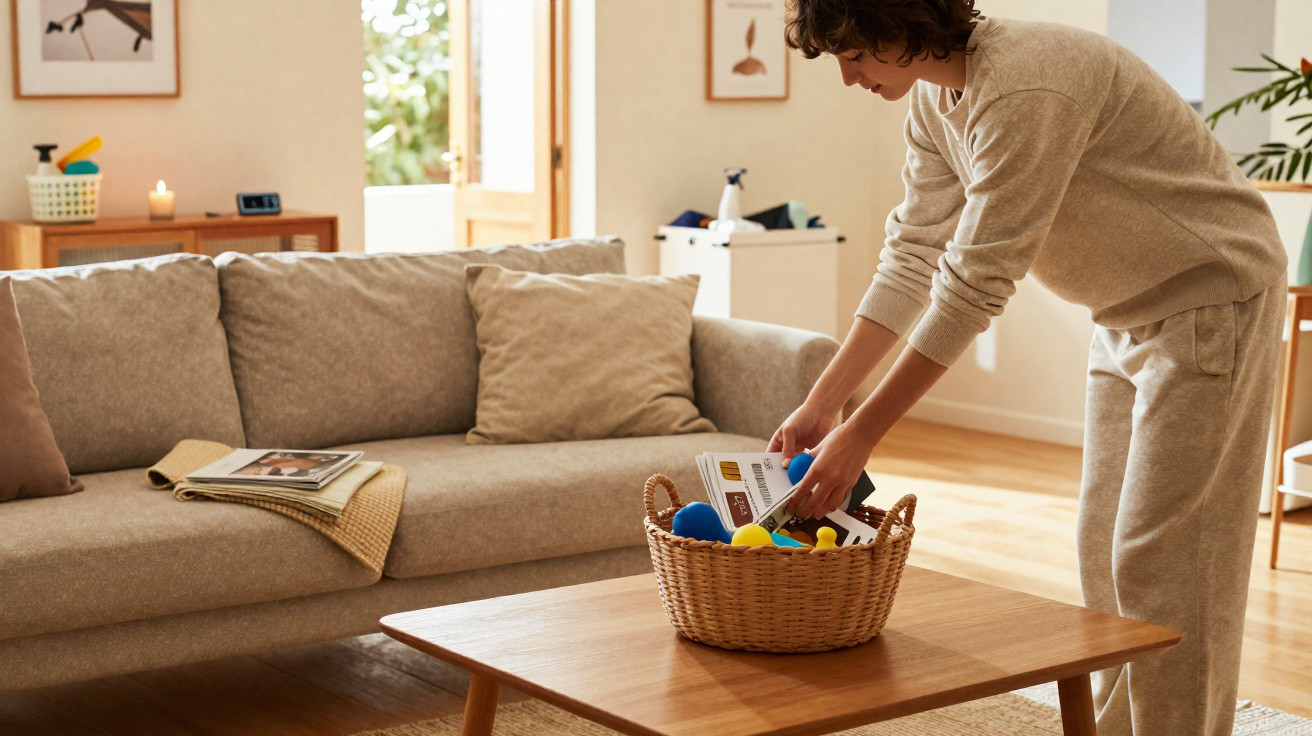
The last time my phone vibrated with “We’re five minutes away!”, I was barefoot at the hob, stirring onions that had chosen to scent the entire flat with evidence of last night’s decisions. Clean socks were spread across the radiator, and a Lego figure stood watch on the coffee table as though it paid rent. That familiar, fizzy panic started to rise.
We have all had the doorbell moment: your eyes race through an audit of every life choice, beginning with the heap of shoes. I no longer wanted the constant jolt, the apologetic grin, or the frantic stuffing of clutter into the nearest tote bag. So I created a cleaning schedule designed not for immaculate perfection, but to help me say, “Come in!” without recoiling. Magazine-perfect was never the target. I wanted guest-notice-ready. That distinction changes everything, beginning in the hallway.
The panic text that created my cleaning schedule
It started with a Sunday roast I had forgotten I was hosting. Two friends, a toddler, a bottle of red, and ten minutes until they arrived. I whirled around the flat: plumping cushions, sweeping crumbs into my palm and replacing the loo roll. Once they had gone, I wondered whether it was possible to live just five minutes from being ready on most days. Not every day. Most days.
That idea became a cycle of small rituals that do not consume an entire evening. I was not attempting to “do it all”. What I needed was a few essential jobs to carry me through the week, alongside a rotation for everything else. Less guilt, more routine. The answer was not working harder; it was deciding what guests actually see and, more importantly, what helps me feel at peace.
Front of house and backstage: what guests see
A theatre-working friend once told me that new staff are taught one simple idea: the audience sees the front, not the wings. Applying that to a home was a revelation. Your front of house is the hallway, loo, living room and kitchen worktops. Backstage includes bedrooms, the laundry corner and that cupboard where extension leads go to die. Visitors are not going to explore your airing cupboard, and you should not fear it either.
When the hallway is calm, the whole home seems clean. Gather shoes into a basket, stack post in a tray, wipe the mirror and enjoy the small miracle of a doormat that gets used. In the living room, reshape the cushions, fold the throws and remove everything from the coffee table except a book or remote control. Kitchen worktops should be clean, or at least headed that way. The loo can reach acceptable glory with a quick swish and wipe. This is your stage.
Backstage spaces still get dealt with, but according to the schedule rather than in a panic. I gave up acting as if every wardrobe rail could be perfectly arranged every day. That left me free to keep the rooms people occupy straightforward, without berating myself for owning a “misc” drawer. Even so, it is surprising how much quieter your own mind becomes when the front of house is gently under control.
The anchor habits that work on autopilot
The core of the system is a set of morning and evening anchors, small enough for both the days when you feel capable and those when you do not. In the morning, make the bed, open a window for three minutes, throw any hovering laundry into the hamper and clear the sink. In the evening, run the dishwasher or fill it up, sweep away crumbs quickly and spend three songs tidying the living room. The music matters. Put the kettle on and count that as encouragement.
These anchors create dependable beats around which everything else can move. They are wonderfully boring. Put one mug in the dishwasher now rather than building a balancing act later. Wipe the bathroom sink once while the shower heats up. This is what transformed things for me: I stopped “cleaning” and began resetting. It takes less time than scrolling through somebody else’s spotless utility room.
There is also the nightly sink reset. It may be old-fashioned, but it works fast: hot water, a clean cloth and a swift wipe across the hob after a particularly enthusiastic supper. The kitchen no longer smells like Tuesday. It need not gleam; it simply needs to stop muttering at you.
The weekly loop: a 20-minute rotation
The weekly schedule is a cycle rather than a rulebook. Spend roughly 20 minutes each day, five days a week, with a different focus for each day. The goal is not “I do everything”, but “everything gets its turn”. Let’s be honest: no one really does this every day. Yet when you miss a day, the loop still moves on. Just rejoin it from wherever you are.
Monday–Tuesday: surfaces and floors
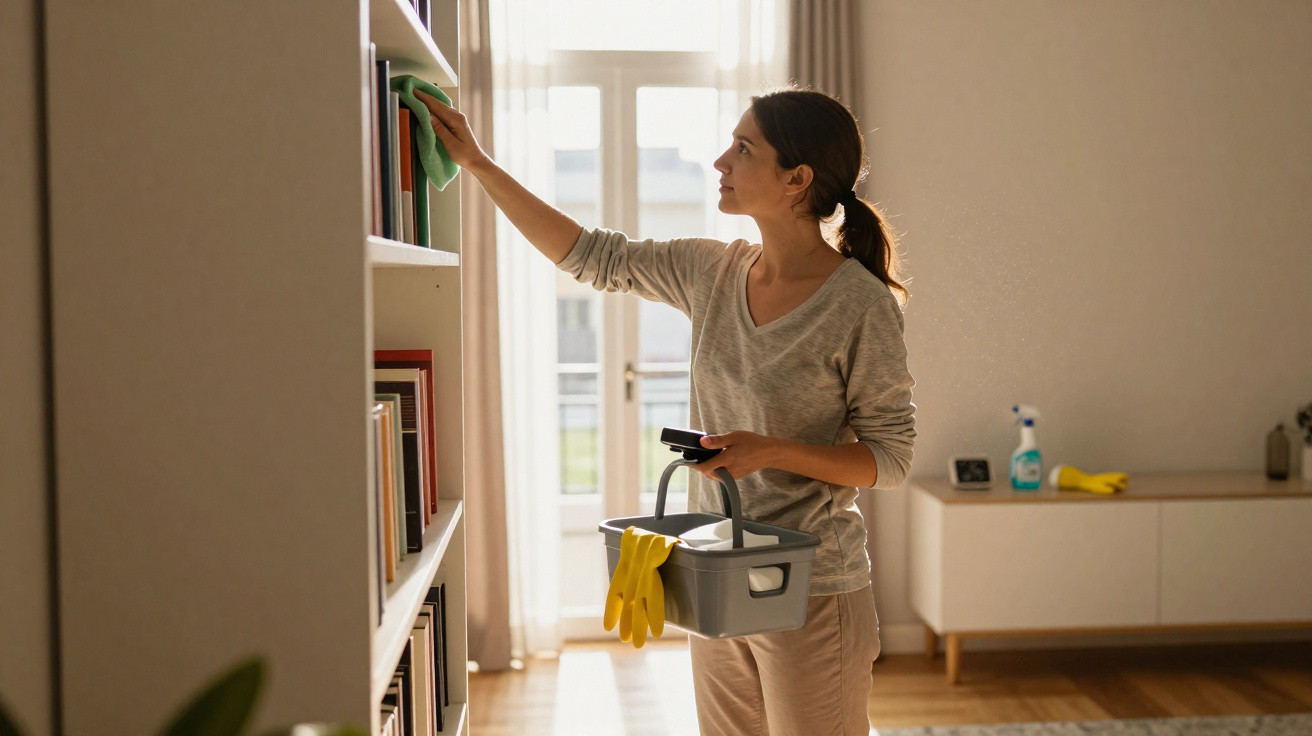
Monday belongs to kitchen and living-room surfaces. Wipe the worktops, clear clutter hotspots, water the plants and dust the obvious areas, such as the TV stand. There is no need to climb a stepladder to polish the coving. Clean what people’s eyes actually land on. Tuesday is for floors: hoover the visible areas, sweep the kitchen and mop if the week has involved curry. There is no need to shift the sofa unless your dog has unionised beneath it.
Wednesday–Friday: bathrooms and bedding
Wednesday is the bathroom blitz: mirrors, sink, loo and a clean towel. It is not spa day; it is make-it-fresh day. Thursday is for bedrooms. Reset surfaces, return mugs to the kitchen, run a duster over bedside tables, open the wardrobe and put away the shirt currently stuck in limbo. Friday covers bedding and towels: strip them, wash them, dry them and remake the bed. Fresh sheets on a Friday evening feel like a secret improvement to life.
Saturday is flexible: use it for guests, a larger task if you have the energy, or nothing at all if you do not. Sunday is for resetting: take out the bin, glance through the fridge, plan manageable dinners and lay out tomorrow’s clothes as a favour to your Monday future self. The whole approach shifts around real life. That is the point.
The face-saving shortcuts: baskets, trays and doors
Some shortcuts are simply acts of kindness. A lidded basket in the living room can swallow toy avalanches and stray chargers in five seconds. A tray beside the front door prevents post from multiplying across the dining table. When things have somewhere to land, they stop crashing into your peace. I also have a small “goes elsewhere” basket that travels around the flat during the evening tidy. It is Uber for misplaced belongings.
And then there are doors. Use them. Close the bedroom door when friends pop round for tea. Nobody needs a view of Mount Laundrymore. If a cupboard is bursting, that is a problem for Wednesday-you. Today-you lights a candle and cuts the cake. There is dignity in deliberate blindness. You are not fooling anyone; you are giving priority to the room you are sharing.
The five-minute arrivals and departures
One five-minute rule keeps the whole system manageable: move for five minutes when you get home, and for five minutes before bed. On arrival, put shoes away, hang up your coat and sort the post into bin, keep and action. Put dishes directly in the dishwasher, or wash them in the warm water already running over your hands. The flat then stops gathering tiny storms at the entrance.
Before sleeping, I walk through each room. Cushions, blanket, remotes, mugs. I turn off lights in reverse order, as if closing a small shop. If I feel particularly ambitious, I spray lemon cleaner onto a cloth and quickly sweep it over the coffee table. It smells like “tomorrow will not start with crumbs”. A room feels different when it has been quietly finished.
Clean the sink every night. That is my one bossy instruction. A clean sink prevents an avalanche by breakfast. Rinse the sponge as well. People seldom mention this, but it matters.
Laundry and dishes: the river you cannot fight
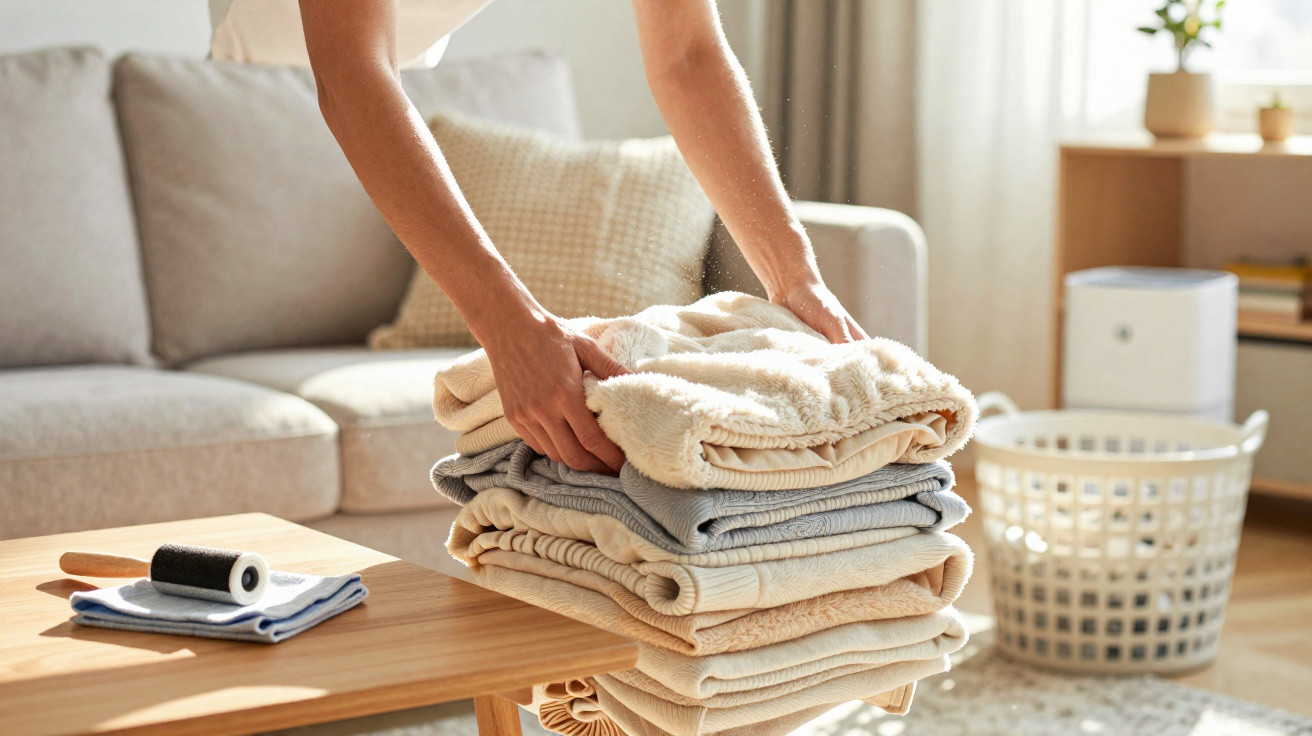
Laundry and dishes never end; they are a river. Treat them as weather and prepare accordingly. When you do a load of laundry, take it from beginning to end on the same day: into the basket, then the machine, then onto the airer or washing line if the weather allows, before folding and putting it away. Folding on the bed forces an immediate put-away because sleep wins that argument every time.
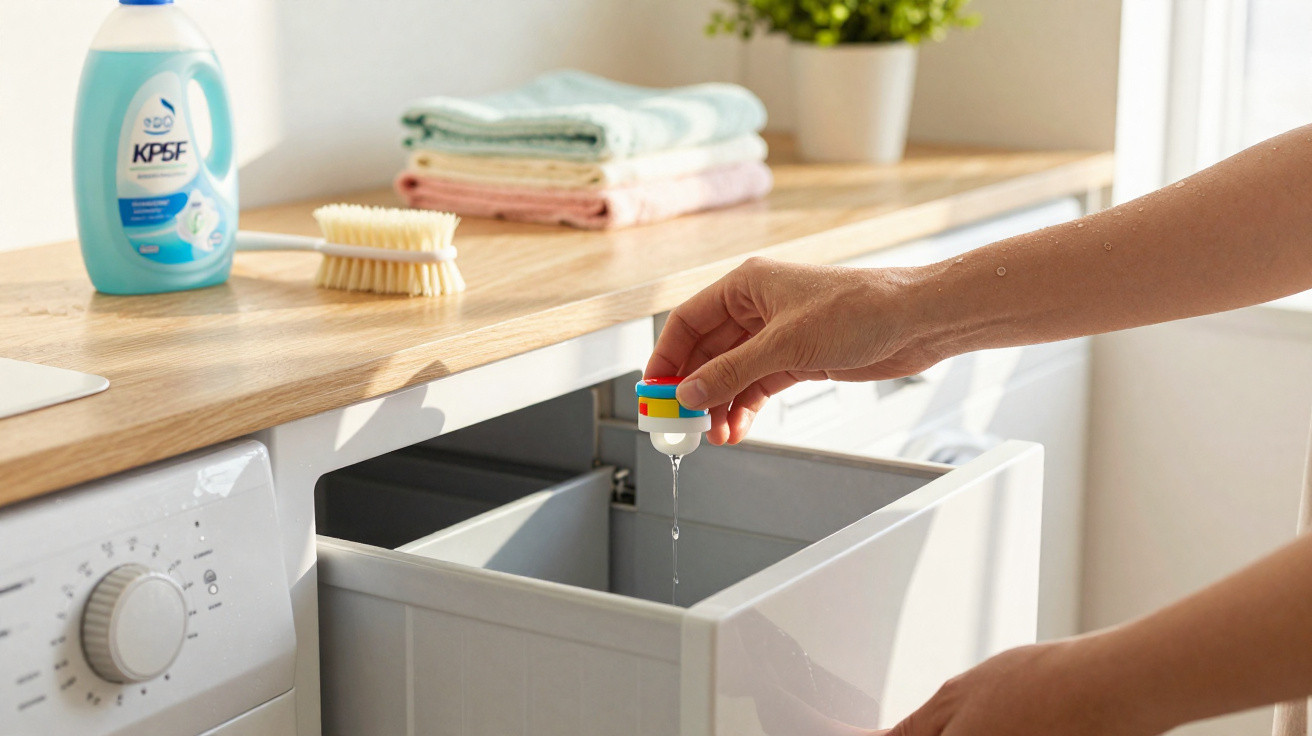
Never let laundry sleep in the machine. That is where hope goes to mildew. I use a phone timer or call out to the smart speaker, as I cannot be trusted to remember between emails. For dishes, I set the dishwasher going at night and empty it as the kettle boils in the morning. The clink of clean plates is unexpectedly pleasing. It says, “We can feed people.”
Without a dishwasher, pair the washing-up with something enjoyable: a podcast, three playlist tracks or a call to your mum. Leave pans to soak while wiping the hob. With a tea towel over your shoulder, steam in the air and your hands busy, it becomes less of a task and more of a small evening ritual.
What guests really notice
Guests notice the lighting, the scent and whether there is somewhere to place a cup. They notice that they can sit down without moving a sock, that the loo feels fresh and that the bin is not auditioning for a wildlife documentary. They almost never spot dust along the skirting boards unless they are lying on your floor, at which point you should probably check whether they are alright. A slightly open window accomplishes more than any spray.
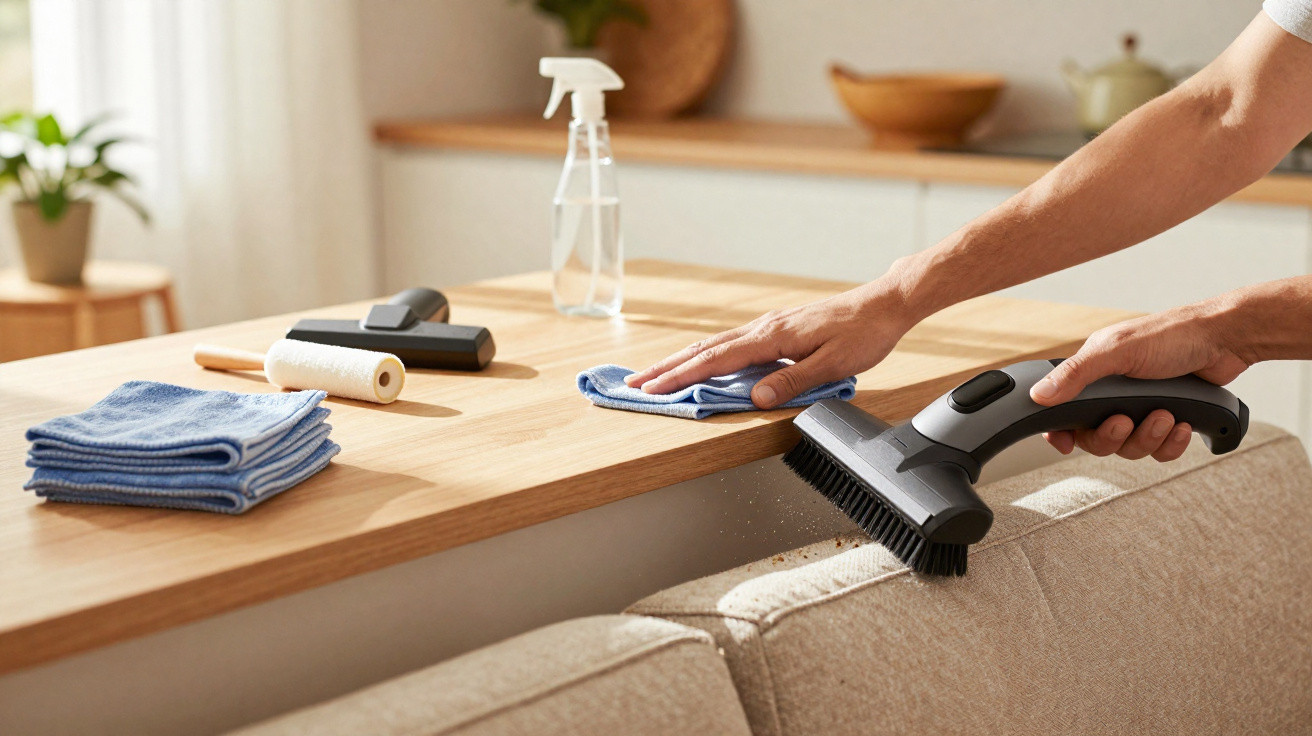
For emergencies, I keep a small kit: a neutral candle, a microfibre cloth and a spray bottle containing warm water with a dot of washing-up liquid. Give the coffee table thirty seconds, swish the loo and arrange a matching pair of cushions on the sofa. The home looks cared for. You are allowed to be smart about first impressions.
When life explodes: the grace day and the eight things
Some days, the flat wins: illness, work or the school project that demands glitter and five hours of your life. On those days, the schedule is merely a coat left by the door, ready to be picked up tomorrow. Every week, I allow a grace day when I do only the essentials: wash the dishes, take out the bin, wipe the sink and make the bed. Nothing more. If I manage those four tasks, I am already ahead.
When I feel overwhelmed, I sometimes play the “Eight Things” game. Choose eight quick wins: clear the coffee table, wipe the bathroom sink, put on a wash, plump cushions, clean the hob, water plants, tidy shoes and sort the post. Count them aloud like a weirdo. It helps. Momentum arrives after you begin moving, not beforehand.
And yes, there will be weeks when the loop unravels because life is larger than your broom. Say it with me: Let’s be honest: no one really does this every day. The achievement lies in returning, not in never stepping away. The house does not hold a grudge.
The 30-minute guest drill
When the message arrives - “We’re nearby!” - I follow a drill that fits into the courage supplied by one kettle. For the first five minutes, reset the hallway: put shoes away, place post in the tray and wipe the mirror using the corner of a barely damp cloth. Use the next ten minutes on the living room: clear surfaces, arrange cushions and throws, collect mugs for the kitchen and wipe the coffee table. Spend the final ten minutes swishing and wiping the loo, putting out a fresh hand towel, tying the bin bag if it is doing too much and quickly hoovering the obvious sections. Two minutes spare? Light the candle, open a window for one minute, then shut it again if it is winter.
I do not deep-clean in a panic; I stage-manage. Music goes on, and I greet my future self an hour from now, who will appreciate the loaded dishwasher. If dinner is underway in the kitchen, I clear one worktop and a stool for a friend to sit on while I chop. I give them a peeler and ask about their day. People do not visit for perfection. They come to see you.
What I actually do when guests are arriving
I welcome them at the door, hang their coats on a hook that exists specifically to keep them off the sofa, and offer tea without apologising for anything. The loo looks respectable and smells as though a lemon has a personality. The living room resembles somewhere humans live, rather than an advert. All of that comes from the little loops running when nobody is watching.
Why the cleaning schedule feels lighter
This schedule is not a spreadsheet. It is a rhythm that keeps your home moving towards being welcoming. I no longer punish myself over the cupboard that needs organising; instead, I value the hallway that quietly looks pleasant every day. There is a gentle pride in that, and it changes the way you move through your own space.
What you are truly creating is a story that your home tells without your saying anything. It says, You can sit here. You are expected. There is a mug with your name on it and a chair that does not need excavating. And there is you, relaxed enough to laugh when the toddler turns their biscuit into confetti, because you know where the hoover is and Wednesday’s dusting can wait until Wednesday.
So no, this schedule will not make your home perfect. It will make it warm, prepared and easy to invite somebody into - including yourself on the days when you need it most. The onions may still make an announcement, but the table will be clear for plates and your smile will not be apologising. That is the win. That is the whole point.


Comments
No comments yet. Be the first to comment!
Leave a Comment