

Freshness, in reality, does not come out of a bottle. You bring it back to your fabrics with fresh air, sunshine and one unassuming cupboard essential that you are likely to own already.
I can still picture my nan in her back garden, clothes pegs held in her teeth while the washing line gave a soft creak over the grass. Labels and passing fashions meant nothing to her. She would glance up at the sky, hold a hand out to judge the breeze, then simply get on with the job. When the shirts came indoors, they seemed almost to hum with sunshine. I asked her once which washing liquid she used. With a wink, she lifted an old jam jar containing a little clear liquid. The breeze and sun, she implied, supplied the rest of the magic. There was no haze of fabric conditioner or blast of perfume: only laundry that smelt as clean as the morning. It was one modest adjustment with a major effect.
Why true freshness does not come in a bottle
Look in a supermarket aisle of detergents and there are endless claims of mountain meadows and sea air. Yet, after putting on the T-shirt, you may notice a chemical trace that stays with you all day. Your sense of smell is not being over-fussy: that is residue. Fragrance oils and softeners can coat the fibres in layers, holding damp odours in place. Rather than removing what is already there, the fragrance merely covers it.
One rainy Tuesday in March, I met Doris in a Leeds launderette. She folded hospital scrubs with such precision that it looked like origami. “For real freshness,” she said, gesturing towards the rain-marked window, “it’s vinegar and air.” She had brought up three children on one income, with a washing line in the back garden. That line dealt with rugby kit, winter socks and household linen that had seen life at its toughest. There was no premium detergent involved: just a capful of clear vinegar in the rinse, while the weather took care of the rest. It was not sentimental; it was practical.
The reason is straightforward. Odours develop as bacteria multiply, while sweat and body oils remain attached to fabric fibres. The gentle acidity of vinegar can help dissolve alkaline remnants from earlier washes, release hard-water mineral deposits and shift the pH away from conditions favoured by odour-causing microbes. Sunshine offers more than warmth, as its UV light helps neutralise many of those microbes. The wind plays an equally understated role, drawing out moisture and volatile odours while textiles dry. There is no perfumed disguise, only a reset for the fabric itself.
The grandmother trick: a step-by-step white vinegar rinse
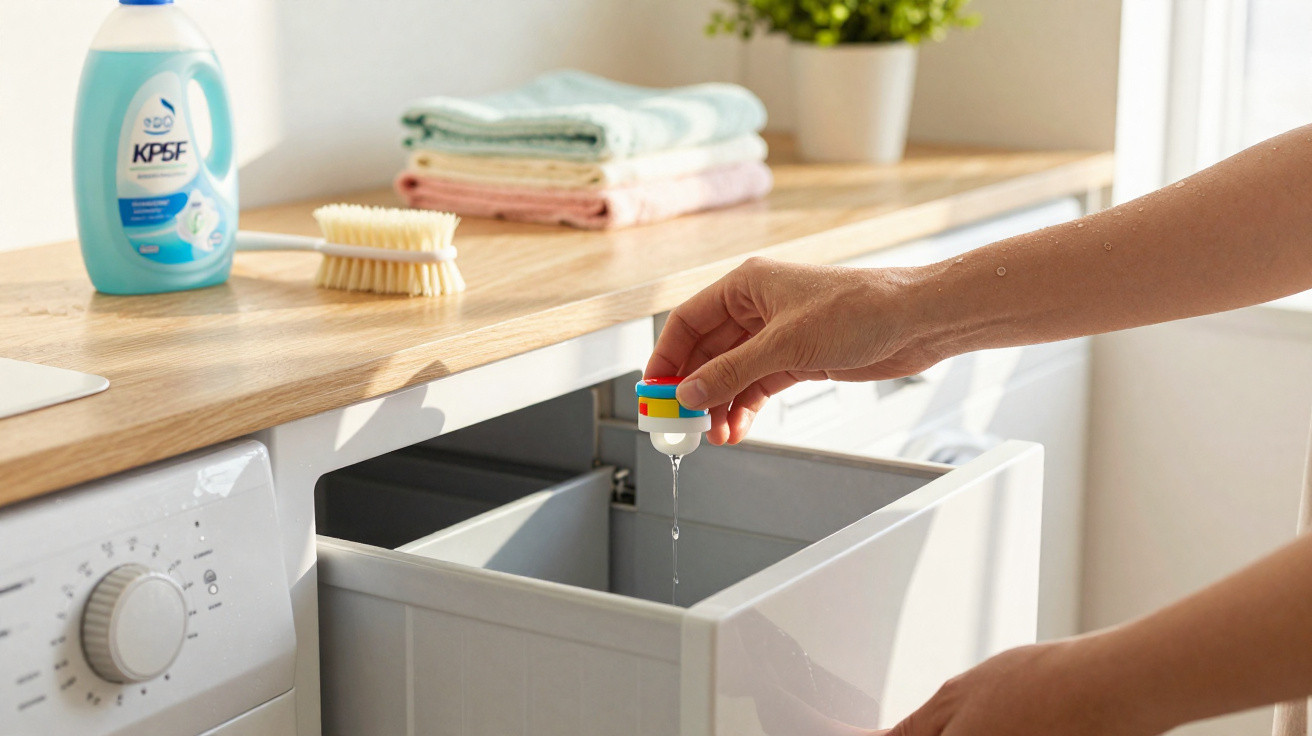
Begin with a manageable load. Leave the drum loose enough for the laundry to move and rinse properly. On this occasion, leave out the detergent. Add 120–180 ml of plain white vinegar in the rinse compartment, select a 30–40°C programme and start the wash. Choose an additional rinse if your washing machine has that option. Afterwards, dry the washing on an outside line whenever you can. On wet days, hang pieces close to an open window or where there is a through-draught, instead of piling them over a radiator. Peg garments by their hems rather than their shoulders, allowing water to run off and the weave to open to the air.
Choose distilled white vinegar and nothing else. Malt and cider varieties may leave colour marks or a residual smell. Never combine vinegar with chlorine bleach. Do not leave elasticated clothes in strong hot sunshine for extended periods. For silk or delicate wool, test a small hidden section first, then use a brief cool soak in the sink. Everyone knows the frustration of a supposedly washed T-shirt that still carries last week’s gym smell; this method gives it a reset. And realistically, no one hand-scrubs collars every single day. The point is to establish a routine that you can genuinely maintain.
As Mary Jones, 79, told me, old-fashioned wisdom often favours the uncomplicated approach:
“Sun does half the washing-you just have to let it.”
Keep this short guide in your peg bag:
- Use 120–180 ml of vinegar for an average load; choose the higher amount in hard-water areas.
- Wash smaller loads and line-dry in real air, keeping gaps between each item.
- When drying indoors, make a through-draught; a fan on a low setting can help carry moisture away.
- For a light fragrance, spray lavender water during ironing rather than adding it to the wash.
- If odours persist, soak for 30 minutes in cool water with 1 tbsp of bicarb, then rinse with vinegar.
Why this small white vinegar ritual still counts
This is not nostalgia simply for nostalgia’s sake. It is a laundry approach that considers your clothes, your household bills and your sense of smell. It swaps suds for moving air and artificial perfume for daylight. Once you have smelt sheets dried in a sharp breeze after a vinegar rinse, it can become surprisingly moreish. You find yourself arranging washing around dry weather, studying clouds as your gran once did and pegging out with real intent. The clean smell remains because there is less residue left behind to turn stale. Your towels start to feel like proper towels once more.
| Key point | Detail | Benefit for the reader |
|---|---|---|
| White vinegar rinse | 120–180 ml in the rinse drawer, no detergent | Removes residue and neutralises odours without perfume |
| Sun and wind | Line-dry outdoors or in a cross-breeze | Naturally lowers microbes and creates a genuinely fresh scent |
| Smaller loads, spacing | Space for clothes to tumble and air to move | Supports better rinsing and drying while avoiding mustiness |
FAQ
- Will my laundry smell like vinegar? Any vinegar smell disappears as the fabrics dry. Once the clothes have aired fully, they will smell of clean rather than anything else.
- Is vinegar safe for colours? Yes, when used in the rinse; it may even help set certain dyes. Do not soak bright colours for hours, and avoid acidic soaks on leather or acetate trims.
- What about towels-won’t they go rough? In fact, they tend to become softer over time as residue is removed. For the fluffiest result, dry them in moving air instead of scorching them on a radiator.
- Can I use this on baby clothes or sensitive skin? Many parents choose it specifically to reduce perfumed residues. Rinse thoroughly, and begin with half a cup to check that it works for your household.
- Isn’t sunlight bad for fabric? Intense sunlight over a long period can fade bright shades. Turn coloured items inside out to dry, then bring them in as soon as they are dry to the touch.



Comments
No comments yet. Be the first to comment!
Leave a Comment