
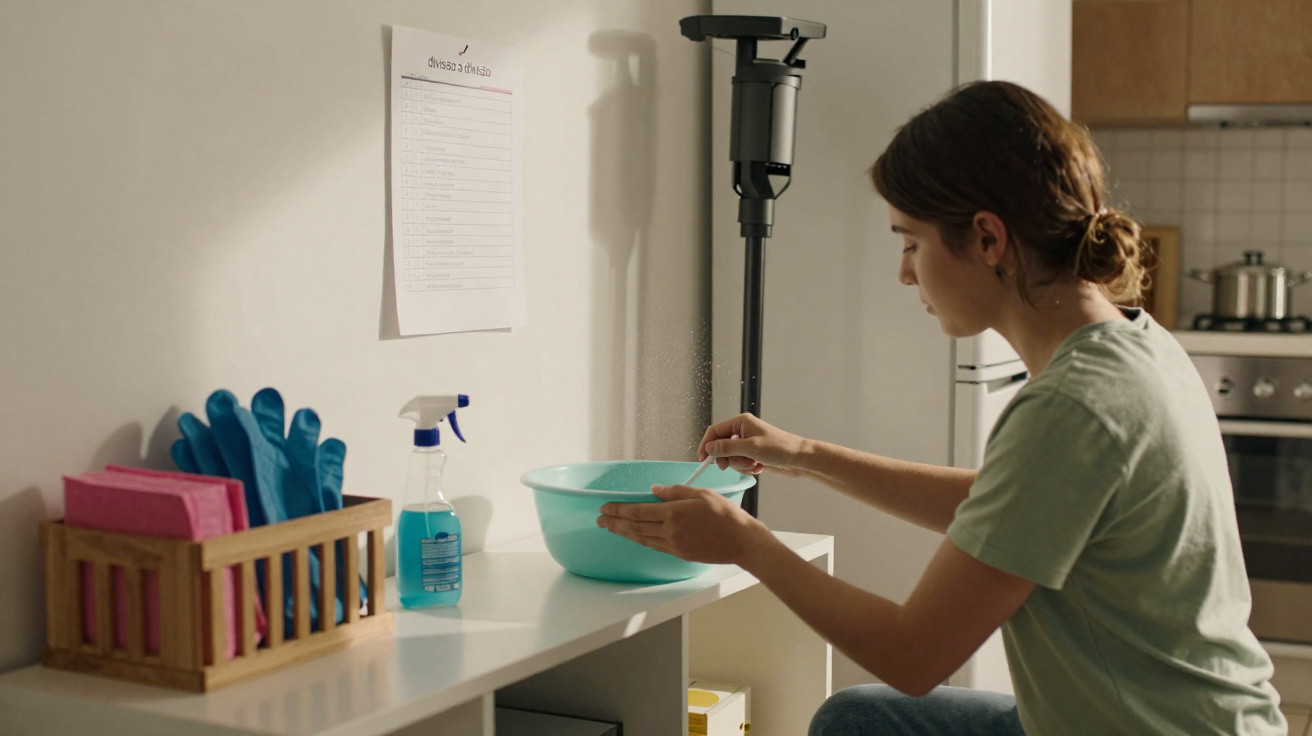
It is that fraught Sunday hush: sunlight pours in, dust hangs in the air, and every item appears to demand attention. A mug sits forgotten beside the sofa. Shoes are scattered near the door. Crumbs gleam on the kitchen worktop as though pleased with themselves. Standing in the middle of it with a spray bottle, you feel worn out before you have even begun. When everything seems “urgent”, how can you possibly choose a starting point? Clean one item, look away, and another bit of mess seems to emerge, as if your home is mocking you. Cleaning can feel never-ending for a reason - and it is less about the mess itself than the sequence you use to deal with it.
The invisible enemy: cleaning in the wrong order
Most people are not really cleaning their homes; they are simply moving mess from one room to another. You begin in the kitchen, head into the living room, then somehow find yourself in the bathroom because you needed to rinse a cloth. An hour passes, no room is completely finished, and your mind is drained.
What seems like “being bad at cleaning” is usually a muddled order of tasks. Constantly changing rooms and jobs saps your energy. You dust once you have already vacuumed. You wipe down surfaces moments before the children come in wearing their shoes. The house comes out on top.
A sensible sequence changes the entire experience. Work in a single direction: from high to low, dry jobs before wet ones, and cleaner areas before dirtier ones. Use the same steps in every zone. It may look like magic, but it is really just choreography.
Picture this: you get up on Saturday, set aside two hours and decide to try one new rule - make one circuit of the house without retracing your steps. Begin in the bedroom: strip the bed, open the window and dust the shelves. Then leave. Do not think, “oh, I’ll just quickly sort that drawer”. Carry on through the hallway, into the living room and then the kitchen.
By the time the first wash load is running, half the house has already received its “first touch”. This is not deep cleaning yet; it is preparation for the task ahead. The repeated movements become unexpectedly soothing. A cup on the table? Picked up. A stray jumper on a chair? Returned to its room. Rather than putting out fires, you are managing the flow.
A 2020 survey by the American Cleaning Institute found that 74% of people feel overwhelmed by household cleaning. This is not because the physical work is too difficult, but because they are unsure when to start and when to stop. Give that same person a defined order of operations and the identical house suddenly takes less time and causes less friction. Routine wins over motivation every time.
Treat cleaning as you would painting a wall. Paint scattered patches at random and you will drip, overlap, overlook sections and lose your place. Start at the top corner instead, working downwards in straight lines and in the same direction, and the task feels easier. The same principle applies to your home.
Dust and crumbs follow a logic, whether or not you work with it. Dust drops downwards. Liquids run and drip. Muddy shoes carry dirt from the entrance through the rest of the house. The most efficient cleaning order is therefore high before low, dry before wet, outside-in or front-to-back, ending in the “dirtiest” spaces such as bathrooms and kitchen floors.
Accept that principle and the rest falls into place. You no longer clean the same square metre three times in one day. You stop letting one “little corner” derail your whole plan. Instead of seeing your home as a chain of emergencies, you begin to treat it as a system. Oddly, that makes it feel less personal and less like a judgement on you.
The best cleaning order: room by room, step by step
Begin at the entrance rather than the kitchen. Your entrance acts as a “filter”: keep it under control and less dirt will spread indoors. Give it a quick reset first - put shoes together, hang coats and stack the post. Sweep or vacuum this small section. Your first battle is already won.
Next, travel through the house in a loop instead of jumping about. A typical route is: bedrooms → hallway → living room → dining area → office → kitchen → bathrooms. Repeat the same order in each room: clear surfaces, dust from top to bottom, then vacuum or sweep. Do not mop yet and do not take on “deep projects”. Stick to those three moves as though following a dance routine.
Move to the wet stage only after every area has completed that cycle. Start with the bathrooms and kitchen worktops, followed by sinks, toilets and the shower, and finish with floors, mopping your way towards the exit of each room. The simple trick is never to walk back across an area you have just cleaned while wet.
Many people begin with whatever irritates them most at that moment: a kitchen sink full of plates, a laundry pile or a sticky dining table. That reaction is understandable, but it destroys efficiency. Emotions make dreadful project managers.
Use this approach instead: set a 15-minute timer for each room during the first pass. Nothing more. If a room is not perfect when the timer ends, move on regardless. Initially, it can feel wrong, like leaving a joke unfinished. Yet your mind stays sharper because it knows there will be another pass. You are not failing; you are working in cycles.
As for laundry, put a load in the washing machine before doing anything else, immediately after getting up and opening the curtains. Use a mixed load if necessary. When you have completed the dry pass through the house, that first load should be ready to hang up or put in the tumble dryer. Cleaning starts to feel like a smooth flow rather than a punishment added to the rest of your chores.
One professional cleaner I interviewed put it in a memorable way:
“Everyone thinks I’m fast because I scrub harder. I’m fast because I never walk the same path twice.”
That is the shift in mindset. You are doing more than tidying; you are planning a route. Enter each room with a map in your head: move clockwise and touch every surface once, or work from left to right and top to bottom. Keep your equipment with you in a caddy containing microfibre cloths, spray, bin bags and a duster. There is no need to return to the cupboard every two minutes.
- Start high: shelves, picture frames, wardrobe tops and hanging lights.
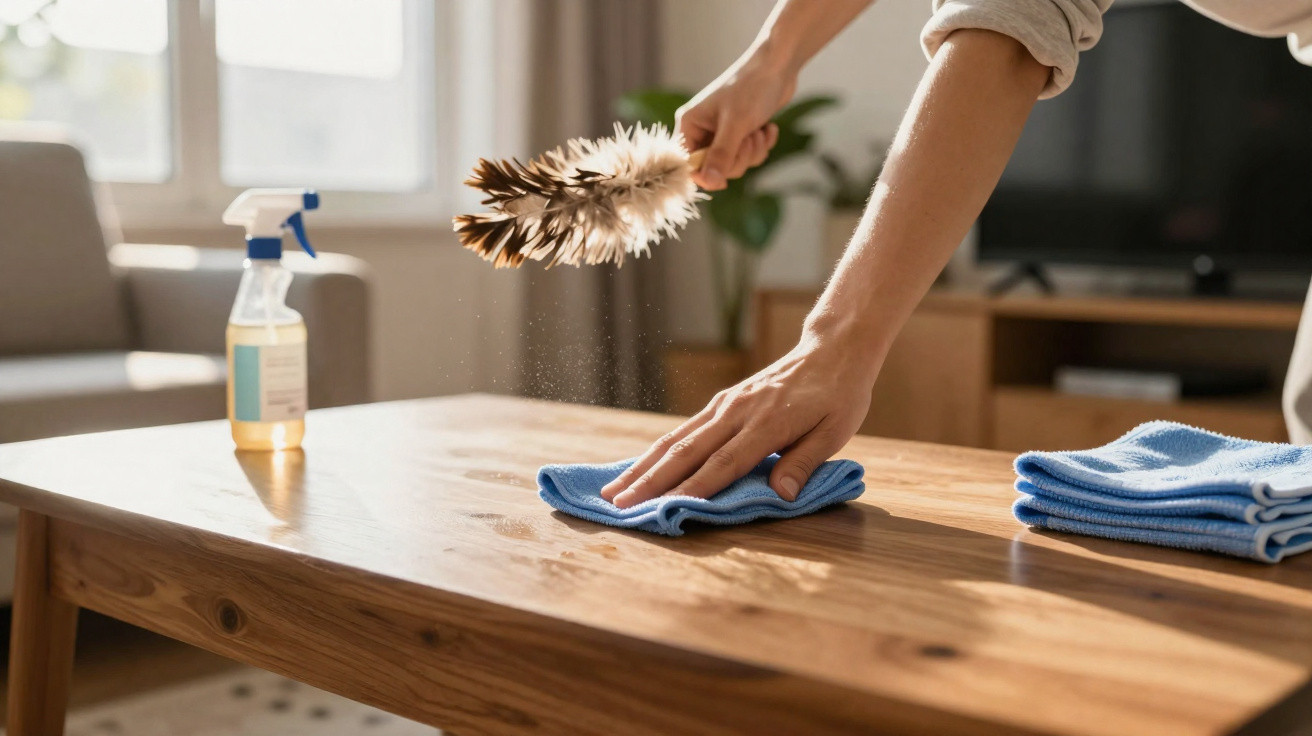
- Then work at mid-level: tables, desks, TV units and bedside tables.
- Finish low: skirting boards, chair legs and finally the floors.
- Do dry tasks first: dusting, decluttering, vacuuming and sweeping.
- Leave wet tasks until last: wiping, scrubbing, mopping and polishing.
A house that stays cleaner longer (with less effort)
After trying a complete clean in the “right order”, the real benefit appears during the following week. Your home will not instantly turn into a show home - life remains messy - but its starting standard will be better. Each time, you are making adjustments rather than rebuilding from chaos.
This is when small routines become more useful than heroic cleaning marathons. Spend five minutes each evening resetting the entrance. Quickly wipe the bathroom sink twice after brushing your teeth. Sweep the kitchen floor for 60 seconds after dinner. Let us be honest: nobody truly does this every day. Even so, completing half of these tasks twice a week will make your major clean last longer.
Something subtle changes on a human level too. Your home begins to feel like an ally instead of a critic. When you arrive back from work, it does not shout back at you. This morning’s dishes are not hidden beneath last night’s. You can see the sofa. Your mind settles that little bit faster, and on difficult days, that small difference can alter the course of your evening.
The right cleaning order also guards against guilt. Once each task has an assigned time - floors at the end, bathrooms in the wet phase and dusting on the first pass - you spend less time thinking, “I should also…” while already occupied with another job. You know when that task will happen. Your mental load becomes lighter because you are not trying to hold the whole house in your mind at once.
We have all received the surprise message: “I’m nearby, can I pop in?” and looked around in alarm. A clear structure means your mind immediately identifies the three quickest improvements: clear the surfaces, sort the entrance and tackle visible floors. You can create a presentable reset in 20 minutes because you are not making up the process as you go.
If all else fails, remember this: nobody runs a museum at home. The aim is not perfection but a house that supports your life rather than exhausting you. You are allowed to shut the door on the messiest room and deal with it next time.
The next time the thought, “I should clean, but where do I even start?”, washes over you, change just one thing: the order. Start at the door. Complete one loop. Dry, then wet. High, then low. It may seem almost too straightforward. That is exactly the point.
Once you discover how much easier cleaning feels in a sensible sequence, returning to the old approach is difficult. You may still complain and put it off, but the job itself will demand less from you. Then, at the end, when you sit on a sofa not covered in yesterday’s clutter, that quiet will feel earned rather than accidental.
| Key point | Detail | Benefit for the reader |
|---|---|---|
| Overall order | Entrance → bedrooms → living spaces → kitchen → bathrooms | Lets you make one complete “circuit” without doubling back |
| Task logic | Dry before wet, high before low, clean before dirty | Prevents freshly cleaned areas from becoming dirty again and saves time |
| Light routines | Daily mini-tasks lasting 1 to 5 minutes | Makes major cleaning sessions easier and reduces the feeling of being overwhelmed |
FAQ:
- What is the single best place to start when cleaning a whole house? Begin at the entrance. It prevents dirt from travelling further and gives you an immediate visual win that encourages you to continue.
- How often should I do a full-house clean in this order? Once a week suits most people. During busy times, every two weeks can still be enough if you add small daily resets.
- Should I clean room by room or task by task? For beginners, working room by room while following the same sequence in each space - declutter, dust, vacuum - is clearer and more rewarding.
- Where does laundry fit into this cleaning order? Start a load at the very beginning, then change it over as you work through the house, so it finishes at roughly the same time as your main clean.
- How do I keep from getting distracted while I clean? Set a timer for each room, carry all your products in a caddy, and note down non-cleaning jobs that occur to you rather than doing them straight away.

Comments
No comments yet. Be the first to comment!
Leave a Comment