
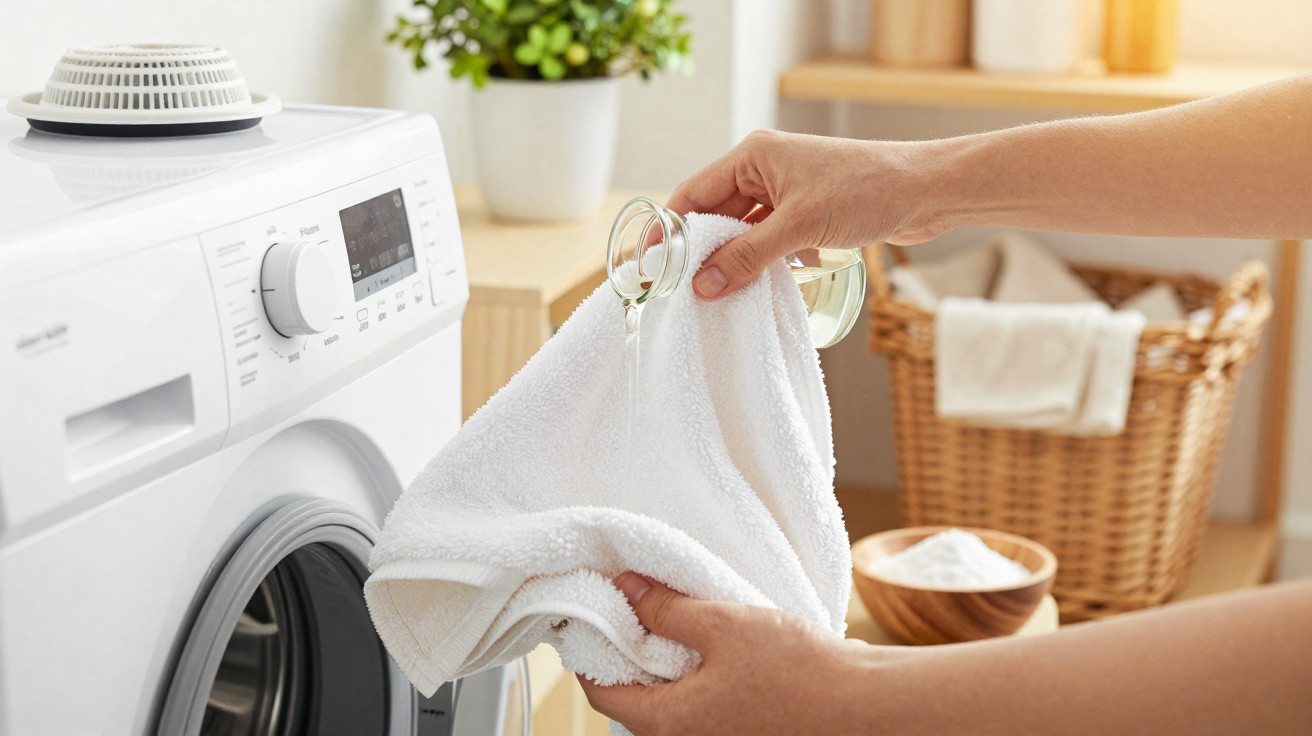
Thick, soft and freshly laundered: you leave the shower, reach for your towel and press it to your skin… only for the water to spread about. There is no satisfying whoosh as the moisture vanishes, only clammy annoyance. You put the towel back on its rail and wonder whether the washing powder, fabric softener or the fact that it is simply “old now” is to blame. Then it occurs to you that you bought it only six months ago.
The reason towels stop absorbing water can feel like one of those minor household wrongs that nobody discusses. You pay for decent cotton, follow the care instructions and may even change detergents. Still, nothing improves. Your towels become fluffier while doing their job less effectively. Between the laundry basket and the radiator, something unseen is stripping away their ability to soak up water - and it is probably not the cause you expect.
The hidden cause in your laundry routine
Fabric softener is usually blamed first. It is the familiar suspect, cast as the villain by every cleaning blog. But plenty of households that never use softener still find their towels merely shift water around rather than absorb it. With repeated washing, the problem becomes worse. It can seem unfair, almost as though the textile industry has played a trick on you.
The true cause is much less exciting and far more commonplace: build-up. Residual detergent, hard-water minerals and body oils can remain after each wash, creating layer upon layer. These deposits settle deep within the cotton loops, blocking fibres that were once open like tiny straws. The towel may still appear plush on the surface, but beneath it is effectively wearing an invisible raincoat.
One major UK laundry brand reportedly acknowledged in internal research that the “recommended” amount marked on a cap is driven by marketing rather than everyday washing habits. That additional scoop added “just in case” does not simply wash away. It remains behind, crusting within the fibres, binding to calcium and magnesium in hard water, and gradually turning an absorbent towel into a water-repellent sheet. The machine finishes its programme and the towel smells “clean”, but an invisible microscopic coating remains. Your skin notices the effect long before your eyes can.
In Birmingham, one busy family of four keeps its washing machine in almost continuous use during the week. There are school uniforms, gym clothes, baby garments and bath towels, and the drum scarcely has time to cool. The mother buys a huge value box of detergent and pours it in without measuring, since the cap markings are difficult to see with wet hands over the noise of a running machine. For fragrance, she adds a splash of softener. For a few weeks, the towels feel wonderfully luxurious. Then the grumbles begin.
Her teenage daughter says her hair towel “just moves the water around”. Her father begins reaching for two towels after showering. Visitors use the smart guest towels once, then politely leave them folded differently - a subtle, wordless review. No one connects the issue with the heavy detergent doses. They decide the towels are “past their best” and start looking online for replacements, as every 60°C wash quietly bakes another layer of residue into the pile.
A small survey conducted by a UK home-care retailer uncovered a telling pattern: 72% of people surveyed said they use “about a capful” of detergent for each wash, but just 18% had checked the dosing advice for their local water hardness. Households in hard-water locations such as Kent, Essex and much of London require different routines from those in soft-water areas. Instead, most people wash every fabric in the same way, using identical cycles and products. Because towels are designed to absorb and retain liquid, they become ideal sponges for any trace the rinse programme fails to remove. The more premium the towel, the deeper its loops and the more residue it can hold.
In physical terms, absorbency relies on surface area and the empty spaces between fibres. Think of every cotton loop as a small tube designed to draw in water. In a new towel, these tubes remain clear, allowing water to rush in. As time passes, detergent surfactants, minerals and oils coat them much as limescale coats a kettle. This changes the surface energy. Rather than flowing into the fibres, water lingers on the top and then travels sideways.
Washing towels at ever-higher temperatures will not remedy this. Heat can actually set residue more firmly, much like sugar turning to caramel when cooked. Many people then instinctively add extra detergent to get the towels “really clean”, reinforcing the very cycle causing the problem. That is why a towel can look impressive straight from the drying rack while leaving your skin strangely sticky or damp. Your eyes register fluff and bulk; your skin registers physics.
The underappreciated reason towels lose absorbency is therefore not solely the choice of product. It is gradual accumulation: a slow chemical layering created by countless small decisions at the washing machine. It lies precisely where convenience, habit and marketing meet.
How to restore real absorbency to your towels
There is a somewhat radical reset that laundry enthusiasts discuss online: stripping. The term sounds dramatic, but it is essentially a thorough de-clogging treatment for textiles. Towels are soaked in hot water with a measured blend of washing soda, or soda crystals, a modest quantity of powder detergent and sometimes a borax substitute. The purpose is straightforward: to break the connection between the fibres and the deposits, allowing the cotton to breathe again.
Fill a bath or large bucket with very hot water, dissolve the mixture and add clean towels only. Leave out clothes and elasticated items; ideally, use pure cotton alone. Soak the towels for four to six hours, stirring now and then. Even towels that appeared “clean” may turn the water a cloudy grey-brown. Rinse them well, then put them through a complete washing cycle without detergent. Once dried, the change can seem almost magical. They feel lighter and take hold of water instead of resisting it.
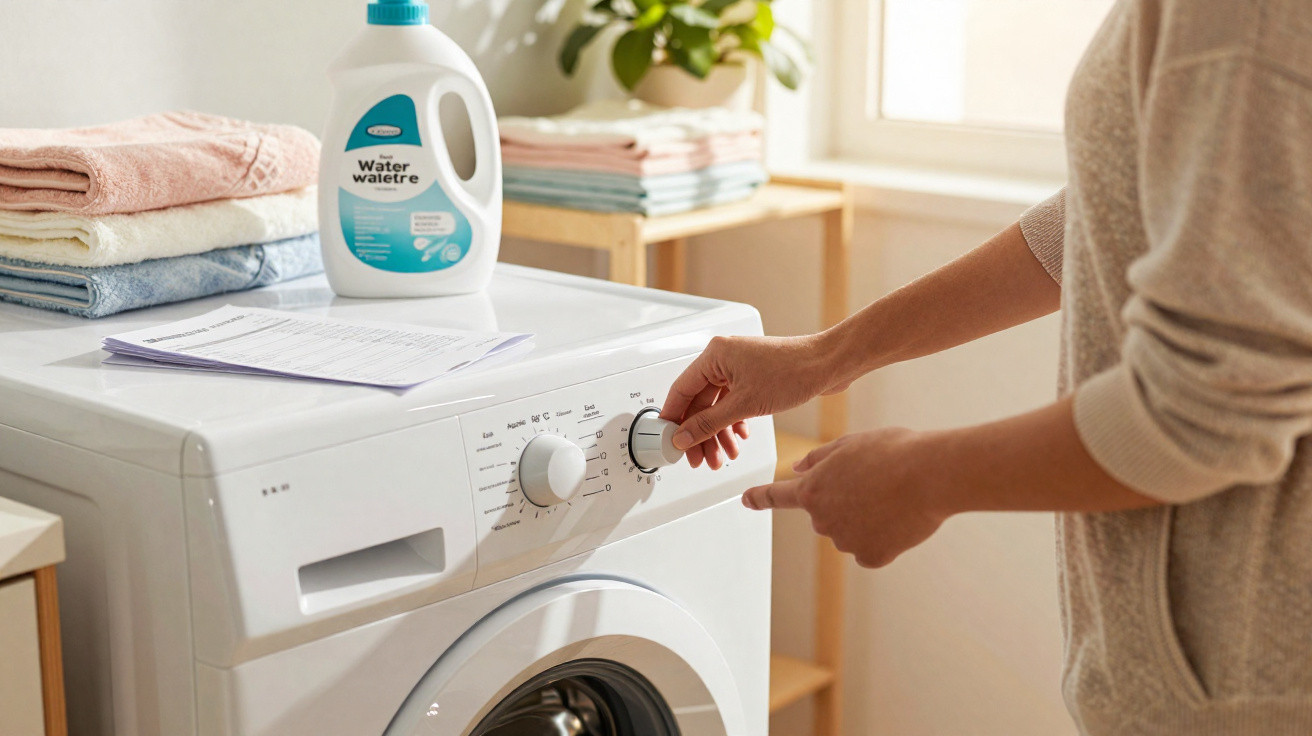
Let’s be honest: nobody genuinely does this every day. That is why adjusting ordinary habits around detergent and drying matters more than occasional dramatic rescue treatments. After stripping towels once, treat them more gently. Use less detergent than the cap recommends, particularly with a modern efficient washing machine. Avoid fabric softener entirely for towels; if you miss the fragrance, use wool dryer balls with a drop of essential oil, or a scented laundry perfume sheet that does not coat fibres in the same manner.
Wash towels separately from synthetic garments. Combined loads hold onto lint, adding another source of blockage. Where possible, choose a lower spin speed, since forceful spinning can compress the loops and leave them less able to catch water. Every month or two, run an empty hot cycle using soda crystals or a washing-machine cleaner. A dirty drum returns residue to every load, however pleasant your detergent may smell.
There is a particular satisfaction in reviving a “dead” towel instead of discarding it. It is a domestic solution you can physically feel against your skin. One London-based textile technician told me:
“People think their towels are worn out after a year, but in most cases the cotton is fine. It’s not the fibre that’s tired, it’s the build-up around it. Once you free the loops, the towel behaves like itself again.”
For a quick checklist beside the washing machine, use the following:
- Use 30–40% less detergent than the cap line for towels.
- Never use fabric softener on any towel.
- Wash towels separately, rather than alongside synthetics.
- Dry them fully, preferably with good ventilation or a low-heat tumble dry.
- In hard-water areas, strip heavily used towels every 3–6 months.
These are not strict instructions so much as small trials. Test one or two changes, notice the difference when you first rub down after showering, and then decide which routines deserve a place in your life. Your skin will give you the answer long before any label does.
The understated pleasure of a towel that works
There is a curious intimacy in the instant a towel touches your skin. It is the first thing against you after a shower, a cold swim or a bath following an exhausting day. When it takes up the water with one assured press, you unwind more quickly. Your shoulders loosen. You feel cared for in a way product specifications struggle to capture.
We seldom discuss this small daily luxury. Towels are grouped under “home textiles”, placed somewhere between bed linen and tea towels. Yet a genuinely absorbent towel changes the pace of an entire bathroom routine. Parents often notice it first with squirming toddlers, who complain less because drying takes half as long. People with long hair notice when a hair towel genuinely reduces blow-drying time. Those in shared houses appreciate it during rushed pre-work showers, when there is no time to wait around and air-dry.
More broadly, knowing why towels lose absorbency weakens a larger assumption: that something is “worn out” merely because it no longer performs properly. Sometimes it is simply unable to breathe. Just as an overfilled wardrobe conceals perfectly wearable clothes, a blocked towel conceals perfectly sound cotton. Learning to remove the build-up - the residues, the habits and the automatic extra squeeze of detergent - is a way of regaining control over an area of life that can otherwise feel governed by labels and advertising.
In practical terms, that could mean purchasing fewer towels and maintaining them more carefully. It could involve discussing reduced detergent use with flatmates. It might even mean sharing before-and-after images from your first stripping experiment, murky water included. More personally, it may simply be about noticing how your body feels when a towel finally performs as it should. That quiet, private comfort matters. It is ordinary life made better, one unblocked cotton loop at a time.
| Key point | Detail | Why it matters to the reader |
|---|---|---|
| Invisible residues | Detergent, minerals and oils build up in the fibres | Understand why “clean” towels no longer absorb |
| Detergent dose | Caps often encourage over-dosing | Use less to keep towels genuinely effective |
| Strip wash | A hot soak with soda crystals and a small amount of detergent | Revive older towels without buying replacements |
FAQ:
- Why do my brand new towels feel soft but not very absorbent? Many new towels have finishing agents applied so that they look and feel plush in the shop. A few hot washes without softener, using less detergent than usual, can remove this coating and allow the fibres to absorb properly.
- Is fabric softener really that bad for towels? Softener leaves behind a thin waxy coating that smooths fibres and gives them a silky feel. However, the same layer blocks water, so regular use on towels produces flatter loops with poorer absorbency.
- How often should I wash bath towels? Washing them after every three to four uses offers a sound balance between hygiene and fibre longevity, unless somebody at home is ill or the bathroom is especially humid.
- Can I fix old hotel-style towels that feel like cardboard? Yes, provided the cotton has not worn through. A stripping soak, less detergent, no softener and a few gentle tumble-drying cycles will usually restore a surprisingly good level of absorbency.
- Does line drying or tumble drying make towels more absorbent? Line drying is gentler on fibres and uses less energy, while a short low-heat tumble dry with dryer balls can bring back fluff. For absorbency, though, controlling residue matters more than the drying method by itself.

Comments
No comments yet. Be the first to comment!
Leave a Comment