
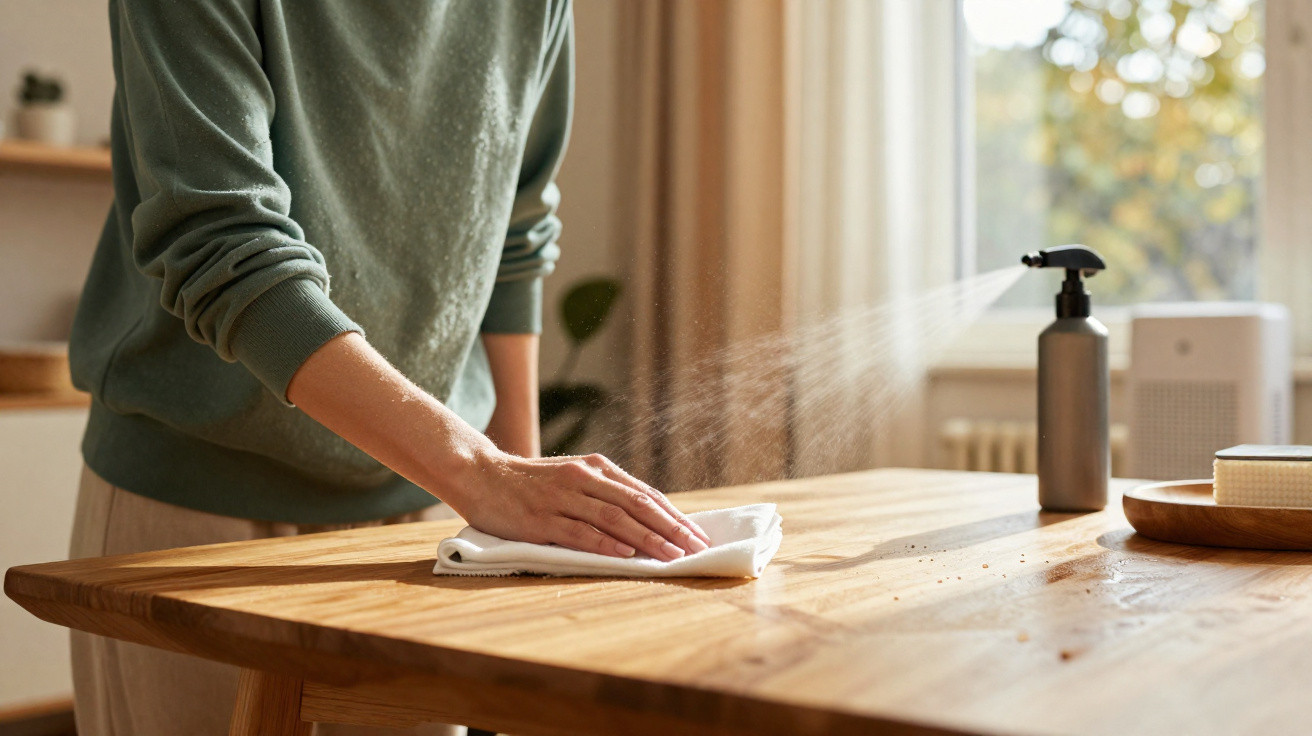
The cloth glides over the shelf, leaving grey marks on the microfibre and bringing the small satisfaction of finally tackling that persistent layer of dust.
You open the window “to let some air in”; fresh air pours through, the curtains drift and the room immediately seems brighter. For several minutes, it all appears spotless. Then the sun moves, a shaft of light stretches across the sitting room… and there it is: a haze of fine particles whirling through the air like miniature planets, slowly settling back onto the surfaces you have just cleaned.
You sigh, wipe once more, and the pattern starts again. More dust, more wiping, more annoyance. A car drives past outside, a neighbour beats a rug, and a gust enters like an unwanted visitor. But what if opening the windows as you clean – supposedly such a sensible idea – is actually undermining your work? What if fresh air is your least helpful ally?
Why that “fresh air” moment can backfire
There is an odd contradiction in most homes during a cleaning session. We open windows for the rush of oxygen and daylight, to get rid of cleaning-product smells and the heaviness of stale winter air. The breeze feels pure, even wholesome. But the particles visible in sunlight reveal a different reality. They have not appeared by magic: the airflow you have let in has lifted them, transported them and gently deposited them again.
What you are seeing is a blend of skin flakes, fibres, pollen, soot and dust from outdoors settling softly around the room. An open window does more than freshen the air. It can turn your home into a small wind tunnel, where every pass of a cloth and every shake of a cushion sends dust briefly airborne… until gravity quietly takes over.
Picture an ordinary Saturday morning in a city flat. The windows are fully open, traffic hums below and somebody is vacuuming at full power. On the fourth floor, Anna removes the bedding and snaps the sheets beside the open window so that “the dust goes out”. For a moment, some dust does head outside. A slight crosswind then drives it straight back indoors, where it curls through the room like smoke. Indoor-dust measurements regularly show that a substantial proportion comes directly from outside, including particles from brakes, soil, building work and even minute tyre fragments. Once these particles have entered, an open window and a little movement are enough to make them settle again – quickly.
The same applies in a peaceful house in the countryside. A tractor travelling along a dry road can raise nearly imperceptible dirt, which drifts towards an open kitchen window. As you wipe the worktop, you may think the room is becoming cleaner every minute. Yet an hour later, you run your fingers across a surface and notice that fine, dry film again. It is not imagined; it is simply the way airflow and gravity work together.
In physical terms, dust responds readily to moving air. When you clean with windows shut, many disturbed particles remain suspended slowly and lazily. They stay airborne for longer, allowing a vacuum cleaner or damp cloth more time to capture them. Opening a window, however, creates pressure differences. Air moves from areas of higher pressure to lower pressure, accelerating particles and sending them against walls, curtains and bookcases. Heavier particles drop rapidly. Lighter ones travel farther, then fall onto the first horizontal surface they encounter: the television unit, the newly wiped table or the dark chest of drawers that reveals every speck.
Air from outdoors brings its own particles too: pollen, minute mineral fragments and emissions from heating systems or vehicles. Cleaning with windows wide open means combining an indoor dust cloud with an outdoor one. That is why so many people jokingly say, “the more I clean, the dirtier it looks in the sun.” Physics simply works faster than our cloths.
How to clean smarter without turning your home into a dust magnet
The easiest adjustment is to change when you open the windows. Rather than opening everything while dusting, keep windows closed during the dusting and shaking stage. Tackle one room at a time. Begin at the top, cleaning shelves and wardrobe tops with a slightly damp microfibre cloth so that dust adheres rather than flies away. Handle objects gently instead of flicking them about the room. Once you have wiped and vacuumed the space, open the window for ten or fifteen minutes to ventilate it.
This approach limits airborne disruption precisely when clean surfaces are most exposed. Cleaning becomes an exercise in collecting dust rather than pursuing it. Before opening a window, you can also use the vacuum cleaner’s brush attachment on furniture and skirting boards. Consider it a way to contain the dust before airflow can carry it around. One final detail can make a major difference: work in a single direction, from the furthest corner towards the doorway, rather than repeatedly walking through your own dust cloud.
Another tip sounds almost overly obvious: take your time. Fast, forceful movements throw more dust into the air. Roll a blanket carefully rather than snapping it, fold bedding from the bed towards the floor instead of towards an open window, and tap cushions together rather than banging them on the windowsill. Small actions such as these determine whether dust stays airborne or ends up in the bin.
We have all finally cleaned after weeks of saying “I’ll do it tomorrow”, only to feel disheartened when everything looks dusty again the following day. Let’s be honest: nobody really does it every day. This is why modest strategic changes matter more than heroic cleaning marathons. Many people also unknowingly add to the dust issue by dry sweeping, using old feather dusters or shaking rugs indoors. These methods move particles about instead of catching them.
Consider replacing the traditional broom with a vacuum cleaner fitted with a HEPA filter, particularly on hard floors. Choose slightly damp mops and cloths rather than dry versions in areas receiving the most sunlight. If you live beside a busy road or building site, do not clean with the windows open during peak traffic periods. It is much like avoiding mopping the floor while somebody is still coming inside with muddy shoes.
As one indoor air specialist said during a home survey in London:
“Most people think opening windows while they dust is like pressing a magic ‘clean air’ button. In reality, they’re just adding speed and fresh supply to the very particles they’re trying to get rid of.”
The statement may sound rather blunt, but it reflects what many indoor-air studies continue to indicate. Everyday habits have the greatest effect, rather than expensive devices or extreme routines. To keep these points in mind before your next cleaning session, use this brief checklist:
- Keep windows shut while dusting and vacuuming, then ventilate afterwards.
- Work from high to low, finishing by the room’s exit.
- Use damp microfibre rather than dry cloths or feather dusters.
- Vacuum rugs and carpets before shaking anything outdoors.
- If you live near a dusty road, choose quieter outdoor periods for opening windows.
Rethinking “fresh air” and clean surfaces at home
After noticing that cloud of particles turning in a sunbeam, it is difficult to ignore it again. It changes how you view the simple act of opening a window during cleaning. Fresh air remains important – very important. Stuffy rooms and trapped pollutants are not the answer. However, the timing, the direction of the breeze and how you move your hands and tools through the air are where the real difference lies.
The next time you reach for the window handle, you may hesitate for a moment. Ask yourself: am I helping this dust get out, or am I about to give it wings? That small question can alter the whole routine. Some people choose to clean in the late afternoon rather than at midday, when harsh sunlight reveals every speck and drains motivation. Others focus carefully on one or two dust hotspots, such as the television area or window ledge, and worry less about everything else.
Practically speaking, knowing how dust settles can be surprisingly freeing. It removes some of the guilt and frustration. Your home does not become dusty again because you are untidy or lazy. It becomes dusty because air circulates, people live there, fabrics shed fibres and windows connect us to a constantly moving world. The question is not “How do I beat dust forever?”. The more useful question is: how can I live comfortably with it without allowing it to win the daily battle for my time, mood and sense of calm?
| Key point | Detail | Benefit for the reader |
|---|---|---|
| Keep windows closed while dusting | Limit draughts when dust is at its most mobile | Fewer particles settle again on surfaces that have already been cleaned |
| Use suitable tools | Slightly damp microfibre cloths and a vacuum cleaner with an effective filter | Dust is captured instead of being released back into the air |
| Choose the right time to ventilate | Air rooms after cleaning, when outdoor pollution is at its lowest | Enjoy fresher air without turning the sitting room into a dust magnet |
FAQ:
- Should I never open windows while cleaning? You can open them, but it is more effective to leave them shut while dusting and vacuuming, then air the room once you have finished. This renews the air without spreading freshly disturbed particles everywhere.
- Why does dust show up more when the sun shines? Sunlight passes through the room and makes normally floating particles visible. You are not necessarily “dirtier” on sunny days; you can simply see what is usually invisible.
- Is outdoor air always dirtier than indoor air? No. Urban outdoor air can contain high levels of pollutants, while indoor air can concentrate dust, chemicals and humidity. The key is to ventilate sensibly, at suitable times and alongside effective cleaning habits.
- Do air purifiers replace good cleaning practices? They may help lower the amount of fine particles in the air, particularly for people with allergies, but they do not remove dust from surfaces. Regular wiping and vacuuming are still needed to keep it under control.
- How often should I really dust my home? There is no single rule for everyone. Some households need to dust busy rooms weekly, while others can wait longer. Prioritise frequently touched surfaces and places where sunlight makes dust particularly noticeable, then adapt the routine to what feels manageable for you.

Comments
No comments yet. Be the first to comment!
Leave a Comment