
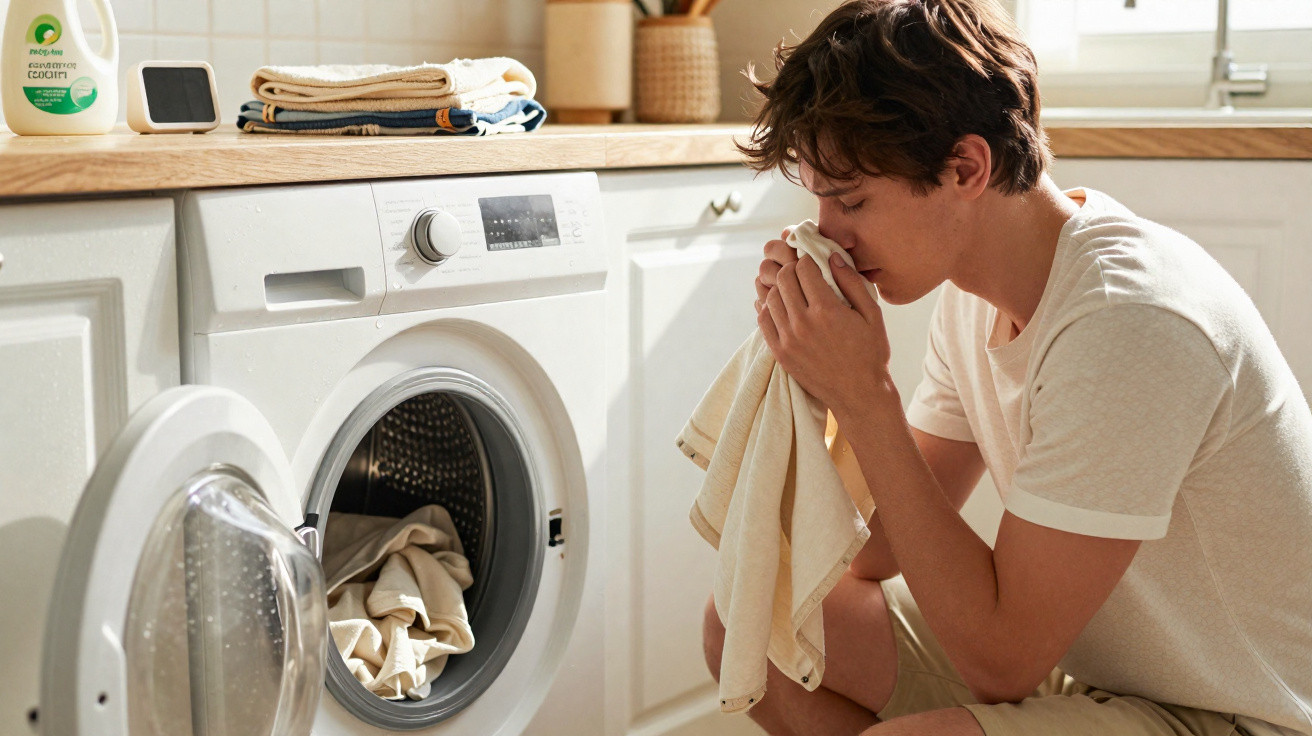
I first really clocked it on a Tuesday evening. I was barefoot in the kitchen, glaring at the washing machine as though it had deliberately let me down.
I had felt quite pleased with myself for getting a load started before work. But then the day took over: a meeting ran late, my train was delayed, and I spent a lacklustre while scrolling on the sofa. Before I knew it, the washing had been sitting in the drum for eight hours. When I opened the door, a warm, humid smell drifted out. It was not utterly awful, just… off. Slightly sour. Slightly disheartening.
Naturally, I washed everything again. I poured in extra detergent, added a dash of fabric softener and tried every tip I had vaguely picked up from relatives and TikTok. The clothes smelled improved afterwards, but they were still not completely right, as if a trace of that first odour had remained. That was when I understood that this was more than “a bit of damp laundry”. Leaving wet clothes sitting for too long allows something to cling on, and it does not entirely let go afterwards.
The quiet moment your laundry crosses a line
There is a point at which freshly washed clothing silently becomes “not so clean anymore”, and the frustrating thing is that you cannot watch it happen. Leaving it in the machine for an hour seems harmless. Two hours will generally be fine too. Then you pass an unseen boundary with no warning, and your clothes begin to smell like a cupboard at the back of an old house. You only discover it afterwards, when you open the drum and get that mild sour waft.
We tend to imagine washing machines as miniature hygiene vaults: enclosed spaces where laundry remains fresh until we return. They are not. After the programme finishes and the water has drained away, the fabrics are left warm, wet and shut inside a dark space without airflow. That is effectively a VIP invitation for mould and bacteria. Your clothes may enter the spin cycle “dirty”, briefly become “clean”, and then discreetly turn into a “breeding ground” while you are watching Netflix.
There is an unpleasant irony to it. The more efficient and energy-saving modern wash programmes get, the easier it becomes to think, “I’ll deal with it later”. Cooler, shorter cycles can end while we are occupied with something else, and the machine gives one polite beep before abandoning us. Nobody teaches you at school how long washed laundry can wait. You learn through experience, starting with your nose.
What that smell actually is (and why it sticks)
The damp drum is alive, literally
That musty scent of an old towel has a cause. It is the smell of bacteria enjoying a small gathering on damp textiles. When wet clothes sit for too long, minute remnants of skin cells, natural body oils, sweat and invisible detergent residue provide food. The washing machine completes its work and empties the water, but the drum stays humid enough for microbes to become active and get to work.
They reproduce in clothing fibres, particularly in cotton T-shirts, towels and gym kit. The odour you notice is a combination of compounds released by those bacteria and whatever was already present on the garments. It is not merely a “wet smell”; it indicates that your freshly washed load has, quietly, become alive again. That is also why the smell is so hard to shift: instead of only removing water, you are now trying to reverse several hours of microbial chemistry.
Once those odour compounds attach themselves to the fibres, they don’t just float away in the next breeze of fabric softener. They adhere, persist and fight back. A further quick wash at the same low temperature that caused the issue will often lack the power to remove them. The laundry emerges smelling somewhat better, but not quite like it has just been washed. Its past is still caught in the weave.
Why some clothes never smell the same again
Some items seem never to fully recover after they have turned sour in the washing machine. Towels are a prime example. They are dense, retain water like a secret, and can remain damp in the middle even after the outside feels dry. This makes them ideal territory for persistent odours: the kind that survive an ordinary wash and return every time you step out of the shower.
Sportswear presents another problem. Stretchy synthetic materials are made to “wick moisture”, which sounds impressive when written on the label. In practice, some fabrics hold on to odours like an unpleasant memory, especially if they have spent half a day in the drum after washing. Even when they look immaculate, they may retain a subtle gym-locker undertone if they have been poorly treated too many times.
Eventually, you may find yourself throwing away a pair of leggings or that grey towel which never quite smells fresh, even when it has just come off the drying rack. You are not imagining it. Once particular smells have worked their way in, they become part of the item’s character. That “clean but not fresh” condition may be the fabric saying: you left me too long, and I remember.
Why your washing machine doesn’t forgive you either
It is tempting to blame the clothing, but the washing machine is hardly innocent in this situation. If damp laundry is regularly left in the drum, the appliance gradually takes on that routine. Moisture lingers, while mildew and bacteria establish themselves in the rubber door seal, detergent drawer and the smallest recesses of the drum. Each fresh load then travels through this mildly funky setting and picks up a hint of mustiness from the previous occasion you “forgot”.
That explains a smell which feels less like “one bad load” and more like “this whole machine has a vibe”. You open its door when it is empty and the scent falls somewhere between a damp cave and an uncared-for swimming-pool changing room. Your clothes are technically clean after a wash, yet there is an underlying note you cannot quite identify. The machine has picked up on your routine and begun to keep score.
Honestly, nobody deep-cleans their washing machine as regularly as they ought to. A hot maintenance cycle, wiping the door seal and washing the drawer are all dull jobs that sound like operating instructions for a spacecraft, so they generally sit at the bottom of the mental to-do list. Each time we leave a wet load for six hours, we add to that gradual build-up. It is not only about one soaked T-shirt; the entire system is quietly going sour.
The emotional side of “just rewash it”
The shame of the second spin
There is a distinctive kind of guilt in accepting defeat and pressing “start” for a second wash. It is hardly dramatic, but there is that sharp thought: I have wasted water, I have wasted time, and I may not even have solved it. You stand at the machine adding more detergent and wishing it will work this time, as though fragranced liquid can wash away bad timekeeping.
We have all taken out a T-shirt that looks entirely clean, pressed it to our face, and instantly known we will not actually wear it in that state. The slight recoil when the smell reaches you can feel oddly personal. It is not simply a laundry mishap. It is proof that, somewhere in the disorder of the day, something got away from you, leaving a mildly embarrassing and mildly smelly consequence.
Rewashing is a private bargain with yourself. Do you tolerate the almost-right smell and trust that nobody else will notice, or do you admit defeat and run it again? At times, practicality decides it: children’s school uniforms, work shirts or anything likely to be close to another person’s nose. On other occasions, it is about how you feel in your own clothes. Genuinely fresh laundry changes the way you carry yourself. Clothing that smells slightly wrong makes you feel a little less visible, whether or not you acknowledge it.
When smells trigger memories
Smells provide emotional shortcuts, and laundry is no different. That lingering damp odour can instantly take you to a former student house, a stale hotel bedroom or a childhood memory of clothes drying badly in a chilly hallway. It is remarkable how a single breath can carry you from a perfectly ordinary adult kitchen to a place you believed was long behind you.
There is comfort, too, in clothes that smell as they should: the familiar laundry fragrance of home, your partner’s T-shirt, or the towel you always choose first. When that changes and a supposedly “fresh wash” smells wrong, it unsettles you. It creates a small fracture in the idea that you have things under control. You notice it most on difficult days, when small details carry more weight than you would care to admit.
Perhaps this is why washing left stale in the machine feels so disproportionately irritating. It is neither dangerous nor dramatic. It is simply one of those minor everyday failures that accumulate, leaving you with the sense that life is a little more chaotic than you had hoped.
The unglamorous science of acting fast
There is one straightforward principle that appliance engineers and microbiologists would both endorse: time spent wet is the main enemy. The longer fabric remains warm and damp, the more opportunity bacteria have to multiply and produce those tenacious odour compounds. In an ideal world, you would remove laundry within half an hour of the programme finishing. In real life, most people have around two to four hours before the situation begins to become risky, depending on the temperature of the room and the material involved.
Once you appreciate that timing matters more than almost anything else-more than detergent brand, fabric softener or elaborate programme settings-the situation looks different. Setting a phone alarm no longer seems overly fussy; it feels like basic self-protection. If you are heading out or expect to be distracted, it is more sensible to use a delay timer so the wash ends when you are home than to rely on remembering it at 11 pm.
And if you do make the mistake? Moving quickly as soon as you realise a load has been left inside can determine whether “this smells a bit off” becomes “this towel will never be the same”. Rewash it promptly at a higher temperature, leave out the fabric softener, and dry the items swiftly, either outside with good air circulation or in a tumble dryer. Allowing them to sit damp in the laundry basket again is essentially replaying the same error.
Why this tiny habit shapes how your home feels
It is easy to write off smelly laundry as an unremarkable household nuisance, something to complain about briefly before carrying on. But something broader is taking place beneath it. The scent of your home-that mixture of food, textiles, people and products-is one of the subtle ways you judge whether life feels manageable. When clothes smell stale before you have even put them on, it weakens that quiet sense of order.
By contrast, opening the washing machine and finding only the neutral damp smell of clean clothes is unexpectedly satisfying. Putting up laundry that you know will dry fresh, or folding towels that smell as though they belong in a peaceful adult bathroom rather than a chaotic shared house, all point to a version of yourself you are trying to preserve. Laundry seems insignificant until you remember it affects what you wear, how you sleep and what you wrap around yourself after showering.
Leaving wet clothes in the washer for too long doesn’t just create a smell; it creates a story your fabrics keep telling back to you. It is a story of hurried mornings, missed alarms and good intentions thrown off course. Saving a load in time is one of those small, personal victories that nobody else notices, but you do. Perhaps that is why the faint sour odour of laundry left too long hurts so much: it reminds us that the little, unglamorous moments quietly determine how our days and homes truly feel.




Comments
No comments yet. Be the first to comment!
Leave a Comment