
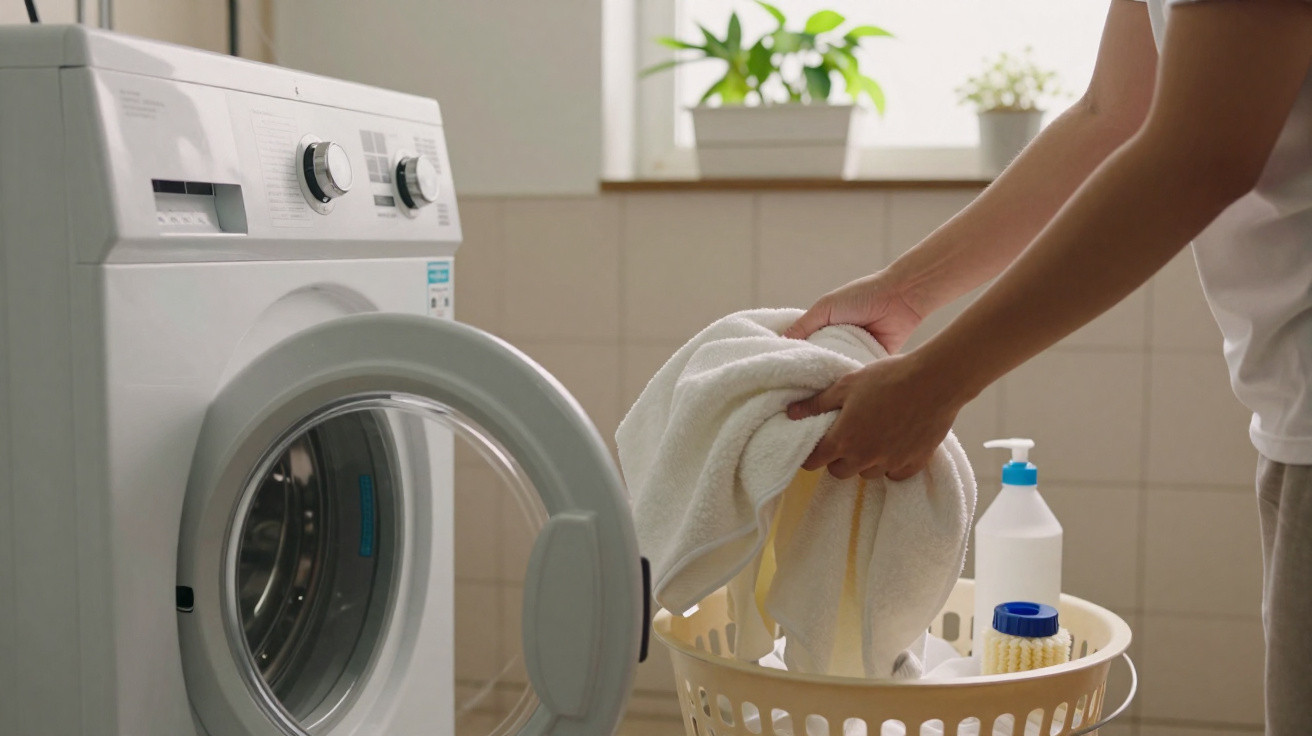
The washing machine finished 40 minutes ago.
Your laundry is still in the drum: lukewarm, heavy and neglected after the quiet “ping” you missed while dinner was catching and your phone kept buzzing. When you eventually take it out, the clothes feel oddly cold, almost timid, and there is a faint smell you choose to overlook.
You hang the load up or drop it into a basket, assuring yourself that it will “air out”. It can wait until tomorrow, you tell yourself. Yet the next day, the clean cotton T-shirt has the scent of a damp cellar, while your favourite towel carries a sour note that no fabric conditioner can conceal.
You may begin blaming the detergent, the washing machine or something else entirely. In reality, the laundry simply remained damp in the wrong environment for slightly too long. The truth is more troubling than the odour itself.
How damp laundry becomes a stubborn smell
The most persistent laundry odours rarely develop while clothes are dirty. They tend to emerge afterwards, once you assume the difficult part is over. The crucial period is when freshly washed items are left wet, bunched together or forgotten rather than dried promptly and thoroughly.
At that point, textiles become a miniature holiday resort for bacteria and mould spores: warm, humid and without fresh air. It is an ideal setting for microbes to feed on sweat residue and skin cells that remain in the fibres. Initially, the result is not overwhelming. It merely hints at a problem.
Once the odour becomes obvious, it is embedded deep in the fabric weave. A quick spray of fragrance will not solve it.
During a rainy week in a small London flat, Anna believed she was saving time. She did a wash late at night, removed the damp laundry from the machine and arranged it on an overcrowded drying rack in the hallway. The doors were closed, the windows shut and the radiators off. By morning, the clothes still felt clammy.
She left them for “just one more day”. By the third day, every piece had developed that humid, mildly sour smell. It is the sort of scent that lingers in towels and makes bed linen seem unclean, despite looking spotless. She washed everything again, this time using extra detergent. Nothing improved.
Only a hot wash with a cup of white vinegar, followed by a full day drying beside an open window, finally reduced the odour. The unseen price was extra time, water and detergent, along with the mounting annoyance of repeating the same household task.
The process itself is quite straightforward. If laundry stays damp in the washing machine, a laundry basket or a poorly ventilated room where it dries slowly, bacteria can multiply rapidly. They feed on tiny traces of body oils, deodorant, sebum and detergent that has not rinsed away completely.
As these substances are broken down, the bacteria produce volatile compounds. The “wet dog”, “musty cellar” or “old towel” smell is simply chemistry at work. Once those molecules attach themselves to fibres, however, they are difficult to remove. A more pleasant fragrance or a longer spin cycle will not simply wash them away.
That’s why the same T-shirt can smell fine straight from the machine, but like a locker room after 24 hours crumpled and damp in a corner. The smell is not mysterious; it is a matter of timing.
The right way to dry laundry and prevent big smells
The most important change is to dry clothes quickly. Freshly washed laundry should move from wet to completely dry as fast as your home allows. Treat the end of a wash cycle much like hot food: the longer it remains in a warm, enclosed place, the more unwanted things can grow.
Where possible, empty the drum within an hour of the cycle ending. Shake out each item to loosen the fibres and release excess water. Arrange garments with space rather than in layers: use one hanger for each shirt, leave room between folded towels and open socks flat rather than keeping them rolled into balls.
If you have a tumble dryer, use shorter programmes at a moderate temperature, then complete the drying on an airer. When drying indoors, create ventilation. A slightly open window, extractor fan or even a compact dehumidifier can make a substantial difference.
Let’s be honest: nobody manages this every day. Life gets in the way, alarms are missed and laundry is left waiting. There are still ways to minimise the effect when this happens. If you discover the load remains in the machine three hours later, run a brief rinse or spin programme to refresh it and bring the temperature down.
Then approach drying sensibly. Do not heap everything into a laundry basket for later. A basket acts like a slow cooker for moisture and odour. Lay clothes out in the warmest, driest room rather than a chilly hallway or continually damp bathroom. Thick items, including hoodies and towels, need particularly generous spacing.
During a week of poor weather, rotate the laundry: remove items that are nearly dry from the rack and put the wettest pieces in their place. This straightforward habit can matter more than the expensive detergent bought on offer.
Some people assume products are the answer. In practice, how you handle damp laundry during its first few hours matters far more than any supposedly miraculous scented beads.
“Odors in textiles are less about how dirty they were at the start, and more about how long they stayed damp,” notes one European hygiene researcher. “Fast, complete drying is the most underrated cleaning step in everyday homes.”
When all the advice feels like too much, it is useful to remember a handful of simple rules.
- Never leave clean laundry in the washing machine overnight. If you do forget it, rinse it again before drying.
- Make sure every item has airflow: use extra hangers, avoid overlapping layers and open windows whenever you can.
- For musty towels, use a 60°C hot wash with a cup of white vinegar, then dry them fully outdoors or in a hot tumble dryer.
- In small flats, run a dehumidifier or fan; slow drying quietly encourages unpleasant smells.
- If an item still smells after drying, do not fold it away. Wash it again rather than hiding the issue in your wardrobe.
Ending the cycle of “clean but smelly” laundry
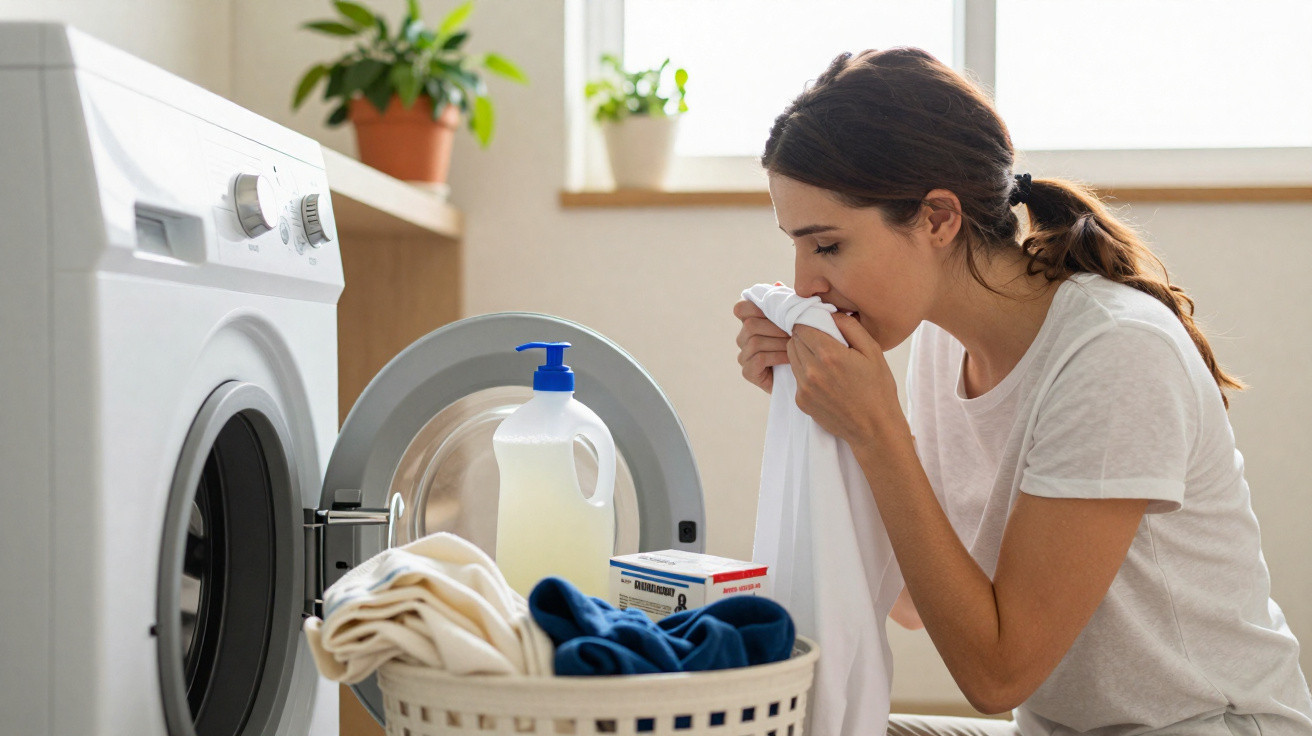
Laundry odours can bring a subtle sense of embarrassment. You open a cupboard for visitors, offer them a towel and immediately wonder whether they will detect that faint sour scent. It never comes up over brunch, but nearly every home has a collection of oddly smelling clothes that gets pushed to the back.
At a deeper level, these smells reflect a household’s routine: hurried evenings, limited space, excessive humidity and too little time. This is why the answer is not purely practical. It also means giving laundry a different place in the weekly routine, so dampness does not receive the lengthy head start it thrives on.
The change could be as easy as setting a phone reminder when you press “start”, washing smaller loads that dry faster or placing the folding airer by the window rather than behind a door. Small adjustments can have a major effect.
When laundry no longer smells like yesterday’s weather, there is a subtle change. A T-shirt taken from the wardrobe smells of nothing at all - or perhaps sunshine, fabric and memory - rather than a forgotten corner of the home. That neutral scent is what real cleanliness feels like.
On a busy Wednesday, picking up a gym top that smells fresh rather than swampy does more than spare your nose. It shows the outcome of many small, almost unnoticed choices made over several days: repositioning the rack, opening a window and restarting a forgotten cycle rather than simply hoping for the best.
We have all experienced a clean-looking towel that smells as though it spent the night in a basement. Perhaps the real message is to notice the dull, damp stage in between that is usually ignored, and to recognise it as part of the task. Your future self - hurriedly folding soft clothes with a neutral scent - will quietly be grateful.
| Key point | Details | Why it matters to readers |
|---|---|---|
| Do not leave laundry in the drum | Empty the washing machine within 1 hour of the programme finishing. If you have forgotten it for several hours, use a quick rinse or spin programme before drying. | This restricts bacterial growth in warm, enclosed conditions, preventing clothes from developing a “wet dog” or sour smell before they even get to the drying rack. |
| Dry quickly, rather than merely “eventually” | Use the warmest, driest room, open a window or use a fan/dehumidifier. Leave space between items on hangers or racks instead of piling them up. | Faster drying closes the moisture window that microbes require to multiply, helping fabrics remain neutral-smelling rather than musty. |
| Restore musty towels and sportswear | Wash again on a hot cycle (40–60°C depending on the fabric) with a cup of white vinegar or an odour-removing detergent, then dry completely outdoors or in a hot tumble dryer. | Deep odours trapped in thick fibres or synthetic materials can be removed, meaning you need not throw away items that are “clean but smelly”. |
FAQ: damp laundry smells
- How long can clean laundry stay in the washer before it starts to smell? In most homes, there is around 1–2 hours before odour-producing bacteria begin multiplying in earnest, particularly in a warm machine. After 8–12 hours, many people notice a distinct musty smell. If it has been left overnight, it is generally worthwhile to run a short rinse before drying.
- Why do my towels smell bad even after I wash them? Dense towels dry slowly and can remain damp in the centre, trapping bacteria and body oils. Over time, this creates a seemingly permanent smell. A hot wash using less detergent, a cup of white vinegar and quick, complete drying will often revive them. Repeating this process once or twice can reset particularly stubborn towels.
- Is fabric softener making odors worse? It can. Fabric softeners leave a coating that makes textiles feel smooth, but this layer can retain moisture and residue. On towels and sportswear, the coating may lock in smells. Using less softener, or not using it at all for these items, usually produces fresher results.
- Can I just spray perfume or fabric mist on smelly clothes? You may cover the odour briefly, but the bacteria and residue causing it remain in the fabric. In warm conditions, the unpleasant smell often returns alongside the fragrance. If something smells musty when dry, a proper rewash is the only dependable solution.
- What’s the best way to dry laundry indoors without smelling up the room? Pick the sunniest or warmest room, maintain some airflow with a fan or open window, and do not overcrowd the airer. A small dehumidifier placed near the laundry can be extremely effective in compact flats. Rotating items on the rack so each receives time in the best position also reduces that damp-room smell.

Comments
No comments yet. Be the first to comment!
Leave a Comment