
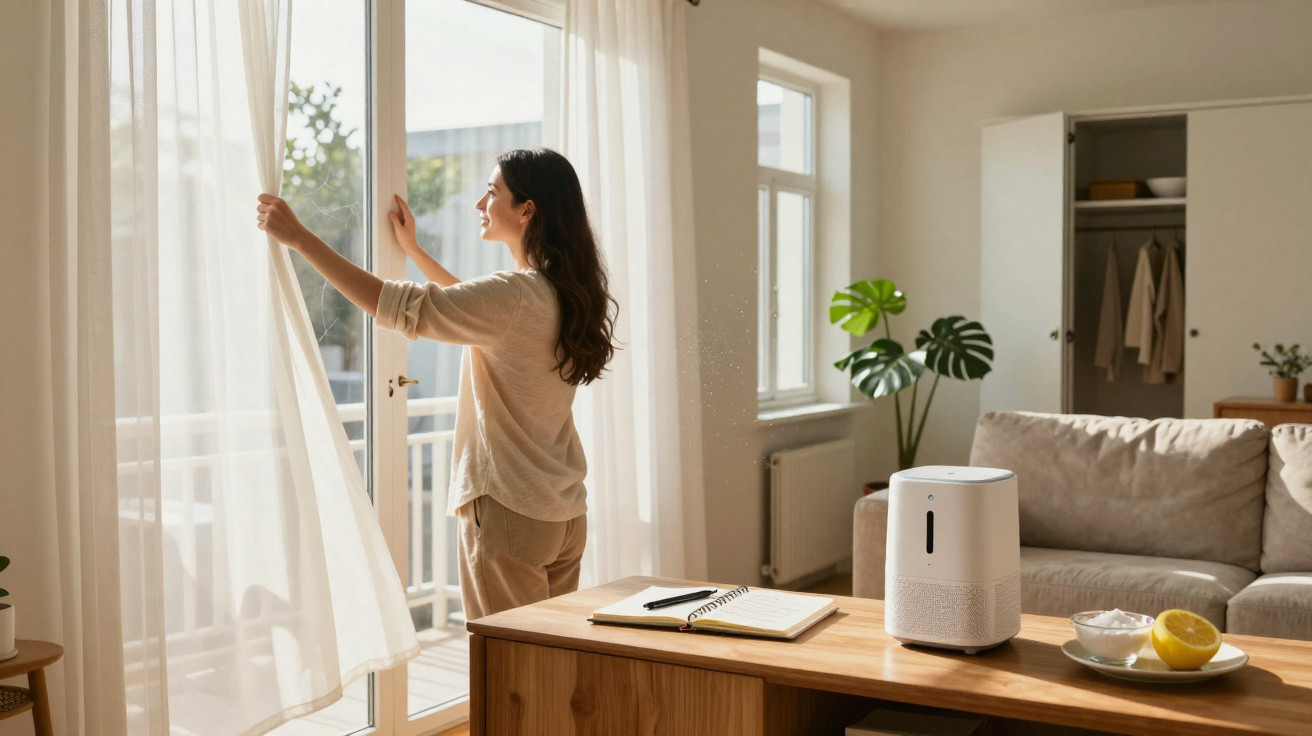
The flat was immaculate.
The cushions had been fluffed, the sink gleamed and a light citrus scent lingered in the hall. Yet once the door clicked shut and the outdoor air was gone, it appeared: that sealed-up, closed-in smell. It was not dirty, nor quite damp. Just… stale. The sort of smell you notice only after being away for several days, when your own home seems to welcome you back with a weary exhale.
You can spray, mop and burn scented candles until there is no wax left. A few hours later, though, the odour quietly returns, hanging low in the room like dust you cannot see. Friends may say, “Oh, I don’t notice anything,” but you do. You catch it the moment you put down your bag and take off your shoes.
It is not in your head. In most cases, it points to one very straightforward cause.
The hidden reason clean homes still smell “closed”
Most stale-smelling homes are not unclean; their air is simply stagnant. With nowhere to escape, it keeps circulating through the same spaces, collecting faint traces of cooking, showers, pets, washing and even our skin. We clean what we can see, while overlooking the invisible surface: the air itself.
Modern properties, particularly in the UK, are designed or renovated to be increasingly airtight. Think new windows, thick curtains, insulation and draught-proofed doors. This is excellent for reducing energy bills, but less helpful for keeping a home fresh. Air becomes trapped, humidity gradually rises and odours that ought to disperse simply… remain.
We often blame the bin, fridge or carpet, though they are frequently not at fault. The unobtrusive problem is insufficient ventilation: too little fresh air entering and too little stale air leaving. Even an immaculate home can smell of last night’s meal because last night’s air has never gone.
One London letting agent told me she can nearly predict which flats will smell stale before opening the door: long hallways, rarely opened windows, radiators running and plenty of fabric. There may be no visible dirt, but the air feels heavy before you have even removed your coat.
Research supports this. A UK indoor-air-quality survey found that many people open their windows for under 10 minutes a day during winter, while some do not open them at all. Combine that with working from home, extra cooking and more showers, and rooms never properly refresh themselves. The odour is not intense enough to seem “bad”; it is merely a little old, like a hotel room that has not been aired between guests.
During a rainy Tuesday in Manchester, I visited a flawlessly maintained semi-detached home. There were fresh flowers on the table, visible vacuum lines in the hallway and no clutter. Still, the dining room carried the smell of old toast and damp coats. The owner laughed, slightly embarrassed: “I’ve tried every diffuser under the sun. The smell wins.” The underlying problem was much simpler. Her new windows’ trickle vents were tightly shut, and she kept the kitchen door closed when cooking. Her home was beautiful – and sealed in.
There is some subtle chemistry behind that confined sensation. Normal daily life releases volatile organic compounds (VOCs) from cleaning products, air fresheners, furniture and even new flooring. Moisture from breathing, boiling pasta and hot showers also remains in the air. Soft furnishings absorb all of this, then release it gradually over time.
Without fresh air moving through the home, these particles remain. Your nose rapidly adjusts to and “forgets” powerful odours, but it is highly sensitive to air that feels old. It is almost as though your brain is telling you that the room has a memory. That mild stale smell is your home’s recent past refusing to move on.
In technical terms, you are detecting a combination of slightly elevated humidity, low-level VOCs and odour molecules that have not been sufficiently diluted. Nothing alarming, just enough to make a room feel as though it has not had a proper breath for days.
Small adjustments that change the way your home smells
The most effective way to freshen a home is not a product but a habit: changing the air every day. There is no need to leave windows open all day or for hours in cold weather; a short, brisk exchange of indoor and outdoor air is enough.
Open windows on opposing sides of your home for 5–10 minutes twice daily. That is all it takes. This creates a small wind tunnel, pushing indoor air out and drawing in relatively cleaner outdoor air. In winter, the walls and furnishings hold onto their warmth, so temperatures do not drop as dramatically as you may expect, while the smell is reset.
If your flat has windows on only one side, open the front door a little at the same time, just enough to create a cross-breeze. That brief rush of air can do more for stale odours than hours of scented sprays. It seems almost overly simple, which is probably why we overlook it.
Another understated solution is dealing with moisture before it settles into fabrics. Run the extractor fan whenever you cook or shower, and leave it on for at least 10–15 minutes afterwards. Let’s be honest: hardly anyone truly does that every day. However, homes that look and smell fresher nearly always share one feature: steam is not allowed to linger.
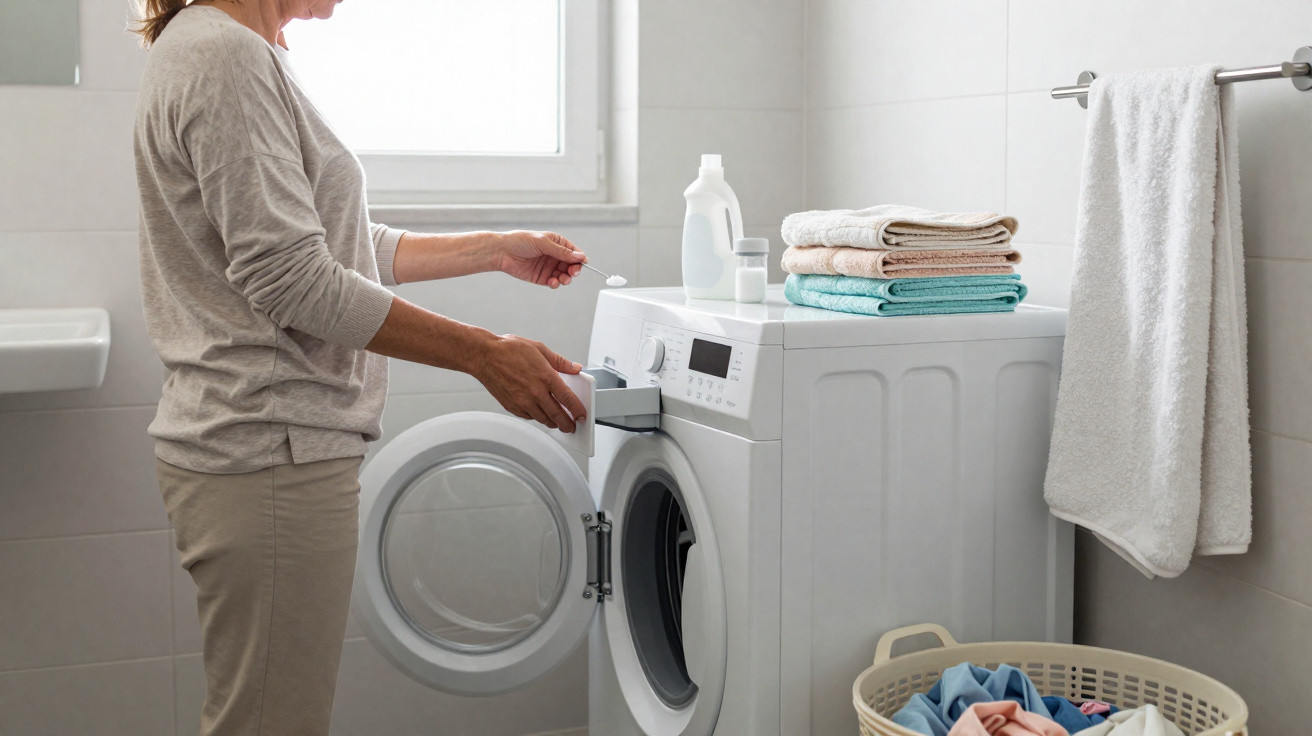
When drying clothes indoors, keep them in a single, well-ventilated room with a window slightly open, or place them near a dehumidifier. Otherwise, the smell of laundry works its way into carpets, curtains and even painted walls. Your home is not dirty; the air is simply following your laundry routine.
Many people respond to a stale smell with panic-cleaning. They scrub the floors and clear cupboards, only to feel discouraged when the odour remains. Usually, the overlooked step is air circulation and moisture management, rather than additional bleach.
“People think of smell as a cleaning problem,” explains an indoor air specialist I spoke to. “Most of the time, it’s a circulation problem. You’re not trying to deodorise your home, you’re trying to change its air more often.”
A few discreet aids can help without resorting to harsh chemicals. Put bowls of bicarbonate of soda in tucked-away areas to absorb persistent odours. Use washable sofa throws, which take on much of the everyday smell and can be removed and laundered. An inexpensive hygrometer can also monitor humidity; aim for roughly 40–60%.
- Open windows fully for 5–10 minutes twice daily to replace the air.
- Use extractor fans while cooking or showering, and afterwards.
- Launder soft furnishings regularly, including cushion covers, throws and curtains.
- Keep indoor humidity at around 40–60% to prevent that “heavy” feeling in the air.
- Reduce strong artificial fragrances, which mask stale air rather than tackling it.
Rethinking what a “clean” home should feel like
We usually assess cleanliness by sight: uncluttered surfaces, neat shelves and floors comfortable enough to walk on barefoot. But the homes that feel most welcoming are often those with light-feeling air, even when a little washing is sitting on a chair. That is the subtle change in mindset: treating freshness as something to maintain, rather than something to spray.
On a wet Sunday, a friend in Bristol showed me her “air reset” routine. She opens the windows wide, puts on music and does a quick 10-minute tidy while the flat airs. She was convinced her home had smelled better since starting this habit than it ever did with her previous routine of weekly deep cleans and continually lit scented candles. It was not immaculate: there was some clutter and a pile of books beside the sofa. Yet the air felt peaceful, as if the room had just released a deep breath.
At a more emotional level, smell quietly shapes the atmosphere of a home. A faint enclosed odour can make somewhere feel worn out, however spotless it is. A fresher smell does not mean your life is perfectly organised, but it can soften the day’s rough edges. It can turn a late-night cup of tea at the kitchen table into a small, unexpected luxury. And it is a reminder that a lived-in home is allowed to breathe, just as the people living in it are.
| Key point | Detail | Why it matters to the reader |
|---|---|---|
| The real cause of a “closed-in” smell | Stagnant air, insufficient air replacement and mild humidity | It shows that the problem is not necessarily inadequate cleaning |
| The most effective action | Open windows wide for 5–10 minutes twice a day | A straightforward, free solution that is easy to try today |
| The role of daily habits | Showering, cooking, drying laundry and fragranced products | It helps identify what may be quietly feeding the stale smell at home |
FAQ:
- Why does my house still smell stale after I’ve cleaned everything? The problem is often trapped air rather than dirt. When air does not circulate, odours from everyday life remain suspended and settle into fabrics, even if every surface is spotless.
- Is it safe to open windows in winter without losing all the heat? Brief ventilation bursts are generally fine. Opening windows wide for 5–10 minutes replaces the air quickly, while walls and furniture retain most of the warmth.
- Do air fresheners actually help with stale smells? They disguise the odour rather than remove it. Some may even introduce extra chemicals into air that is already stagnant. Ventilation and humidity control offer greater long-term benefits.
- Can a dehumidifier stop my home smelling musty? It can be very helpful where humidity is high, particularly in small or poorly ventilated areas. Used alongside regular airing, it is much more effective.
- How often should I wash soft furnishings to keep the house smelling fresh? For most homes, washing cushion covers and throws every 4–6 weeks is a good routine, and more frequently if you have pets or dry washing indoors.

Comments
No comments yet. Be the first to comment!
Leave a Comment