
Sunlight on the glass, spray bottle in hand, and time slipping away. You wipe the pane, the light changes, and those fine, taunting lines appear again - visible only once you stand back. Professional cleaners deal with the same noon glare, yet they finish the job, smile, and head to the next window.
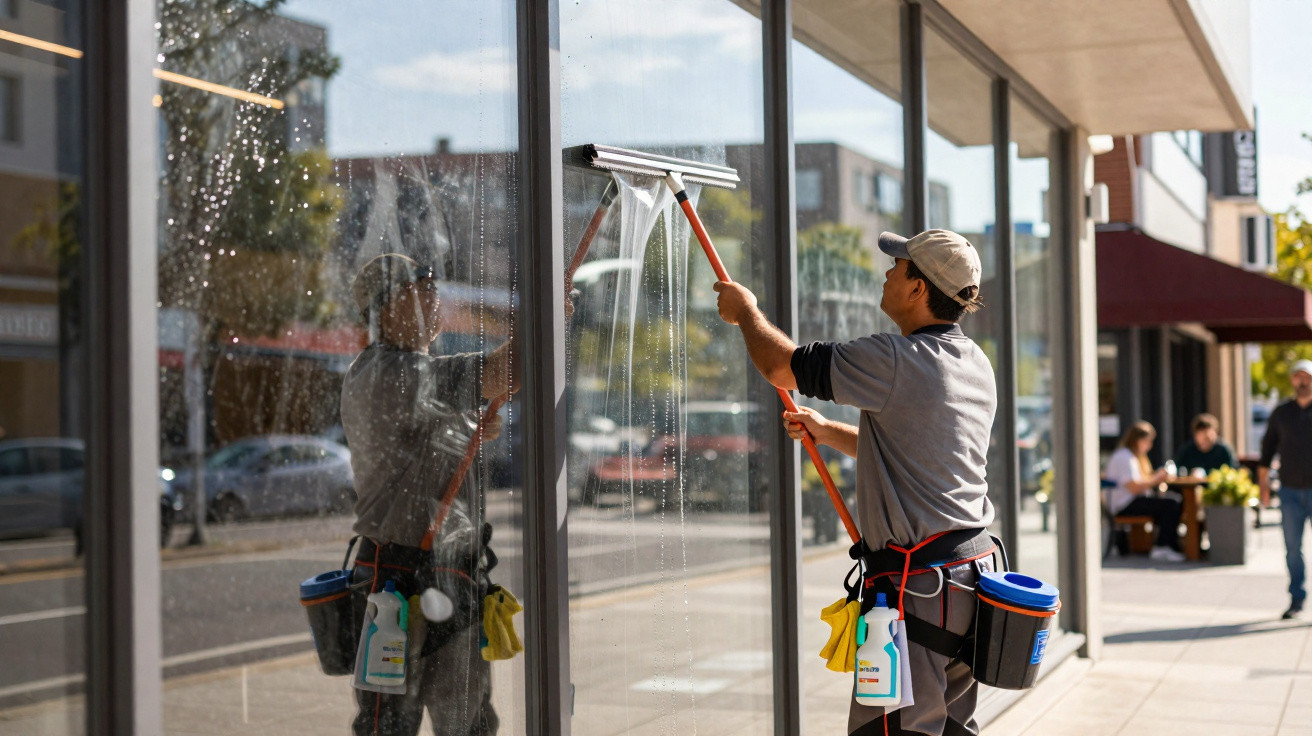
A window cleaner wearing a faded cap drew a squeegee across a shopfront while the lunchtime crowd looked on. The sun struck the glass directly, but there were no streaks - only a crisp sheet of water splitting into tidy ribbons.
His movements were quick and rhythmic: wet the pane, pull the blade, wipe it, repeat. A second cloth worked around the edges like a magician’s final flourish. I expected the usual faint haze to emerge. It did not.
The real secret is not what most people assume.
Sunlight is not the enemy - residue is
In bright conditions, water can evaporate almost instantly. Minerals, soap residue and lint are then baked onto the glass, appearing as pale, ghost-like curves. Professionals do not battle the sun; they work faster than it by controlling what is left on the pane.
They adjust their solution, control the blade and reduce the area they tackle at once. Direct sun doesn’t cause streaks - residue does. Once you set up your process around that fact, cleaning at noon is simply another part of the day.
In Phoenix, a café owner insisted that midday window cleaning was cursed. A crew arrived with a compact DI tank, a soft-bristled washer and a pile of dry scrims. They misted the glass, squeegeed it, detailed the edges and were gone before the ice in a customer’s drink had finished cracking.
There was no strong chemical smell and no desperate polishing. The panes were simply clear, and remained so as the sun climbed higher. Several large installers have reported fewer call-backs since adopting pure-water poles for sun-facing façades. It is not magic; it is chemistry combined with timing.
The reasoning is straightforward. Hard water deposits minerals, household window sprays leave surfactant film, and warm glass speeds up evaporation. Remove the water layer cleanly, minimise the residue in your mix and work over smaller areas.
For an extra advantage, add a small amount of isopropyl alcohol to the solution. It evaporates cleanly, lowers surface tension and allows the blade to glide more easily. The sun acts as a spotlight, exposing whatever your technique and cleaning mix leave behind.
Field-tested methods for streak-free windows in full sun
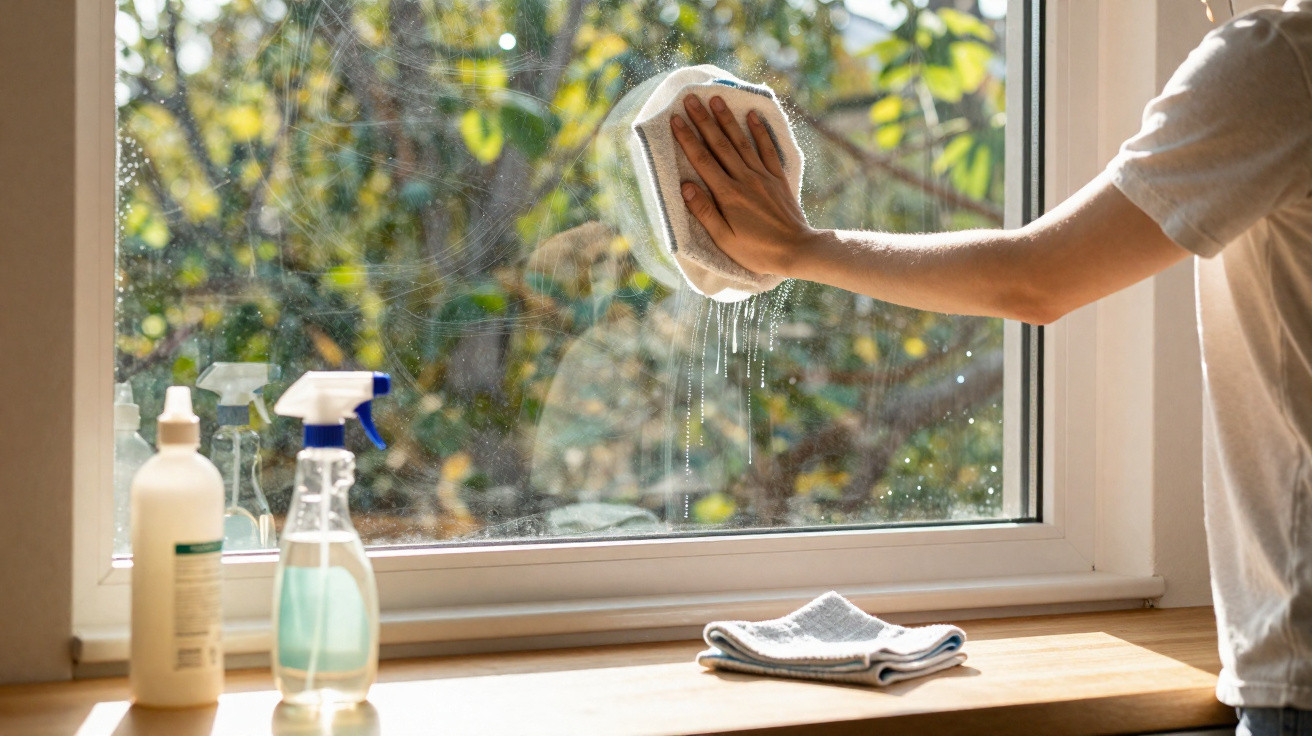
Prepare your solution like a professional: 2 litres of cool water, a pea-sized drop of classic washing-up liquid and 100 ml of isopropyl alcohol (70–90%). Where tap water is hard, choose distilled water. Wet the glass using a strip washer, starting with the top and sides to cool the edges.
Use a squeegee fitted with sharp rubber, beginning at the top of the pane. Either fan the blade or pull it straight down in overlapping strokes. Dry the blade with a towel after every pass, then finish the perimeter with a dry microfibre scrim. Work small, finish fast, detail the edges.
Avoid paper towels, as they release fibres that sunlight readily reveals. Rather than soaking an entire patio door at once, clean one half at a time. Replace the squeegee rubber as soon as it starts to chatter or produces faint lines.
Keep two cloths to hand: a slightly damp one for the corners and a completely dry one for final touch marks. Everyone has seen a flawless pane spoiled by a single drip from the top rail. Catch it with the dry cloth before it turns into a comet-like trail.
Put simply, sprays used on their own in fierce sunshine often become an endless wipe-and-chase routine. If the glass is extremely hot, create shade with a golf umbrella or a light sheet held by a clamp. Then let the blade remove nearly all the liquid instead of relying on your cloth.
“Sun days are timing days,” says Maya, a technician who cleans storefronts by noon. “I cut the pane, pull the water, and only touch the edges. If my towel is doing the heavy lifting, I’ve already lost.”
- Lightly pre-wet the glass to cool it first.
- Mix water with a micro-dose of washing-up liquid and isopropyl alcohol.
- Work in sections that can be completed within 30–45 seconds.
- Wipe the squeegee rubber after every stroke.
- Detail the edges once using a dry scrim.
Window-cleaning gear and small upgrades that make the difference
Choose a good squeegee with a firm yet fresh rubber edge. Worn rubber causes tiny chatter marks that may only become visible in sunlight. Keep the blade edge free from dirt by wiping it on a dry, lint-free towel after each stroke.
Not all microfibre cloths perform alike. Use a tightly woven scrim for detailing and a softer, plusher cloth for washing frames. If your windows sit beneath sprinklers, use distilled water or a handheld DI filter instead. Pure water equals zero spots, even at noon.
Your setup matters too: use a bucket-on-a-belt to prevent drips, a holster for the squeegee and separate bags for wet and dry cloths. Let’s be honest: nobody does every window every day. Your kit should therefore make a quick Saturday round feel nearly automatic.
What changes when your windows look perfect in full sun
Rooms feel lighter, plants appear healthier and the view seems more luxurious. You begin to notice that much of what looked like dirty glass was actually residue from the previous clean. Light looks cleaner, outlines become sharper and mornings feel gentler.
You will also stop putting off south-facing windows. Once you understand the small-section rhythm, sunny panes become predictable rather than intimidating. There is a quiet satisfaction in completing a perfect pass and walking away before the water has a chance to dry.
People will ask what product you used. You may simply shrug, because the answer is not one product but the order of actions: a clean mix, controlled blade work and fast edge detailing. Then you look up at the sky and think: more of this, please.
| Key point | Detail | Benefit for the reader |
|---|---|---|
| Mix optimised for sunlight | 2 litres of water + a drop of washing-up liquid + 100 ml of isopropyl alcohol | Less residue, clean drying and fewer streaks |
| Squeegee first | Clean blade, overlapping passes and wiping the blade after every pass | Removes the water film before it can mark the glass |
| Pure water for hard-water areas | Distilled, deionised or an RO/DI system | No mineral deposits and no white spots, even in full sun |
FAQ
- Can I really clean windows in full sun without streaks? Yes. Choose a low-residue mix, work in small sections, remove most of the water with a squeegee and detail the edges once using a dry scrim.
- What’s the best homemade solution for sunny days? Cool water, a tiny drop of washing-up liquid and 10–15% isopropyl alcohol. Distilled water is useful where you have hard water.
- Do I need special professional equipment? A quality squeegee, fresh rubber, a strip washer and two microfibre cloths will outperform any “miracle” spray in bright sunshine.
- Why does my glass look worse after it dries? Minerals, remaining soap and fibres are drying on the pane. Cut down residue and remove the water film quickly with the squeegee.
- How often should I change the squeegee rubber? Replace it when it chatters or leaves faint lines. For household use, this may be every few months; with heavy use, it may be every few weeks.

Comments
No comments yet. Be the first to comment!
Leave a Comment