
You have scrubbed, sprayed and shampooed until your arms could do no more, yet the shadow still shows through the carpet fibres. The surprising part is that the answer is not a brightly coloured bottle from the cleaning aisle. It is a pantry staple that costs pennies, used with an iron and a clean towel. You do not even have to enjoy cleaning to make it work.
One Saturday morning, the light fell across the floor perfectly and revealed it again: a pale coffee ring we had thought we had defeated the previous year. Enzyme sprays, oxygen foams and even a hired machine that sounded like a miniature jet had achieved nothing. Then a neighbour sent a photo of a white towel marked with a brown square transferred by steam. “Use the pantry stuff,” she wrote. Five minutes later, we gave it a go.
The stain genuinely started to shift.
The overlooked pantry stain remover
There is a kitchen cupboard essential that can make old carpet stains surrender: white distilled vinegar. Its smell is not especially pleasant while you are using it, but it disappears as the area dries. The key is its pH. Many persistent carpet marks are alkaline, or are bound up with dried sugar, tannins, soap deposits or minerals left by tap water. The gentle acidity of vinegar rehydrates these residues and helps break their grip. Combined with heat and wicking, it draws the stain into a towel much like ink being absorbed by blotting paper.
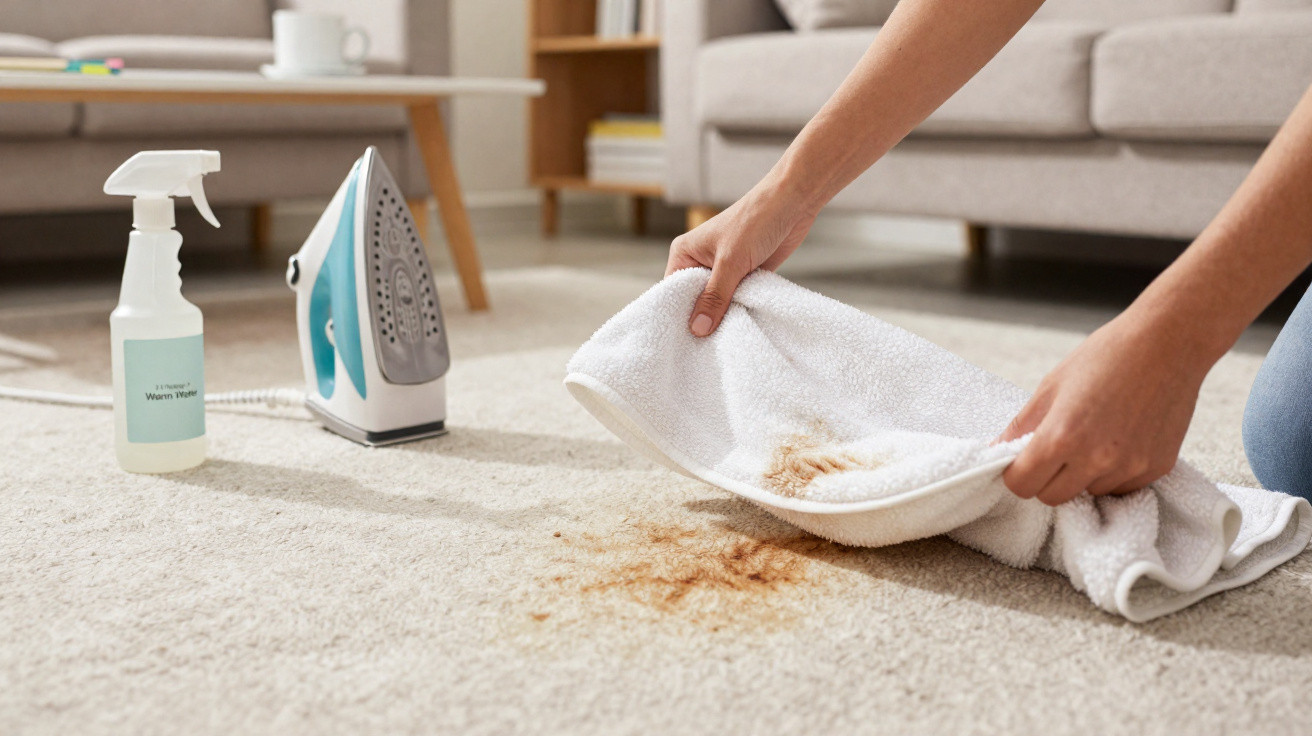
Most of us have reached the point where a mark looks permanent and you start considering rearranging the furniture to cover it. One Boston reader said she removed a four-year-old tea stain that had defeated three supposedly “professional strength” removers. She combined equal amounts of warm water and vinegar, placed a damp white towel over the area and ran a steaming iron gently across it. With every lift, the towel became another shade darker. After the fourth pass, only a faint trace remained. She laughed at the floor as though it had been caught out.
There is some satisfyingly straightforward science behind it. Dried coffee and wine stains are complicated mixtures of acids, tannins, sometimes milk, and frequently soap left behind from earlier cleaning attempts. Vinegar reduces the pH, allowing that residue to release; it also moistens dried particles so they can move and helps surfactants work properly. Steam supplies kinetic energy, easing the stain from the carpet pile and opening up the fibres. The towel then acts as an absorbent sponge, drawing the loosened dirt up and out so it cannot settle back into a ring. It is not magic, merely chemistry and patience.
How to lift carpet stains with vinegar and steam
Begin by testing an inconspicuous area, particularly if the carpet is wool. Make a basic solution using 1 part white distilled vinegar and 1 part warm water. For grimy or sticky marks, include one small drop of clear washing-up liquid. Vacuum the carpet first. Spray or blot a light amount of solution onto the stain, without soaking it. Cover the area with a clean white cotton towel. Set your iron to steam at a low-to-medium setting, then press for 10–15 seconds. Lift the towel to inspect it: brown or yellow staining should have transferred. Shift to a fresh part of the towel and continue until no more colour comes away.
Give the spot a light mist of plain water, then blot it with a dry towel. This reduces the chance of a fresh ring forming from remaining vinegar or soap. To tackle odour and aid drying, scatter a light layer of baking soda over the area, leave it until completely dry and vacuum it up. Use water sparingly to avoid saturating the underlay beneath the carpet. For a delicate rug, dilute the vinegar further, using 1 part vinegar to 3 parts water, and leave out the washing-up liquid. Testing in a wardrobe corner is far better than regretting it in the sitting room.
The common mistakes are minor but easily missed. Coloured towels may release dye when exposed to steam, so use white cotton only. Avoid apple cider vinegar, as its colour can transfer. Move the iron gently and do not use intense heat, which may warp synthetic fibres. Realistically, nobody gets every detail perfect every time. If a stain returns by the next morning because it is wicking up from underneath, cover the area with a dry white towel, place a flat weight on top and leave it overnight. One rule is absolute: Do not mix vinegar with bleach or ammonia.
“When clients think a stain is permanent, nine times out of ten it’s residue fighting them. Vinegar plus steam doesn’t just clean-it releases.”
- Best ratio for synthetic carpets: 1:1 vinegar to warm water
- Best ratio for wool or silk: 1:3 vinegar to warm water, with no washing-up liquid
- Timing: steam for 10–15 seconds per press, then inspect the towel
- Tools: white cotton towels, a spray bottle and a basic steam iron
- Avoid: apple cider vinegar, coloured towels and an excessively hot iron
When white distilled vinegar works best
This approach responds particularly well to old coffee, tea, fizzy drink, juice, red wine halos and unexplained marks left from a previous tenancy. Steam softens the stain, vinegar releases it and the towel absorbs it. Fresh pet accidents often lift very well, while older ones may require another treatment or a dedicated enzyme cleaner later to digest any remaining proteins. Grease and lipstick can be more difficult. First blot with cornflour to draw out the oil, vacuum it away, then use vinegar on any tint that remains. This combination is not a substitute for every specialist product, but it can deal with far more than you might expect.
The carpet fibre is important. Nylon and polyester tend to be forgiving. Wool can react badly to both acid and heat, so use a cooler, weaker treatment: brief steaming, a gentler dilution and an iron held just above the towel rather than pressed down. Always test for colourfastness. If the carpet backing has previously been wet, use liquids lightly so that old stains in the underlay are not drawn to the surface. For rugs coloured with natural dyes, keep the test area extremely small. If you are uncertain, turn off the steam and use presses with a warm towel instead.
You can tell the process is working when the towel changes colour and the mark becomes duller after every pass. If no colour transfers, stop and rehydrate the stain with a fresh light spray. One useful extra step is to use distilled water where tap water is hard, as this helps avoid mineral rings. For anyone inclined to scrub hard, consider this: carpet fibres are like hair-rub them too much and they frizz. Keep the friction for your trainers and allow the chemistry to do the work. This is a gradual, satisfying rescue rather than a wrestling match.
A simple carpet-care ritual
What makes this pantry technique appealing is not only the cleaner carpet. It is the relief of feeling that your home has stopped fighting back. You remove something you had assumed was permanent, and the room seems to breathe again. Pass it on to the person who relies on expensive sprays, or to a friend renting a place with mysterious blotches beneath the sofa. Some stains will still require professional help, and that is perfectly fine. Yet when a white towel turns brown and the mark finally gives way, it is a small victory you can repeat. Your floor holds a little less history, and the morning light feels kinder.
| Key point | Detail | Why it matters to the reader |
|---|---|---|
| The staple | White distilled vinegar diluted with warm water | Inexpensive, likely already in your pantry and safe for most carpets |
| The method | Spray, cover with a white towel, steam for 10–15 seconds, lift and repeat | Draws old stains into the towel instead of spreading them |
| Take care with | Wool or silk, coloured towels, and mixing with bleach or ammonia | Helps prevent damage, protects colours and keeps the air safe |
FAQ
- Will vinegar damage my carpet? When used properly, no. Dilute it, test a hidden area and take extra care with wool. Most synthetic carpets cope well with a 1:1 mixture.
- Can I do this without an iron? Yes. Use steam from a kettle nearby and press with a hot, damp towel, reheating it as needed. It takes longer, but it can still work.
- Does this remove pet urine odour? It helps loosen the stain and lessen the smell, although old urine may still need an enzyme cleaner to break down proteins. Vinegar deals with the halo; enzymes deal with the biology.
- What if the stain is oily or greasy? Begin with cornflour or baking soda to absorb the oil for 30–60 minutes, vacuum, then use the vinegar-and-steam method on any remaining tint.
- Why not simply hire a carpet cleaner? Large machines can over-soak carpets and leave behind soap that attracts dirt later. This targeted method uses very little liquid and avoids residue.


Comments
No comments yet. Be the first to comment!
Leave a Comment