
Not an abstract threat, but products that sit against our skin throughout the day. The most unsettling detail? One item highlighted is a supermarket favourite.
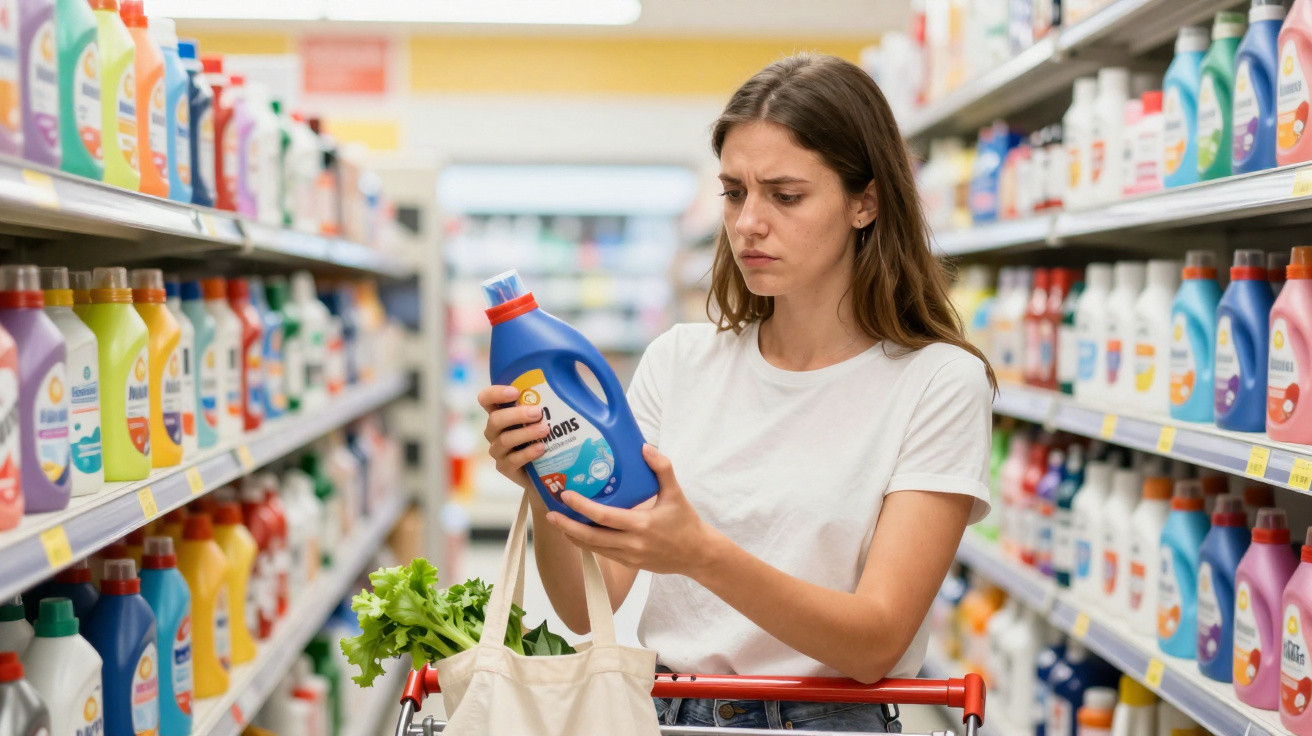
I was in the laundry detergent aisle, only half paying attention to rows of bright lids and “spring meadow” packaging, when a woman bent closer to smell a bottle as though it were a bunch of flowers. Most of us know the feeling: laundry that smells fresh can seem like a modest victory. A toddler in a trolley was waving a pod around like a plaything. Then my phone vibrated with the latest 60 Millions de consommateurs test results: four widely used detergents had been identified for ingredients associated with allergies and other health concerns. Looking again at the liquids and pods, I became conscious of every claim on the packaging - and of what those labels failed to say. One of the products is a sales-chart leader.
What 60 Millions de consommateurs found in its detergent tests
60 Millions de consommateurs assessed a selection of detergents sold in France, rating their washing performance, labelling transparency and chemical risk. Its laboratory findings focused on allergenic preservatives including MIT/CMIT and benzisothiazolinone, as well as strong fragrance formulas containing recognised allergens such as limonene and linalool. In a few cases, products marketed as “gentle” or “sensitive” did not appear to match their ingredient lists.
Among the four poorly rated products was a best-selling “3-in-1” pod made by a global manufacturer, valued for its practicality and fragrance. The magazine’s panel raised concerns about its powerful scent profile and sensitising substances that may be encountered over repeated washes. EU regulations require particular allergens to appear on labels above very low thresholds, but who studies a detergent bottle closely in the middle of a weekly supermarket shop?
The laboratory’s reasoning is straightforward. Liquid detergents and pods frequently require preservatives to remain stable, which is where isothiazolinones can enter the formula. Optical brighteners may adhere to clothing and skin, potentially increasing exposure over time. Add quats from fabric softeners and residues from ethoxylated surfactants, which may contain traces of 1,4-dioxane, and clothes become an everyday contact surface. The stain disappears, but the exposure remains.
How to choose safer detergent without overthinking it
For a simple change, keep the formula basic. Opt for a fragrance-free powder carrying an official eco-label, such as the EU Ecolabel or an equivalent certification, and measure the dose according to the washing load rather than estimating it. Powder detergents generally avoid the strongest preservatives used in liquids and pods. Use the lowest temperature that still delivers a clean wash, and select an additional rinse for baby clothes or sportswear.
One frequent mistake is assuming that “more detergent = cleaner clothes”. In practice, it does the opposite. Using too much leaves residue that can rub against the skin and retain fragrance. Combining a heavily scented fabric softener with a scented pod layers allergens into the same wash. For stains, apply a small paste made from powder detergent and water before washing as usual. Realistically, nobody will manage that every day. Doing it most of the time is enough; perfection is not the goal.
Keep this sentence in mind before adding the next scoop:
“The dose makes the poison, but repetition makes the allergy.”
- Replace pods with powder to reduce exposure to preservatives.
- Choose short ingredient lists and clearly displayed allergen information.
- Try an eco-label product, then test it on towels for a week.
- If fragrance is important to you, begin with a lightly fragranced option rather than a “fresh burst” formula.
Detergent brands, consumer backlash and the wider issue
60 Millions de consommateurs is unequivocal: four identified laundry products perform poorly against health criteria, with one being surprisingly popular. Its report gives the specific product references, barcodes and batches. Rather than criticising individual labels in the supermarket aisle, the focus here is on the recurring pattern. That pattern matters more than the logos: heavily fragranced products, liquid formulas high in preservatives, and marketing based on emotion rather than clear information. In the shopping basket, the smell is noticed first - not the allergen list.
This is not an argument against convenience. It is a prompt to reduce the number of irritants that touch our skin every day. The encouraging part is that safer alternatives are already available on supermarket shelves, often unnoticed.
| Key point | Detail | Why it matters to readers |
|---|---|---|
| Watch the formula, not the slogan | Look for powder, low fragrance and official eco-labels | A quick way to reduce allergen exposure |
| Preservatives can be a trigger | Liquids and pods often contain MIT/CMIT or BIT | Explains why even “sensitive skin” products may cause a reaction |
| Small changes make a difference | Use the right dose, add an extra rinse for delicate items and avoid strong fabric softeners | Fabrics feel cleaner, with fewer rashes and itches |
FAQ
- Which four brands did 60 Millions de consommateurs warn about? The magazine gives the exact product references in its latest test. To remain fair and accurate, the names are contained in its report. Their common features are strong fragrances, preservative-heavy liquid or pod formulas, and low scores on health criteria.
- Are “natural” or “green” detergents always safer? Not necessarily. Some “eco” liquid detergents still contain sensitising preservatives or perfumes. Check for an official eco-label and a short ingredient list. Powder formats can help.
- Are pods worse than liquids or powder? Pods are convenient, but they are generally liquid detergent contained in a film and have similar preservative and fragrance profiles. For people with sensitivities, powder is usually the safer choice.
- How do I know whether a detergent is triggering my skin? Look out for itching, redness or dry areas where clothes rub against the body. Change to a plain powder detergent, use half the usual dose and add an extra rinse for two weeks. Improvement is the useful sign.
- Is homemade laundry soap a good alternative? It can sometimes clean inadequately and may clog washing machines. A certified, low-fragrance powder will usually offer a better balance of safety, cleaning performance and machine care.



Comments
No comments yet. Be the first to comment!
Leave a Comment