

The shirts almost crackle as you pull them from the drying rack.
Your towels carry the scent of “Spring Meadow”, “Arctic Breeze”, or whichever poetic promise appears on the bottle. Press your face into a freshly washed jumper and, yes, it smells… clean. Not unpleasant. Not sour. Simply clean. But somehow, it still lacks something.
It is not the bright, open-window freshness of washing dried outdoors in the countryside. Nor is it that subtly addictive scent of fabric that has been properly aired: light, neutral and clear. Instead, there is a slight heaviness, as though something has been discreetly covered up rather than completely removed.
So you add another capful of detergent, another softener sheet and another scented bead to the drum. The fragrance becomes more intense, but the laundry never becomes fresher.
The reason is often lurking somewhere you hardly ever inspect.
The hidden “damp shadow” in your washing routine
Standing in front of a modern washing machine, it is easy to feel that you have done everything correctly. The digital display is lit, the eco cycle is selected and an expensive detergent pod is waiting to go in. The drum spins, the fragrance arrives, and your clothes emerge smelling… passable. Sort of clean. Yet beneath the perfume sits a muted note: a “damp shadow” that no advert talks about.
This unseen shadow is not overpowering. It remains in collars, waistbands and the underarms of gym tops. It hangs around in towels that are still faintly damp at their centre. Once you recognise it, you cannot stop noticing it. Your clothes are not unpleasant enough to warrant washing again, but neither are they properly fresh. They exist in an awkward in-between state.
On a Tuesday morning in a London flatshare, Mia takes a hoodie from the airer before work. She smells it. “Smells fine… I think?” She shrugs and puts it on. Later, after a crowded Tube journey, she catches an odour that feels flat and muggy. It is not BO, and it is not quite sweat. It is more like the trace of last week’s workout lingering inside clean cotton.
UK surveys quietly point to the same trend. We wash more frequently, use cooler temperatures and choose increasingly powerful fragrances. At the same time, complaints about musty washing and towels that “never feel quite right” continue to rise. This does not mean washing machines have worsened, or that we have become too sensitive. Our laundry habits have changed in a way that our noses often detect first.
The explanation is dull on paper but harsh in reality. Cooler washes, quick programmes and heavily fragranced products can help with energy costs and make appealing marketing claims. They are less effective at removing old detergent deposits, body oils and bacteria embedded deep within fabric. Fragrance therefore settles over the material, disguising rather than changing what lies beneath.
Your brain registers a “clean smell” when it picks up perfume, conditioner and no obvious foul odour. Genuine freshness, however, is largely the absence of smell. No dampness. No remaining product. No trapped odours returning once body heat warms the material again. When that hidden combination remains, the washing smells clean in the basket but disappointingly stale against your skin.
Laundry build-up: the overlooked culprit
The understated offender is not the floral fragrance you choose or how regularly you do the washing. It is build-up: in the drum, in the drawer and within the fibres themselves. Invisible layers form one on top of another. Think of it as plaque on teeth. It does not appear overnight; it gradually accumulates and sticks, until fresh laundry is no longer truly fresh, merely chemically disguised.
Each time you pour in slightly too much detergent “just to be safe”, part of it may not rinse away completely. It coats fibres, particularly synthetics and fluffy towels. That tacky layer holds onto odours, skin oils and moisture: exactly the three things you do not want together in a warm, damp setting. The more fragrance you add in pursuit of freshness, the more layers you create.
Consider Dan, who enjoys using plenty of softener because it makes his towels smell like a spa. Initially, the approach works. The towels are soft as clouds and strongly perfumed. A few months later, though, they begin to feel strangely soggy after showers. They need longer to dry. Before long, they develop that recognisable “wet dog meets perfume” smell, particularly during winter.
He tries a different scent and a different brand, but the problem remains. The towels are not at fault, and neither is the machine. The fibres are being smothered by years of residue. Every wash rinses the surface without fully clearing what is lodged deep inside the loops. The smell he is trying to remove has effectively become embedded in the fabric.
Apply the same idea to the washing machine. There is the drawer with grey sludge gathering in its corners, the rubber seal that never dries fully, and the drum that appears gleaming while concealing a film of old product, limescale and microbes. Low-temperature quick washes do little to shift this coating. They gently warm it up instead. In effect, you are washing your “clean” clothes in yesterday’s bathwater.
Chemically, the issue is straightforward. Detergents are made to bind to dirt and oils. When there is too much product, too little water or insufficient heat, part of that dirt-filled mixture clings to surfaces instead of being flushed away. Fabric conditioner is essentially a coating product: it makes materials feel smoother by depositing residue. That sounds helpful in theory, but it becomes a hidden problem when used continuously.
This is why washing can smell clean when it leaves the machine but fail to smell genuinely fresh nine hours later. You have dealt with the obvious odours, covered the fibres in fragrance and allowed the microbial activity beneath the surface to continue. The overlooked reason is not that your nose is being fussy; your entire laundry routine is quietly working against itself.
The simple reset that makes “fresh” possible again
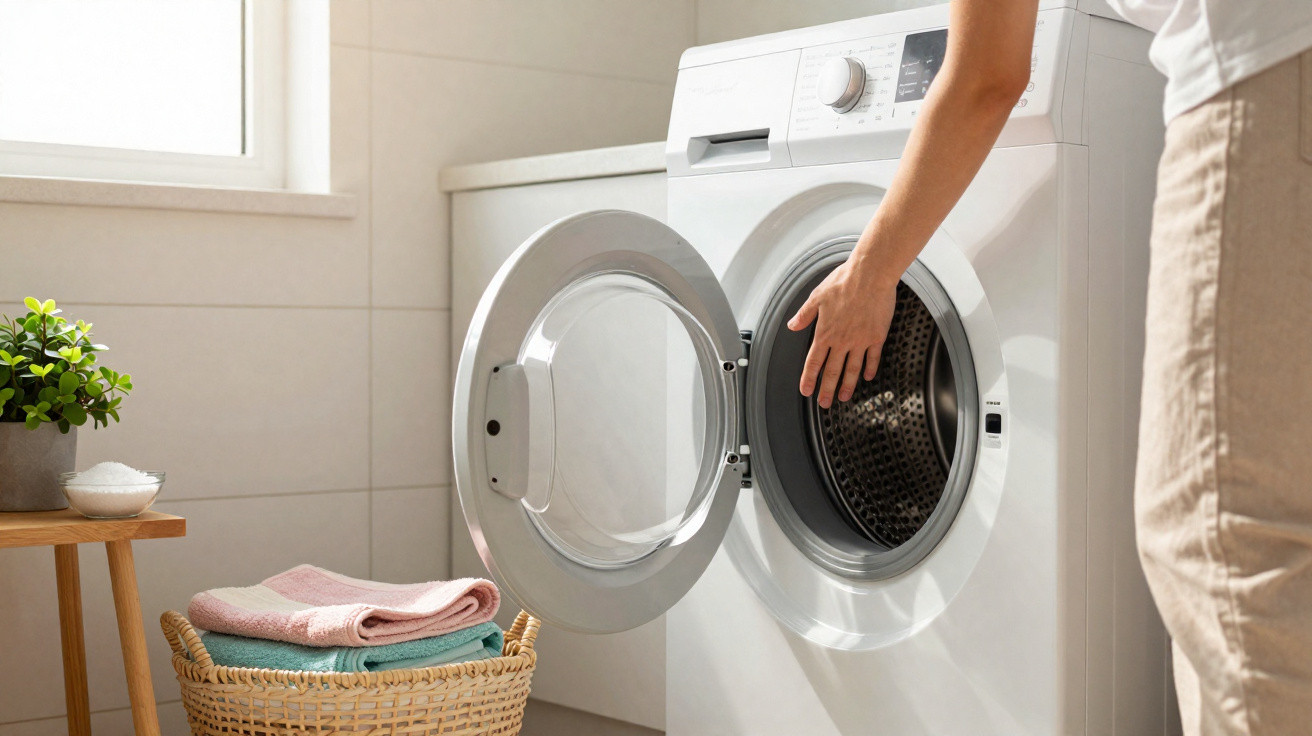
The meaningful change begins with something thoroughly unglamorous: a reset wash. Run a long, hot cycle with an empty drum. Do not take half measures. Use only the machine, a good washing-machine cleaner or a cup of white vinegar, and allow heat enough time to do what short spin cycles cannot: lift away old layers.
Doing this once a month is the gold standard, although once every two or three months can still make a significant difference. Choose the hottest cotton cycle your machine permits. Afterwards, wipe the rubber seal using a cloth, paying close attention to the fold where water collects. Remove the detergent drawer and clean its sticky corners. Leave the door open so that the interior can dry properly.
Next comes a fresh start for your clothes. Cut your detergent dosage in half for several weeks. Really: use half. Your nose may panic, but ignore it. Replace fabric conditioner with a splash of white vinegar in the rinse compartment, or leave out conditioner entirely for a couple of loads. Vinegar does not provide a scent; it helps loosen old odours and reduce residue.
Give the worst items at least one “stripping” wash: gym clothing, old towels and bedding that always smells slightly “slept in”, even after cleaning. Use a longer programme, warmer water, fragrance-free detergent where possible, and nothing else. They may not smell like an advert afterwards. Instead, they will smell neutral. That is the new standard for fresh.
Daily habits matter more than any miracle product. Do not leave wet washing stewing in the machine for half a day, even when life gets in the way and you are exhausted. Damp darkness is where that dull smell develops most quickly. If it happens, use an additional spin and rinse rather than later drowning everything in perfume.
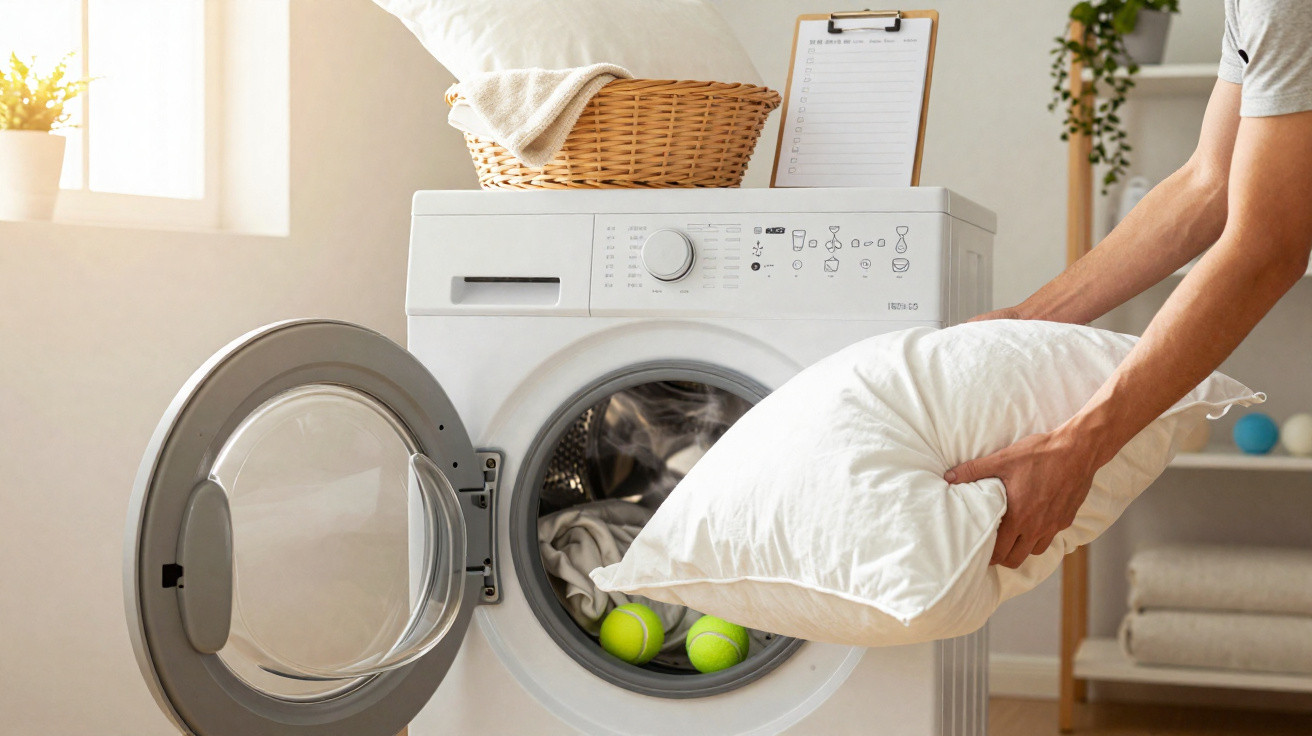
Drying is another overlooked deciding factor. Clothes packed too closely onto an overcrowded airer take far longer to dry. The middle remains humid even when the outer surface seems fine. Space garments out, open a window slightly or use the extractor fan. If you rely on a tumble dryer, clean the lint filter regularly and allow items to dry completely, rather than merely until they no longer feel wet.
And if all this sounds tiring, here is the honest version: no one is doing all of this perfectly. People leave loads in the machine. People pour in too much detergent. People wear that questionable T-shirt again because it “smells alright, actually”. The aim is not perfection. It is making small adjustments that gradually remove the stale undertone from your fabrics.
“Fresh laundry doesn’t need to smell like a perfume advert,” says one home care expert I spoke to. “It mostly needs to smell like nothing – and feel light, dry and easy to wear. Neutral is the new luxury.”
For busy households and small UK bathrooms, that quiet luxury can come from a straightforward routine:
- Run one hot, empty maintenance wash every 1–3 months.
- Use less detergent than the cap suggests, not more.
- Rotate a few loads with no softener, or use vinegar instead.
- Air the machine: door and drawer open between washes.
- Dry clothes faster: more space on the airer, more airflow.
None of these measures is glamorous. They will not look impressive on a pastel-coloured bottle. But they interrupt the cycle in which we keep masking an issue that could be quietly resolved at its source.
When “nothing” is actually the best smell you own
The first time you wear genuinely reset washing, there is a small moment of realisation. You put on a jumper and there is no burst of fragrance, no chemical note of “clean”, and no trace of last week’s sweat coming back to life. There is simply… nothing. Your skin, your perfume and the air in the room are all that remain. The fabric almost disappears.
That absence can become surprisingly addictive. It smells like space and room to breathe. It changes what your brain identifies as “fresh”. Suddenly, heavily perfumed towels with a slightly greasy feel seem less indulgent and more like a disguise. Quiet neutrality feels more truthful and, somehow, more grown-up.
On a grey Sunday, you may find yourself hanging washing by an open window, with cold air flowing in and radiators humming. Out of habit, you smell a T-shirt and realise that there is no story attached to it. No lingering gym smell and no floral bouquet demanding your attention. It is simply fabric, ready for another day rather than still clinging to the previous one.
The overlooked reason your laundry never felt truly fresh was never only about products or temperatures. It was build-up: of residue, habits and the expectation that more fragrance means greater cleanliness. Once some of that is removed, a different form of freshness emerges. It does not announce itself. You notice it most when you stop thinking about it and simply get dressed.
| Key point | Detail | Why it matters to the reader |
|---|---|---|
| Machine reset | An empty, hot, long cycle with cleaner or vinegar | Removes the hidden film that contaminates every fresh load |
| Less product | A reduced detergent dose, with conditioner limited or replaced | Cuts the residue that holds onto odours and moisture |
| Proper drying | Dry faster, improve ventilation and avoid leaving washing sitting around | Prevents the familiar “clean but not fresh” smell returning later in the day |
FAQ:
- Why do my clothes smell fine from the machine but odd when I wear them? Body warmth and moisture wake up odours trapped beneath layers of detergent and fabric-conditioner residue, especially in areas that were never fully rinsed.
- Is washing at 30°C the problem? Not by itself. Low temperatures are fine if you run hot cycles occasionally to clean the machine and avoid overloading it with products that cannot rinse away completely.
- Does fabric softener cause bad smells? It can when used constantly. Conditioner coats fibres, which initially feels pleasant but can trap oils, bacteria and moisture that later smell “stale”.
- Will vinegar make my laundry smell like a chip shop? No. Its sour smell evaporates during the rinse and drying stages. Used moderately, it leaves washing neutral rather than vinegary.
- How long can I leave wet laundry in the machine? Ideally, less than an hour. Beyond that point, odour-causing microbes start multiplying. If you forget, run an extra rinse or a quick rewash rather than simply adding too much perfume.


Comments
No comments yet. Be the first to comment!
Leave a Comment