
Sprays that “destroy 99.9% of bacteria”, gels that “shine like new”, wipes scented like alpine mornings captured in a bottle. You stand in the aisle, glancing from one label to the next, partly drawn to the priciest option and partly irritated that you are considering it at all. After all, your kitchen can still look grimy the morning after you have “cleaned everything”.
You are not being lazy. You scour the sink, wipe the hob and mop the floor once footprints begin to appear. Yet that subtle sticky coating on the worktop keeps returning. Your bathroom is clean-ish, but never quite hotel clean. Somewhere in the routine, something is failing to work properly.
Perhaps, then, the issue is not the bottle. The real difference may lie in the few seconds before your finger even reaches the spray trigger. That small, unseen action quietly determines whether cleaning genuinely works or merely appears to.
The pre-clean step that secretly does 80% of the cleaning
Watch a professional cleaner for ten minutes and a clear pattern emerges. They do not immediately reach for the polished bottle. Instead, they devote more time to clearing crumbs, dust, hair, dried food and miscellaneous clutter than to spraying products. It can look almost dull: no impressive foam, simply removal.
Here is the unglamorous reality: the most effective part of cleaning is the “dry clean” before the “wet clean”. Sweeping, vacuuming, lifting loose debris with a dry cloth and putting away things that should not be there all matter. We often treat these jobs as optional, yet this quiet, mildly tedious stage does most of the real work.
One Tuesday evening in Manchester, I watched a cleaner complete a two-bedroom flat in less than an hour. The tenant had booked a “deep clean” and expected the products to deliver the miracle. The cleaner used an ordinary kit with nothing luxurious in it, including supermarket brands. Still, by the time she left, the flat looked as though its lighting had been improved. That was not down to the products, but to what she did before opening a single one.
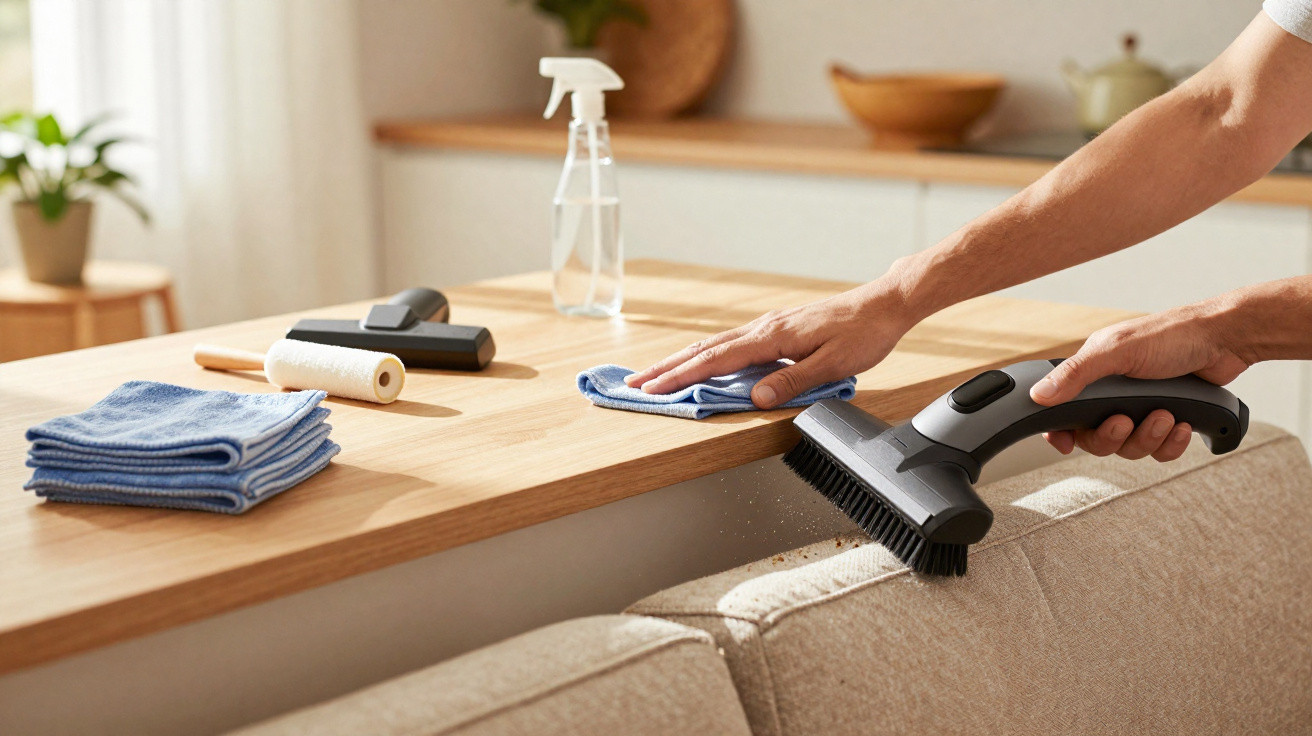
First, she shook the rugs out on the balcony. She then quickly swept beneath the table, vacuumed the sofa, emptied the bins and cleared the kitchen worktops. No spray. No mop. She was simply removing anything loose, obvious or vaguely irritating. She only picked up a bottle once the surfaces were nearly clear. The flat did not merely smell clean; it felt lighter, with less visual clutter and less concealed grime.
Research supports this approach, even though we do not often connect it with cleaning our own homes. Microbiologists recognise that physically removing dirt can be more effective than relying on chemical killing alone. Spray a greasy hob covered in crumbs and much of the product will only cover the upper layer of muck. The molecules intended to “cut through” cannot even reach the surface below. You’re polishing the dirt, not removing it.
Floors work in much the same way. Mop over fluff and dust without removing them first and you are effectively creating a thin soup of dirt. Water distributes it, the cleaner leaves a pleasant scent and the floor may look “better” for an hour or two, before the stickiness comes back. The principle is straightforward: the less physical dirt left behind before you begin “proper” cleaning, the less product you will use and the longer the results will last.
How to pre-clean so your products finally earn their keep
The stage that matters more than the product itself is simple: remove loose dirt before introducing any liquid. That is all. It may sound obvious, even slightly patronising, but applying it deliberately from room to room brings quick changes. Consider it a way to “reset the stage” before the main performance.
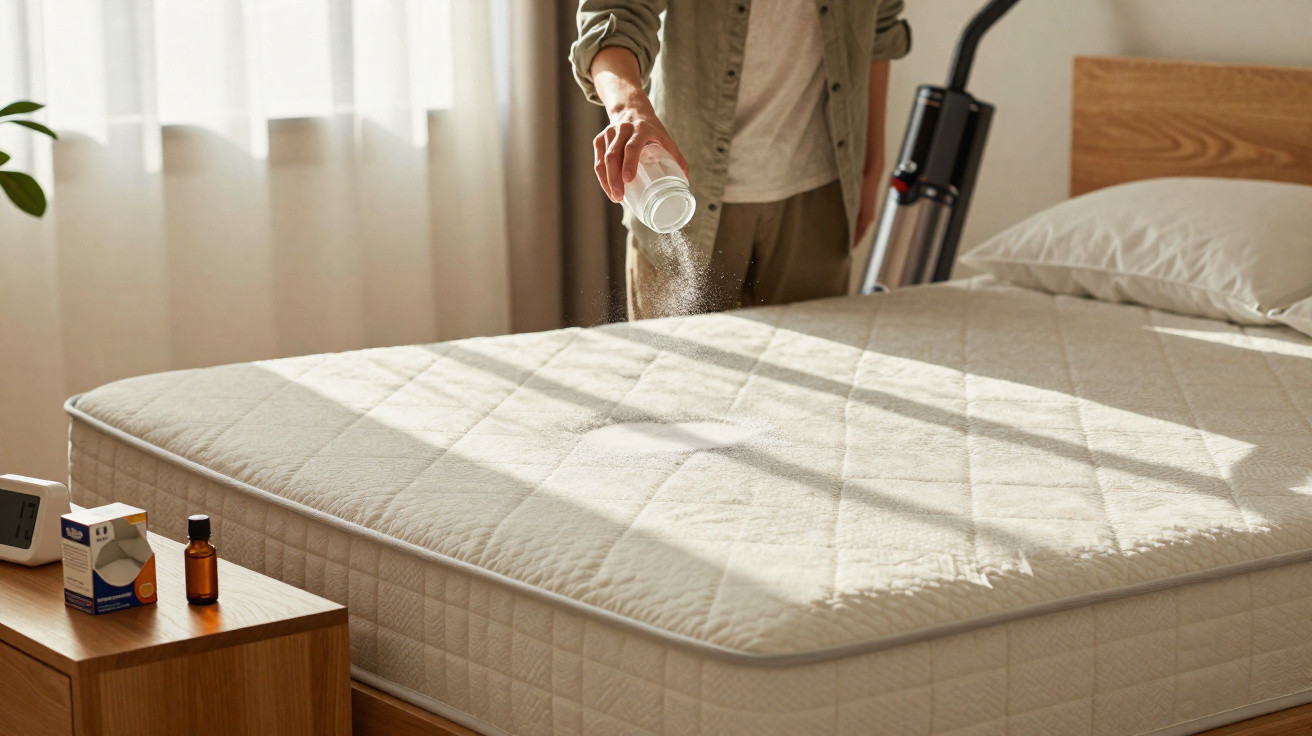
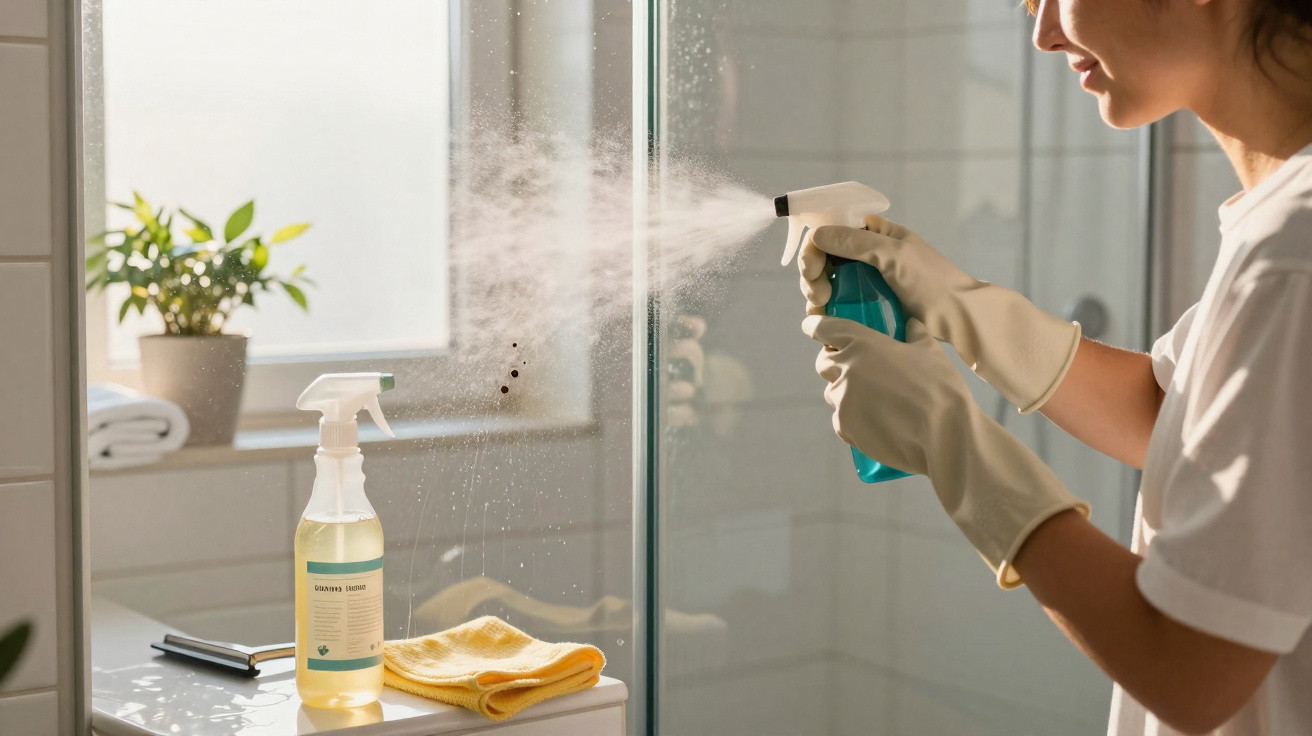
In the kitchen, sweep or vacuum the floor before mopping. Use a dry or only slightly damp microfibre cloth to lift crumbs and dust from worktops before using spray. Brush debris from the hob into the bin before applying degreaser. In the bathroom, dry-dust shelves and skirting boards, shake out bathmats and give the floor a quick vacuum; only then should you start spraying.
The useful shift is to regard cleaning products as a finishing touch rather than the main attraction. They should tackle thin layers of grease, bacteria and stains on surfaces that are already nearly clean, rather than moving food, hair and cat litter around. Once you see it this way, the order of your actions becomes more important than the wording on the bottle, which is surprisingly freeing.
Here is the reality no one posts on Instagram: the most commonly missed cleaning step is not caused by laziness. It is skipping the dry phase because it seems unnecessary when time is short. You spill coffee, grab a cloth, soak it and wipe the area. The job seems done. The stain disappears, but a ring remains, and over time those rings build up in layers.
Go straight in with a wet wipe and crumbs get pushed into corners, grout lines and beneath appliances. They do not vanish; they simply move elsewhere. That is why skirting boards always seem to turn grey, and why that “one sticky patch” on the floor never completely disappears. It is not a personal failing. It is simply… poor choreography.
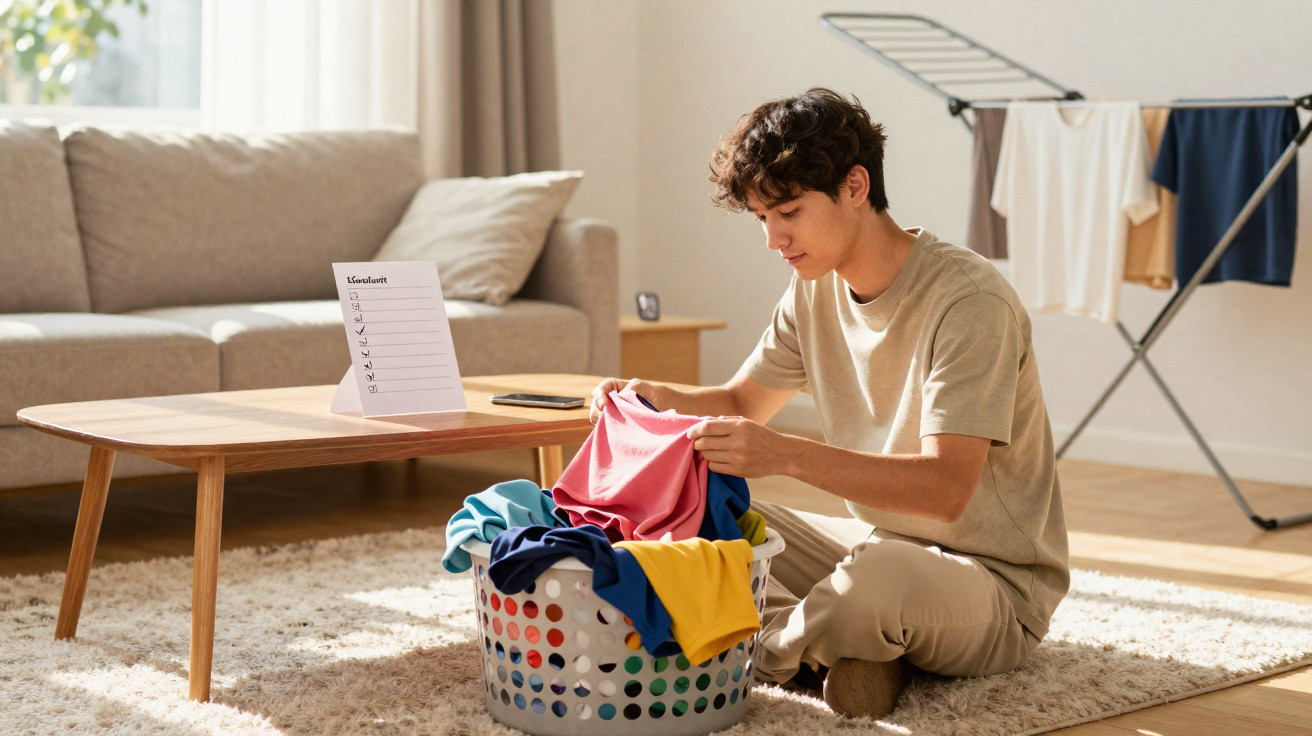
Let us be honest: nobody really does this every day. Most of us clean in guilty bursts rather than through neat, scheduled routines. This is why changing the way you view one step can make a difference. If a full clean is not possible, do a “dry reset” in one area: the table, worktops or floor. When you next clean thoroughly, every product will work more effectively. The result feels different, and that feeling is what encourages you to repeat it.
“If you remove what you can see before you fight what you can’t, you win twice – once for your eyes, and once for your health,” says an infection-control nurse I spoke to in London. She spends her days explaining to staff that wiping isn’t the same as removing. The same lesson quietly applies to our homes.
- Begin with air and dust – open a window for several minutes, shake mats or cloths outdoors, then dust from high to low.
- Move on to the floor – sweep or vacuum before mopping, particularly in kitchens and bathrooms.
- Bring in liquids only afterwards – sprays, cleaners and hot soapy water perform much better on surfaces that have already been “reset”.
Why the pre-clean step changes how your home feels – and how you feel
Recall the last time you entered somebody else’s home and thought, “Wow, this feels clean.” The scent was probably not the reason. More likely, it was the lack of visible clutter and stray dirt: no crumbs on the table, no dust on the TV stand and no hair in the corner of the bathroom. The mind relaxes when it has less to take in, and you breathe slightly more deeply without noticing.
That is the subtle strength of pre-cleaning. Removing loose mess first does not only improve the appearance of rooms after you clean; it also helps them remain more consistent between cleans. Small daily tasks, such as a 60-second sweep beneath the dining table, suddenly matter more than purchasing a new “miracle” floor cleaner. Emotionally, this has value too. After an exhausting day, walking into a hallway without grit beneath your shoes can feel like a small, private triumph.
Practically speaking, you will spend less as well. You use fewer wipes and less spray, while your mop water need not be changed halfway through a single room. Because surfaces are less sticky, they collect less dust, which means less elbow grease next time. It becomes a cycle that works for you rather than against you. More humanly, the home stops seeming like an endless adversary and begins to feel like something you are quietly in control of.
We have all stood in the middle of a cluttered room and thought, “I don’t even know where to start.” This step provides the answer. Start by taking away what is not attached: anything you can sweep, collect, pick up or vacuum. There are no decisions to make, no perfect product to find and no correct fragrance to choose. Just movement. It is a modest change, but after cleaning this way a few times, returning to “spray first, hope for the best” feels strangely wrong.
You may continue buying the same supermarket cleaner. You may still favour the blue liquid or the citrus-scented version. That is perfectly fine. The magic was never in the bottle; it lies in what your hands do two minutes before reaching for it.
| Key point | Detail | Benefit for the reader |
|---|---|---|
| The “dry” stage before using product | Sweep, dust, vacuum and remove crumbs before using liquids | Faster, more effective cleaning with less physical effort |
| Less product, better results | Surfaces already cleared of dirt allow products to work where they matter | Savings on household cleaners and a longer-lasting feeling of cleanliness |
| A lighter mental routine | One priority habit: remove what is visible before treating what is not | Less mental load and greater satisfaction with every cleaning session |
FAQ:
- What exactly counts as the “pre-clean” step? Anything that removes loose dirt without liquid: sweeping, vacuuming, dusting with a dry microfibre cloth, picking up clutter, or shaking out mats and cloths.
- Do I really need to do this every time I clean? No. Prioritise it when doing a proper clean, or in rooms that become dirty most quickly, such as kitchens and bathrooms. Even doing it once a week makes a visible difference.
- Which is better: vacuuming or sweeping? Vacuuming generally collects finer dust and hair, particularly from hard floors and rugs. Sweeping works well for quick resets, but combining both is ideal when possible.
- Can I just use disinfectant wipes instead? Wipes are useful, but using them on surfaces still covered with crumbs or grease merely moves the mess around. They work best on surfaces that have already been “cleared”.
- Does the type of product matter at all then? It still matters for particular problems, including limescale or heavy grease, but for everyday cleaning, the sequence of your steps has much more influence than the brand name on the bottle.
Comments
No comments yet. Be the first to comment!
Leave a Comment